Researchers have developed a novel, bottom-up modeling approach to map the distribution of neodymium (Nd) isotopes in the world’s oceans. This advancement, detailed in a recent publication from the ESS Open Archive, promises to refine our understanding of deep-water circulation, sediment tracing, and paleoclimate reconstruction. Traditionally, modeling Nd isotope distributions relied heavily on complex global circulation models, often requiring significant computational resources and introducing uncertainties due to the models’ inherent limitations.
This new method bypasses those complexities by directly integrating observed riverine inputs and hydrothermal vent contributions of Nd isotopes with a simplified ocean transport model. The team meticulously compiled a comprehensive dataset of Nd isotope signatures from over 100 major rivers globally, alongside estimates of their dissolved and particulate Nd loads. They then incorporated data on hydrothermal vent fluxes, which are significant sources of Nd isotopes in specific ocean regions, particularly the Pacific Ocean.
Importance of Neodymium Isotopes
Neodymium isotopes serve as powerful tracers in oceanography and geochemistry. Their ratios – specifically, the ratio of 143Nd to 144Nd – vary depending on the source rock and are relatively stable during transport in seawater. This stability allows scientists to track water masses as they move through the ocean, identify sources of sediments, and even reconstruct past changes in ocean circulation and weathering rates on continents.
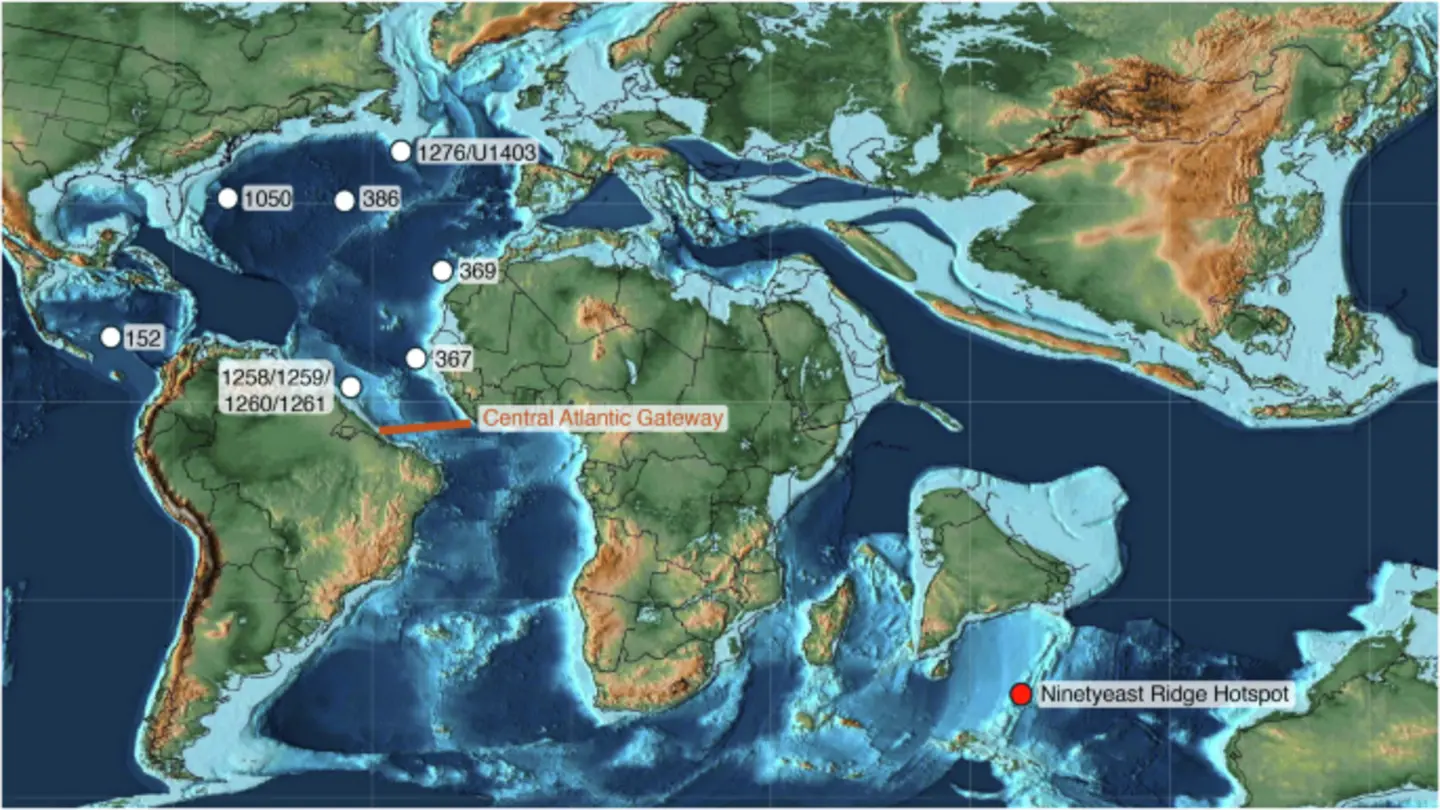
The study highlights the crucial role of riverine input in shaping the Nd isotope composition of coastal waters and, subsequently, the open ocean. Regions with large river systems draining ancient continental crust, like the Himalayas and Australia, exhibit distinct Nd isotope signatures that can be traced far offshore. The model successfully reproduces observed Nd isotope patterns in several key ocean basins, demonstrating its accuracy and reliability.
One of the key findings is the significant impact of sediment recycling on Nd isotope distributions. The model accounts for the release of Nd from sediments back into the water column through processes like resuspension and diagenesis. This feedback mechanism is particularly important in areas with high sedimentation rates, such as the continental margins.
The researchers emphasize that this bottom-up approach is not intended to replace comprehensive ocean circulation models but rather to complement them. It provides a more focused and computationally efficient way to investigate the factors controlling Nd isotope distributions and to validate the results of more complex models. The resulting dataset and modeling framework are publicly available, fostering collaboration and further research in the field.
Future applications of this model include improving our ability to reconstruct past ocean conditions from sediment archives, assessing the impact of climate change on weathering rates and riverine fluxes, and understanding the biogeochemical cycling of other trace elements in the ocean. The work represents a significant step forward in utilizing Nd isotopes as a tool for unraveling the complexities of the Earth’s ocean system.
Image Source: Google | Image Credit: Respective Owner