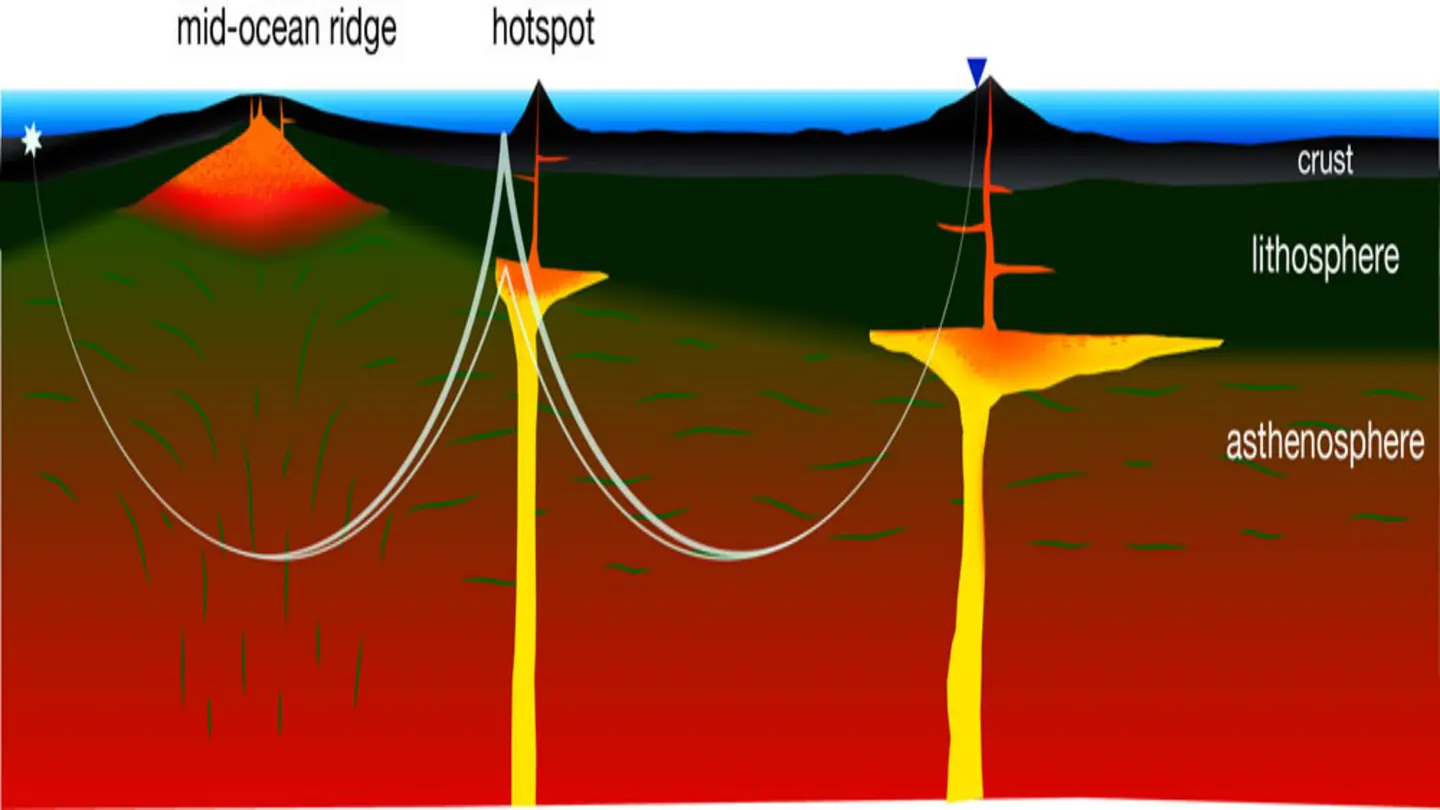
Scientists have developed an enhanced method for identifying earthquakes originating deep within the Earth’s mantle, a region notoriously difficult to study due to the subtle nature of seismic signals from such depths. The research, published in the ESS Open Archive, focuses on refining the Sn/Lg method, a technique used to differentiate between shallow and deep-focus earthquakes.
Traditionally, distinguishing mantle earthquakes from those occurring in the Earth’s crust relies on analyzing the characteristics of seismic waves. The Sn and Lg waves are particularly useful; Sn waves travel through the mantle and are less prominent in shallow earthquakes, while Lg waves travel through the crust and are stronger for shallower events. However, the distinction isn’t always clear, leading to potential misidentification of earthquake origins.
The new approach, detailed in the research, involves a more sophisticated analysis of the Sn/Lg wave ratio, incorporating factors like the distance from the epicenter and the geological properties of the Earth’s crust and mantle along the wave’s path. Researchers have found that by carefully considering these variables, they can significantly improve the accuracy of identifying mantle earthquakes.
Importance of Mantle Earthquake Study
Understanding mantle earthquakes is crucial for several reasons. The mantle comprises the bulk of the Earth’s volume, and processes occurring within it drive plate tectonics and influence volcanic activity. Deep-focus earthquakes, while less frequent than their shallow counterparts, can be incredibly powerful and pose significant seismic hazards. Accurate identification of their source locations is vital for assessing risk and improving earthquake early warning systems.
The study highlights the challenges of detecting these events. Mantle earthquakes generate weaker signals at the surface compared to crustal earthquakes, and these signals are often obscured by noise from other sources, including human activity and naturally occurring ambient vibrations. The refined Sn/Lg method offers a more sensitive tool for sifting through this noise and pinpointing the origin of these elusive earthquakes.
Researchers utilized a large dataset of seismic waveforms from various monitoring stations around the globe to test and validate their improved method. The results demonstrate a substantial increase in the number of accurately identified mantle earthquakes, providing a more comprehensive picture of seismic activity within the Earth’s deep interior. This advancement will contribute to a better understanding of the dynamics of the Earth’s mantle and the forces that shape our planet.
Further research will focus on integrating this refined method with other seismic analysis techniques and developing automated systems for real-time detection of mantle earthquakes. The ultimate goal is to enhance our ability to monitor and mitigate the risks associated with these powerful, yet often hidden, geological events. The team also plans to explore the correlation between mantle earthquake activity and other geophysical phenomena, such as mantle plumes and subduction zone processes.
Image Source: Google | Image Credit: Respective Owner