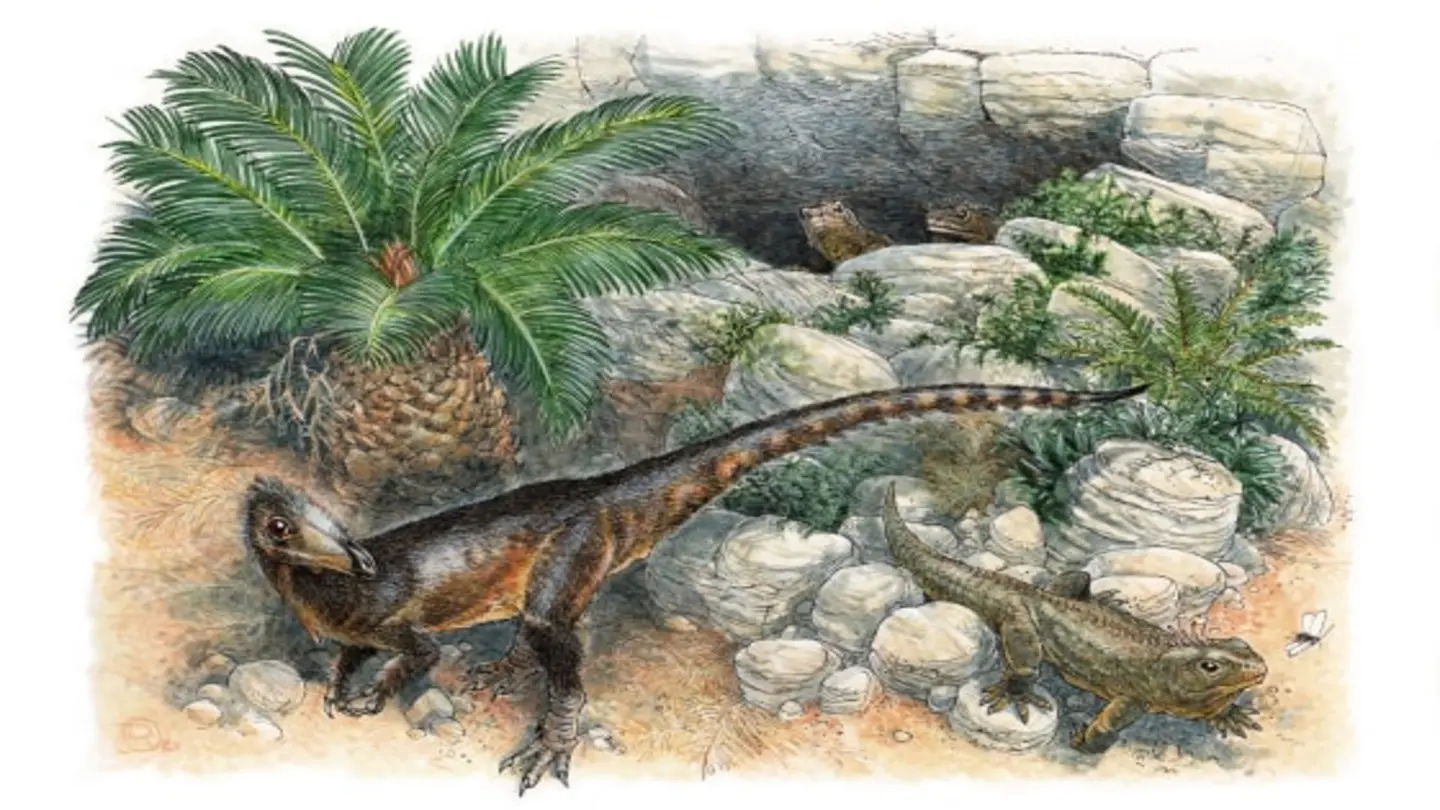
A 125-year-old fossil discovered in Wales has been identified as a new species of meat-eating dinosaur. Paleontologists have determined that the fossil, initially overlooked in museum collections, represents a previously unknown theropod from the early Jurassic period. The dinosaur, named Pendraig milnerae, lived roughly 200 million years ago and provides valuable insights into the evolution of early predatory dinosaurs.
The fossil consists of partial skeletal remains, including vertebrae, that were unearthed in a quarry near Penarth, Wales, in the late 19th century. For many years, the bones were misidentified and stored at the Natural History Museum in London. It was only recently, through detailed examination and comparative analysis, that researchers recognized the unique characteristics of the specimen.
Significance of the Discovery
Pendraig milnerae is particularly significant because it is one of the oldest known Jurassic theropods. Its existence pushes back the timeline for the diversification of these types of dinosaurs. The name Pendraig is derived from the Welsh word for “chief dragon,” reflecting the fossil’s origin in Wales and its predatory nature. The species name, milnerae, honors Angela Milner, a renowned paleontologist at the Natural History Museum, for her contributions to dinosaur research.
“The identification of Pendraig milnerae is a testament to the importance of revisiting old collections and applying new techniques to unlock the secrets they hold,” said Dr. Stephan Spiekman, a research fellow at the Natural History Museum and lead author of the study. “This dinosaur sheds light on the early evolution of theropods and provides a clearer picture of the biodiversity that existed during the Jurassic period.”
Physical Characteristics
While the complete size and appearance of Pendraig milnerae are still unknown, scientists estimate that it was relatively small compared to later theropods, potentially reaching lengths of just over three feet. Its teeth were serrated and designed for tearing flesh, indicative of a carnivorous diet. Analysis of the bone structure suggests that it was an agile and active predator.
The discovery also suggests that theropods in the early Jurassic period may have been more diverse than previously thought. Further research is planned to excavate more fossils from the Penarth quarry, which could reveal additional insights into the ancient ecosystem of Wales and the evolution of dinosaurs. The findings have been published in the journal Royal Society Open Science, marking a significant contribution to the field of paleontology and showcasing the hidden treasures that can be found within museum collections.
The identification of this new species underscores the ongoing importance of paleontological research and the potential for new discoveries to reshape our understanding of prehistoric life. The fossil serves as a reminder that even specimens that have been studied for decades can yield surprising results with the application of modern analytical techniques. The research team hopes their findings will inspire further exploration and investigation into the fossil record, leading to even more groundbreaking discoveries in the future.
Image Source: Google | Image Credit: Respective Owner