Nepal’s Prime Minister KP Sharma Oli has strongly objected to the recent India-China agreement to resume border trade through the Lipulekh Pass, saying the area lies within Nepal’s territory as defined by the 1816 Sugauli Treaty.
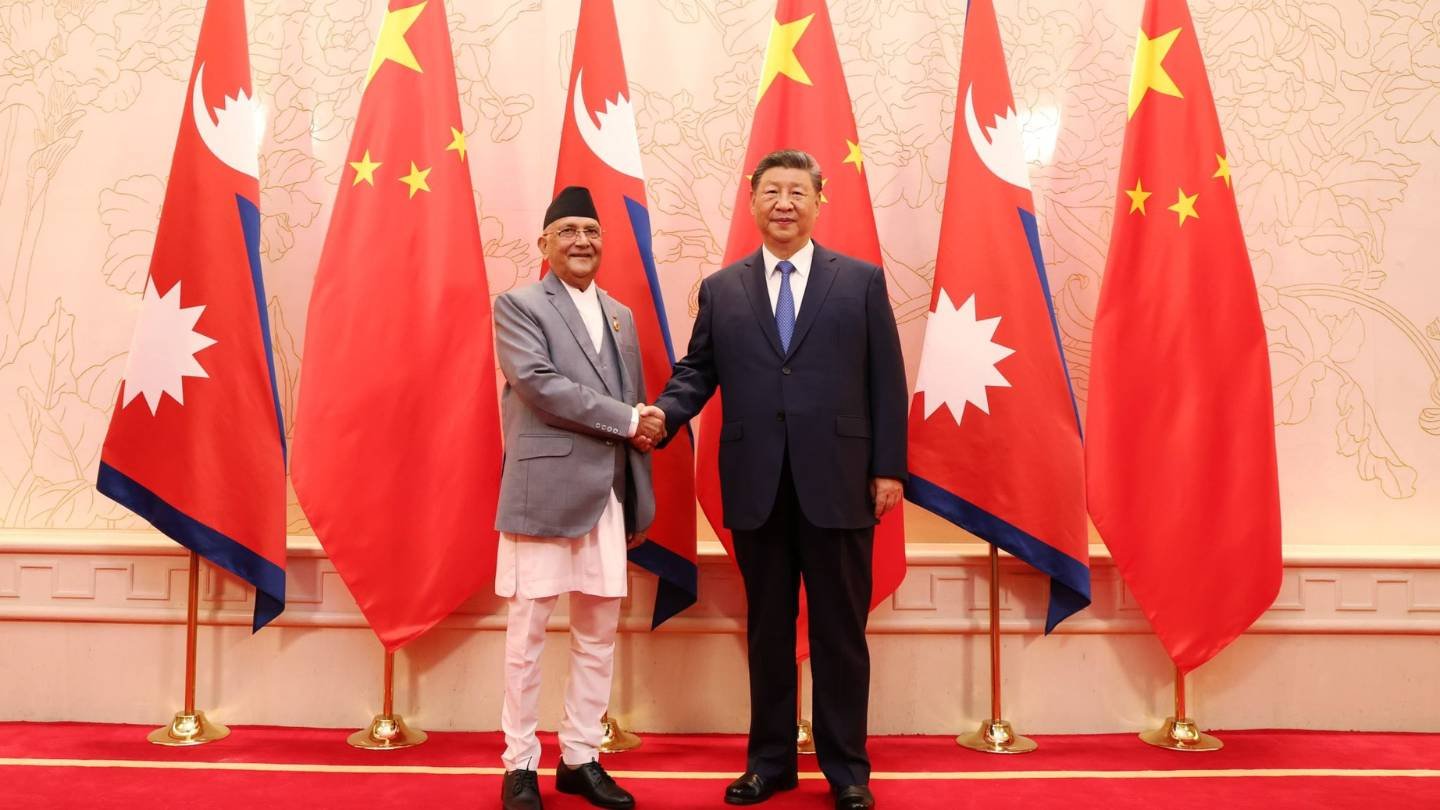
Oli conveyed Nepal’s position directly to Chinese President Xi Jinping during bilateral talks in Tianjin, held ahead of the Shanghai Cooperation Organisation (SCO) Summit.
Nepal’s Stand on Lipulekh
Foreign Secretary Amrit Bahadur Rai confirmed that Oli reminded Xi that the Sugauli Treaty had established the Mahakali River as the boundary, placing all land east of the river—including Lipulekh—within Nepal.
“The Prime Minister clearly conveyed that Lipulekh belongs to Nepal, and any agreement between India and China to use it for trade is unacceptable to Kathmandu,” Rai said.
The Prime Minister’s Office and Nepal’s Embassy in Beijing issued similar statements, stressing that Kathmandu has formally lodged objections and considers Lipulekh, Limpiyadhura, and Kalapani integral parts of Nepal as per its constitutional map.
Background of the Dispute
The controversy reignited earlier this month when India and China agreed to reopen trade through Lipulekh, located in Nepal’s Darchula district. Nepal’s Ministry of Foreign Affairs restated its claims on August 20, asserting that the area is legally Nepali territory.
India, however, maintains that trade through Lipulekh has been ongoing since 1954 and was disrupted only due to the pandemic and other developments. New Delhi said both sides have now agreed to resume the practice.
Broader Context
Following his meeting with Xi, Oli described the discussions as “fruitful,” noting progress on bilateral issues and cooperation. This was Oli’s second meeting with the Chinese president in as many years, and his second official visit to China since taking office again in 2024.
Nepal, a dialogue partner of the SCO since 2016, has sought observer or full membership in the grouping. Its geopolitical position between India and China, however, continues to shape how it navigates regional partnerships.
Source: News18 | Image Source: Google | Image Credit: Respective Owner