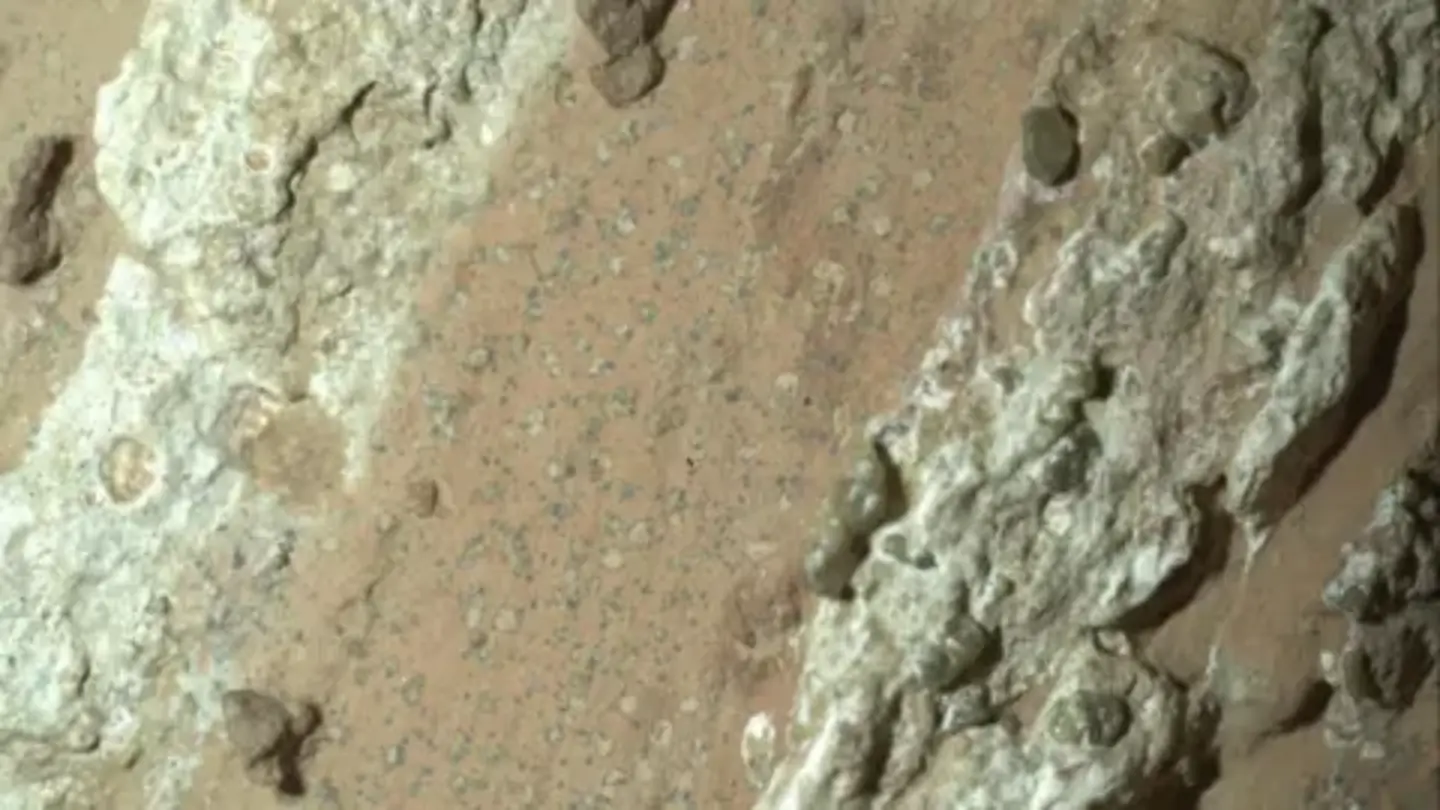
NASA’s Perseverance rover has stumbled upon an unusual rock on the surface of Mars, sparking curiosity and intrigue among scientists. The enigmatic object, described as an ‘alien rock’ by some, appears to be out of place and unlike any other geological feature in its immediate vicinity. Its peculiar composition and texture have led researchers to believe it may not be native to the Martian region where it was discovered.
The rover, currently exploring the Jezero Crater, a location believed to have once been a lake billions of years ago, used its array of scientific instruments to analyze the strange rock. Initial data suggests a unique mineral composition that differs significantly from the surrounding Martian bedrock and soil. This has fueled speculation about its potential origin, with theories ranging from a volcanic ejection from a distant Martian region to an asteroid fragment that crashed onto the planet’s surface.
Possible Explanations
One leading hypothesis suggests the rock could be a piece of ejecta from a large impact event elsewhere on Mars. Powerful impacts can send debris flying across vast distances, potentially depositing rocks from different geological regions onto the Jezero Crater. Alternatively, the rock might be a meteorite, a remnant from the early solar system that survived its fiery descent through the Martian atmosphere. Meteorites are frequently discovered on Mars due to its thin atmosphere, which offers less protection than Earth’s.
Further analysis is underway to determine the rock’s precise mineralogical makeup and isotopic signature. Scientists are particularly interested in identifying any organic molecules or biosignatures that could provide clues about Mars’ past habitability. The Perseverance rover is equipped with advanced tools, including a laser microprobe and a sophisticated chemical analyzer, capable of providing detailed information about the rock’s composition and history. The data collected will be crucial in unraveling the mystery of its origin.
Implications for Martian Geology
The discovery of this unusual rock highlights the complexity and dynamism of the Martian geological landscape. It underscores the importance of robotic exploration in uncovering the planet’s secrets and piecing together its evolutionary history. The Jezero Crater, with its diverse geological features and evidence of past water activity, continues to be a prime location for searching for signs of ancient life. The Perseverance rover is actively collecting samples of Martian rocks and soil, which will eventually be returned to Earth for further study, providing invaluable insights into the red planet’s past and present.
This discovery adds another layer of excitement to the ongoing Mars exploration program. As Perseverance continues its mission, scientists remain hopeful that more surprising and informative discoveries will be made, deepening our understanding of Mars and its potential to have once harbored life. The alien rock serves as a reminder of the many mysteries that still await unraveling on the red planet.
Image Source: Google | Image Credit: Respective Owner