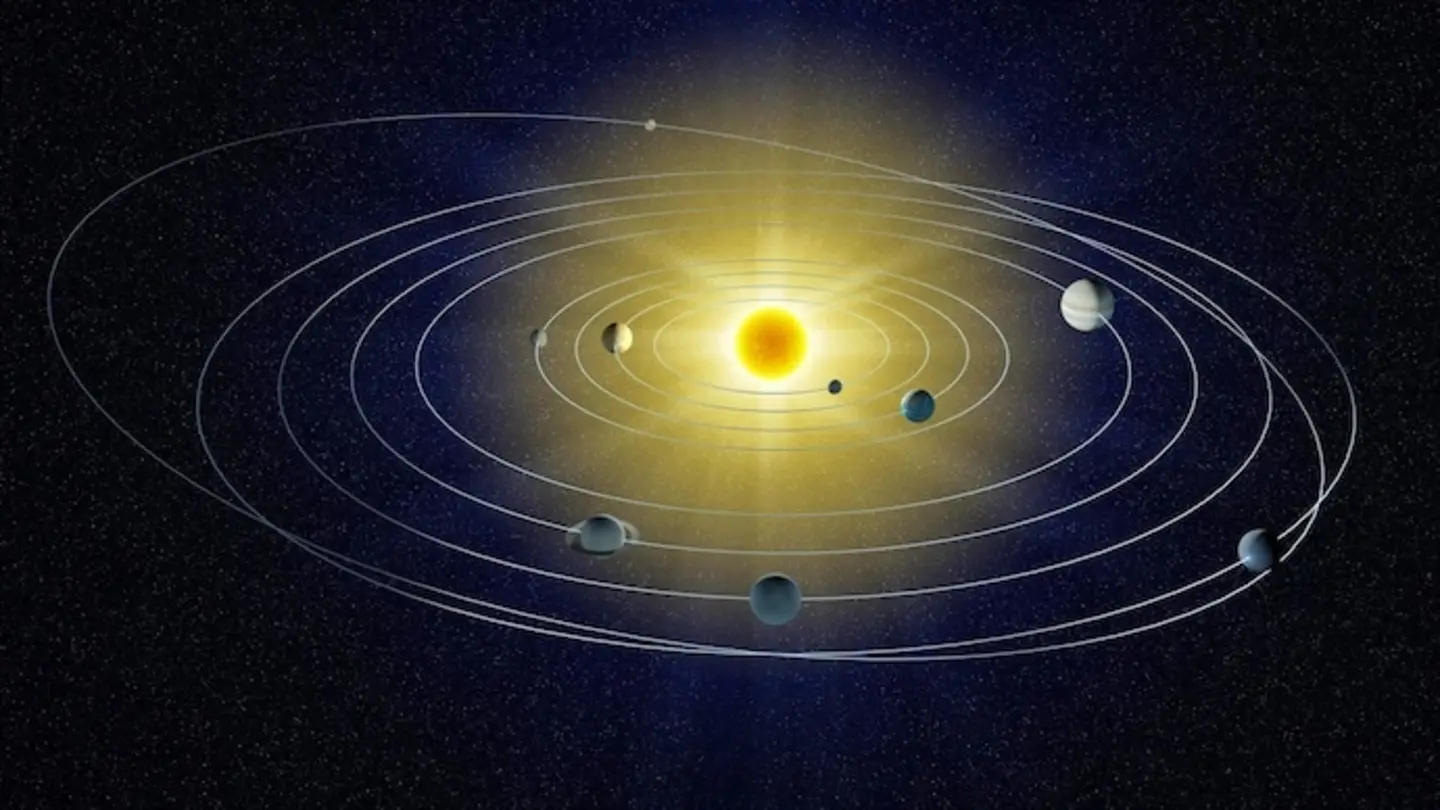
NASA is preparing to launch a groundbreaking mission to map the boundary of our Solar System, a region where the sun’s influence wanes and interstellar space begins. This ambitious endeavor aims to understand the heliosphere, the protective bubble created by the sun that shields us from harmful cosmic radiation. The mission, still under development, promises to provide unprecedented insights into the interaction between the solar wind and the interstellar medium.
Understanding the Heliosphere
The heliosphere is formed by the solar wind, a constant stream of charged particles emitted by the sun. This wind pushes outward, creating a bubble-like structure that extends far beyond the orbit of Pluto. The edge of this bubble, known as the heliopause, marks the boundary where the solar wind is no longer strong enough to push back against the interstellar medium, the matter and radiation that fills the space between star systems. Understanding the heliosphere is crucial because it acts as a shield, protecting Earth and other planets from the potentially harmful effects of galactic cosmic rays.
Currently, our knowledge of the heliosphere is based on data from missions like Voyager 1 and Voyager 2, which crossed the heliopause in 2012 and 2018, respectively. While these missions provided valuable information, they only offered a glimpse of the heliosphere at two specific points. NASA’s new mission aims to create a comprehensive map of the entire heliosphere, providing a more complete understanding of its structure and dynamics.
The mission will utilize advanced instruments to measure the particles and magnetic fields in the heliosheath, the region between the termination shock (where the solar wind slows down) and the heliopause. By studying these measurements, scientists hope to learn more about how the heliosphere interacts with the interstellar medium, how cosmic rays are filtered, and how the heliosphere has evolved over time. These insights will not only deepen our understanding of our own Solar System but also provide valuable information about the environments around other stars.
The data collected from this mission has implications for understanding the potential habitability of exoplanets. A star’s heliosphere can shield orbiting planets from harmful radiation, which is essential for life as we know it. Mapping our own heliosphere can provide clues about the characteristics of other star systems and the likelihood of finding habitable worlds beyond our Solar System. The mission represents a significant step forward in our quest to understand our place in the universe and search for life beyond Earth. Furthermore, it underscores NASA’s commitment to pushing the boundaries of space exploration and scientific discovery.
The mission’s development is ongoing, with scientists and engineers working to refine the instruments and spacecraft design. The launch date is yet to be determined, but the mission is expected to provide a wealth of new data that will revolutionize our understanding of the Solar System’s outer limits.
Image Source: Google | Image Credit: Respective Owner