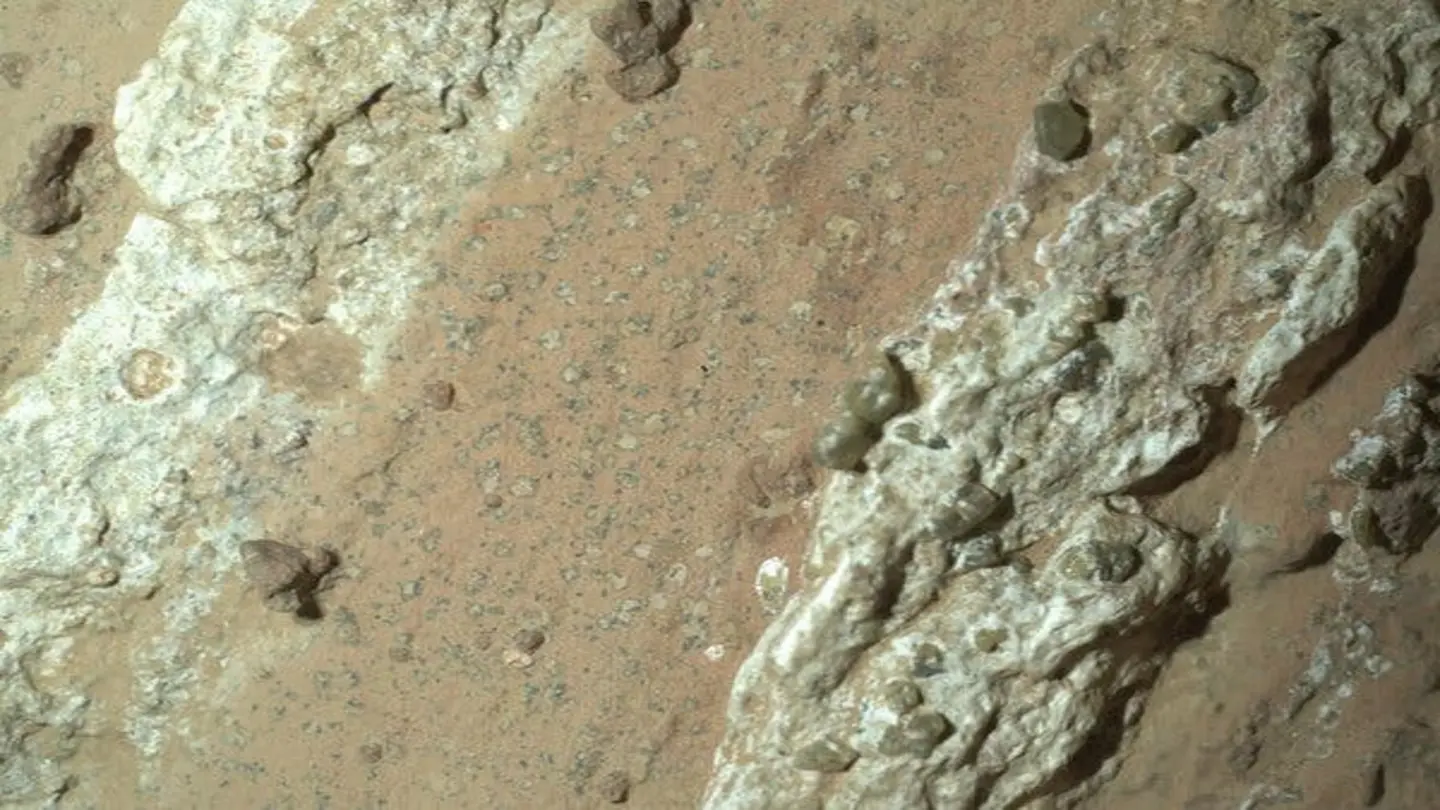
NASA’s Perseverance rover may have unearthed compelling evidence suggesting past microbial life on Mars. The rover’s ongoing exploration of the Jezero Crater, believed to have once been a lake billions of years ago, has yielded intriguing findings within rock samples. Scientists are analyzing these samples for biosignatures, or indicators that life once existed. This discovery is a significant step forward in the search for extraterrestrial life and could revolutionize our understanding of the universe.
The Search for Biosignatures
The key to confirming past life on Mars lies in identifying definitive biosignatures. These can include fossilized remains of microorganisms or chemical compounds produced by living organisms. While previous missions have found organic molecules on Mars, these could have been formed through non-biological processes. The current findings are particularly exciting because the rock samples exhibit textures and compositions that are strongly associated with microbial activity on Earth.
Perseverance is equipped with advanced instruments designed to detect even the faintest traces of past life. The rover uses its SuperCam laser to analyze the chemical composition of rocks from a distance and its SHERLOC instrument, which uses ultraviolet light, to identify organic compounds on the surface. The data collected are then transmitted back to Earth for further analysis by scientists from around the globe. The rover has also been collecting samples of the most promising rocks and storing them in sealed tubes for a future mission to retrieve and bring them back to Earth.
Implications for Future Missions
The potential discovery of microbial life on Mars has profound implications for future space exploration. It would validate the hypothesis that life can exist beyond Earth and provide valuable insights into the conditions necessary for life to arise. It would also influence the design and objectives of future missions, which could focus on searching for life in other potentially habitable environments in our solar system, such as Europa and Enceladus. Moreover, if confirmed, this discovery could prompt a reevaluation of our place in the universe and the possibility of life being more widespread than previously thought.
The next step involves the Mars Sample Return campaign, a joint effort between NASA and the European Space Agency (ESA). This ambitious mission aims to retrieve the samples collected by Perseverance and bring them back to Earth for detailed analysis in state-of-the-art laboratories. Scientists will use advanced techniques to study the samples at a level of detail not possible on Mars, increasing the chances of confirming the presence of biosignatures. The success of this mission is crucial for unlocking the secrets held within Martian rocks and answering the fundamental question of whether we are alone in the universe.
The findings from Perseverance, while still preliminary, underscore the importance of continued exploration of Mars. The search for life beyond Earth is a challenging endeavor, but the potential rewards are immense. Discovering life on Mars would not only expand our scientific knowledge but also inspire future generations of scientists and explorers to reach for the stars.
Image Source: Google | Image Credit: Respective Owner