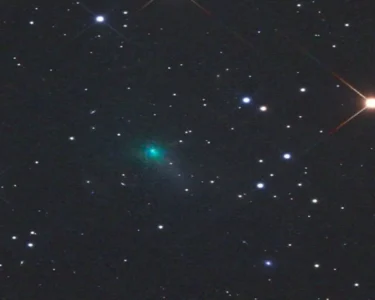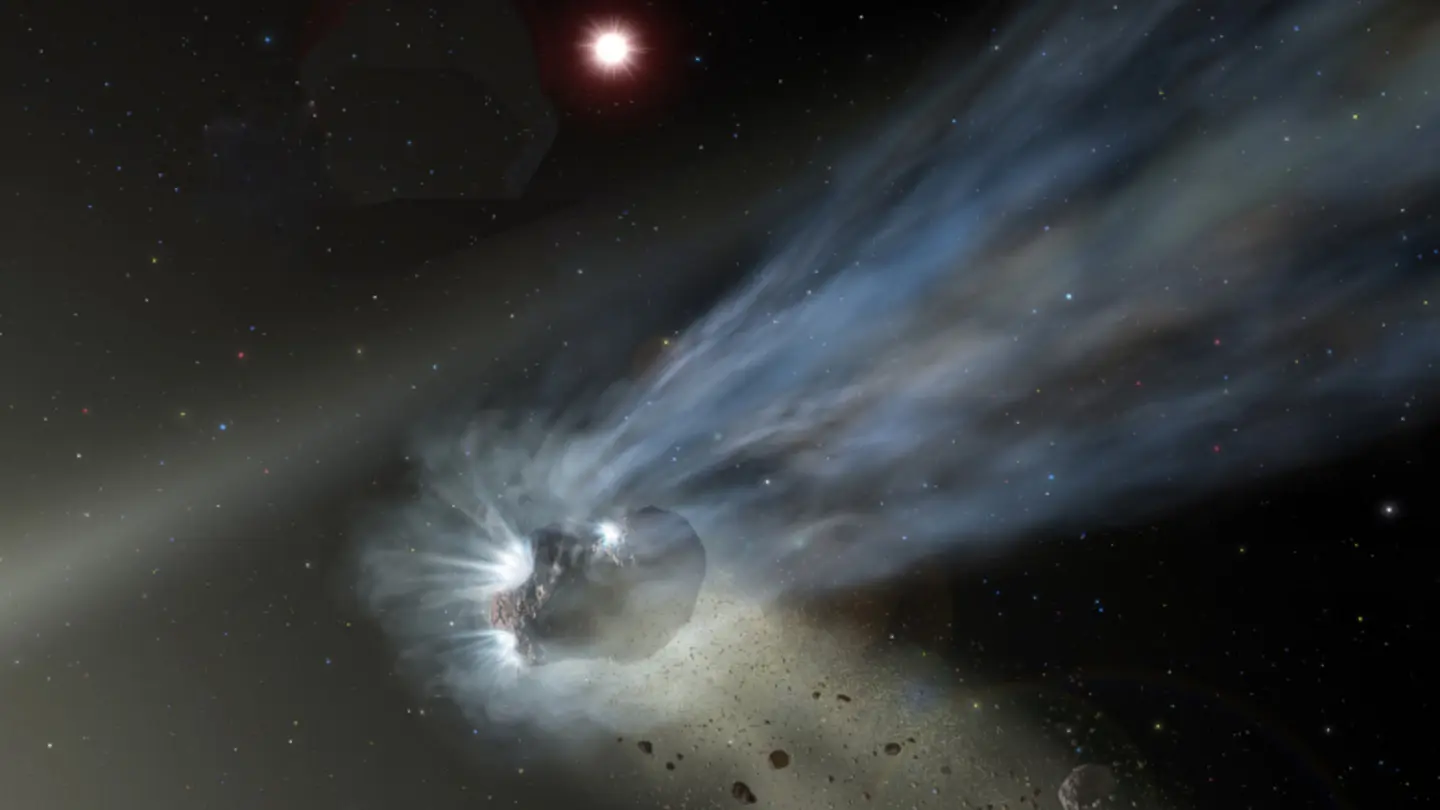
NASA’s Stratospheric Observatory for Infrared Astronomy (SOFIA), in conjunction with the 3I/ATLAS research team, has made a groundbreaking discovery: the definitive fingerprint of water in the vicinity of a comet originating from outside our solar system. This finding, detailed in The Economic Times, has ignited considerable excitement within the scientific community, prompting questions about the potential for life beyond Earth. The comet, designated 2I/Borisov, was first observed in 2019 and identified as an interstellar visitor, having traveled vast distances from another star system.
Implications of Water Detection
The presence of water, a fundamental ingredient for life as we know it, is not entirely unexpected in comets. However, the detection of its specific spectral signature provides crucial insights into the composition and conditions within other planetary systems. Water acts as a solvent and plays a vital role in numerous biochemical processes, making its presence a key factor in assessing the habitability of a celestial body. The discovery suggests that the building blocks for life could be widespread throughout the galaxy, transported by comets and asteroids across interstellar space.
SOFIA, a modified Boeing 747SP aircraft equipped with a powerful telescope, was instrumental in detecting the water signature. Its ability to operate at high altitudes allows it to avoid much of the Earth’s atmosphere, providing a clearer view of infrared light emitted by celestial objects. The infrared spectrum is particularly useful for identifying molecules like water, which absorb and emit light at specific wavelengths. The 3I/ATLAS team analyzed the data collected by SOFIA, confirming the presence of water vapor surrounding the comet’s nucleus.
Future Research Directions
While this discovery is significant, it does not definitively prove the existence of extraterrestrial life. However, it strengthens the argument that the conditions necessary for life may be more common than previously thought. Future research will focus on analyzing the composition of other interstellar comets and asteroids to determine whether they also contain water and other organic molecules. Space-based telescopes like the James Webb Space Telescope will play a crucial role in these investigations, providing even more detailed observations of distant objects.
The detection of water in an interstellar comet marks a significant step forward in our understanding of the universe and the potential for life beyond Earth. It underscores the importance of continued exploration and research, as we strive to answer one of humanity’s most profound questions: Are we alone?
Further studies are needed to analyze the isotopic composition of the water, which could provide clues about its origin and the conditions in the comet’s parent star system. The ratio of deuterium (heavy hydrogen) to hydrogen can vary depending on the temperature and pressure at which the water formed. Comparing this ratio to that of water found on Earth and in other solar system objects could reveal whether the comet originated in a region similar to our own.
This discovery also highlights the importance of international collaboration in scientific research. The 3I/ATLAS team, consisting of scientists from multiple institutions and countries, demonstrates the power of working together to unravel the mysteries of the cosmos. As technology advances and our understanding of the universe deepens, we can expect even more exciting discoveries in the years to come.
Image Source: Google | Image Credit: Respective Owner