NASA has recently announced the crew selected for the CHAPEA (Crew Health and Performance Exploration Analog) mission, a year-long simulation designed to mimic the challenges of a Mars expedition. This ambitious project aims to provide invaluable insights into the psychological and physiological effects of long-duration space travel on astronauts. The crew will reside in a habitat designed to replicate the Martian environment, conducting research and performing tasks similar to those expected of future Mars explorers.
In related news, NASA and Northrop Grumman are collaborating to send medical and technology studies to space. These experiments will explore various aspects of human health in microgravity, as well as test new technologies that could improve future space missions. The studies encompass a range of disciplines, from understanding bone loss in space to developing innovative methods for resource utilization. The outcomes of these studies are expected to significantly contribute to our understanding of the challenges associated with long-term spaceflight and enable safer and more efficient missions.
For sky enthusiasts, NASA has released its September 2025 skywatching guide, offering tips on observing celestial events throughout the month. The guide highlights prominent constellations, planets, and meteor showers visible in the night sky. This resource provides valuable information for both amateur and experienced astronomers, enabling them to better appreciate the wonders of the cosmos. Whether you’re a seasoned stargazer or simply curious about the night sky, NASA’s guide offers a wealth of information.
The Hubble Space Telescope has captured a stunning image of a galaxy brimming with cosmic activity. This breathtaking view reveals a multitude of stars, gas clouds, and dust lanes, showcasing the dynamic processes that shape galaxies over billions of years. The image provides valuable data for astronomers studying galaxy evolution and the formation of stars. Hubble’s continued observations provide invaluable insights into the universe.
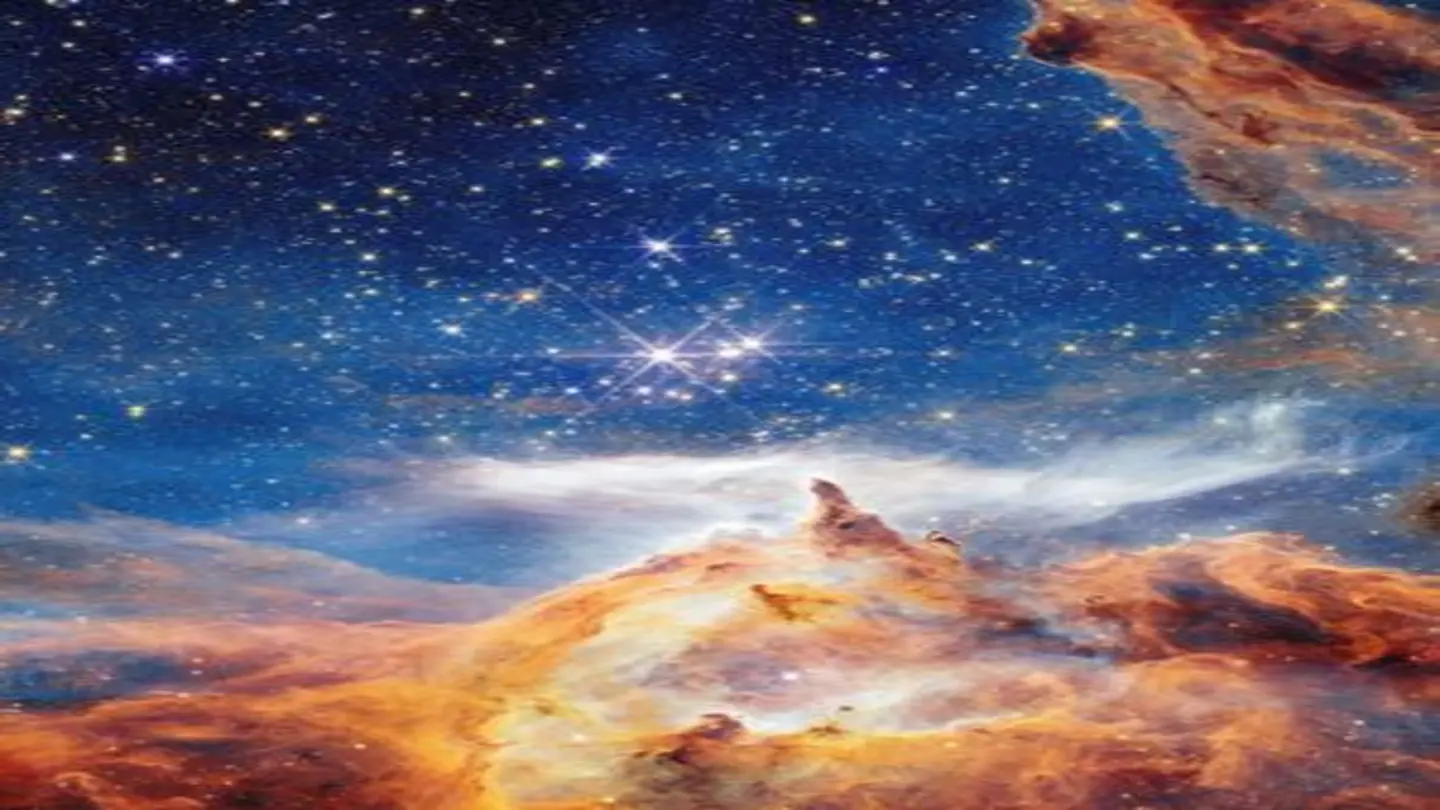
Furthermore, an upcoming launch is set to enhance NASA’s study of the Sun’s influence across space. This mission will deploy advanced instruments to observe the Sun’s corona and solar wind, providing crucial data on how the Sun’s activity impacts Earth and other planets. By understanding the Sun’s behavior, scientists can better predict space weather events that can disrupt satellite communications and power grids. NASA’s Webb Telescope has also delivered a mesmerizing glimpse of star birth, revealing the intricate details of stellar nurseries where new stars are forming. This observation provides valuable clues about the early stages of star formation and the conditions necessary for stars to emerge.
Image Source: Google | Image Credit: Respective Owner