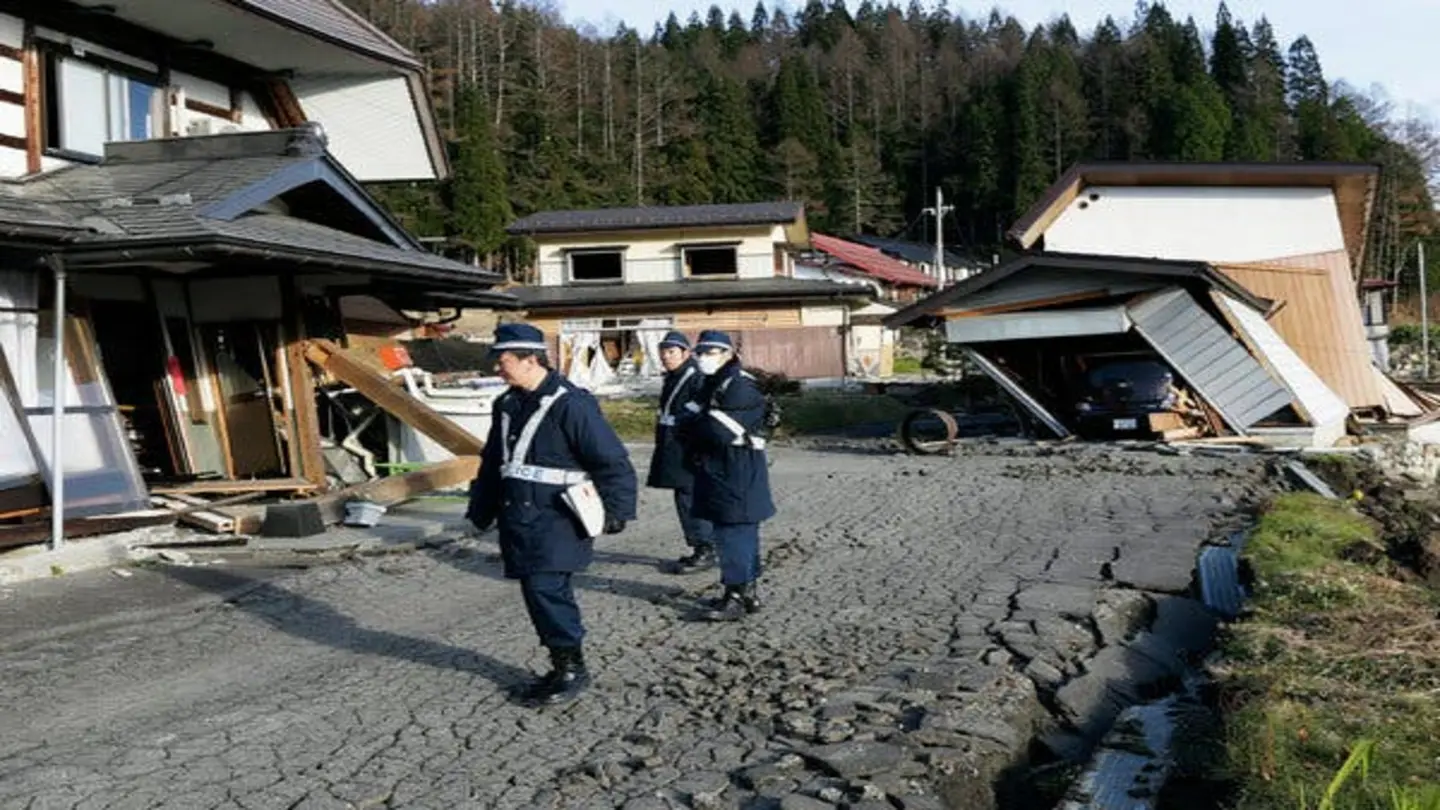
A new study published in ESS Open Archive sheds light on the scaling of earthquake sources and attenuation effects using pulse broadening analysis, focusing on the 2014 Northern Nagano earthquakes. Researchers delved into the intricate relationship between seismic wave propagation and the characteristics of earthquake sources, aiming to improve our understanding of earthquake dynamics and hazard assessment.
The study leverages the phenomenon of pulse broadening, where seismic waves become stretched as they travel through heterogeneous geological structures. By analyzing the extent of this broadening, scientists can infer properties of the earthquake source, such as its size and duration, as well as the attenuation properties of the intervening rock formations. The 2014 Northern Nagano earthquake sequence provided a valuable dataset for this investigation, offering a range of magnitudes and focal depths.
Methodology and Data Analysis
Researchers meticulously analyzed seismograms recorded by a dense network of seismic stations in and around the Nagano region. They focused on identifying and measuring the broadening of seismic pulses, particularly the S-waves, which are sensitive to shear wave velocity variations in the Earth’s crust. Sophisticated signal processing techniques were employed to isolate the effects of pulse broadening from other factors influencing seismic waveforms, such as source radiation patterns and site amplification.
The team then developed a theoretical framework to relate the observed pulse broadening to the source size and attenuation parameters. This framework incorporates models of seismic wave propagation in heterogeneous media, accounting for scattering and absorption effects. By fitting the theoretical predictions to the observed data, the researchers were able to estimate the source dimensions and attenuation coefficients for the Nagano earthquakes.
Key Findings and Implications
The study revealed a clear scaling relationship between the earthquake magnitude and source size, consistent with previous studies. However, the pulse broadening analysis also provided insights into the spatial variations in attenuation across the Nagano region. Areas with higher attenuation coefficients were found to correspond to zones with increased fracturing and fluid saturation, suggesting a link between crustal structure and seismic wave propagation.
These findings have important implications for earthquake hazard assessment. By incorporating the effects of pulse broadening and attenuation into ground motion prediction models, scientists can better estimate the potential shaking intensity from future earthquakes in the Nagano region and other seismically active areas. The improved understanding of source scaling and attenuation also contributes to more accurate earthquake early warning systems.
Furthermore, the research highlights the value of dense seismic networks and advanced signal processing techniques for probing the Earth’s interior and unraveling the complexities of earthquake processes. The study underscores the importance of continued research in seismology to mitigate earthquake risk and protect communities from seismic hazards. Future research could expand the analysis to other earthquake sequences in different geological settings, further refining our understanding of source scaling and attenuation.
Image Source: Google | Image Credit: Respective Owner