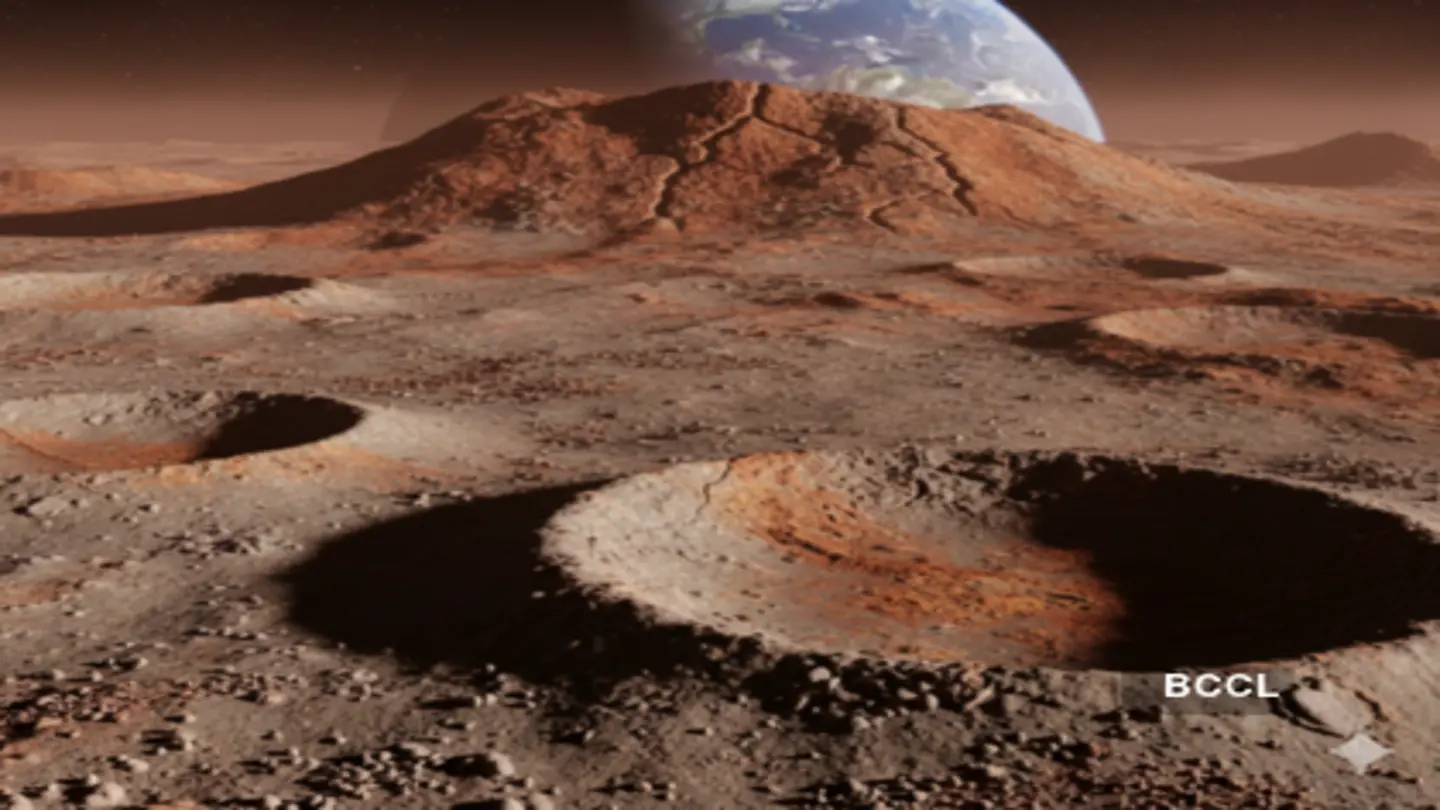
Scientists have been stunned by the discovery of haematite, a form of iron oxide (rust), at the lunar poles. This unexpected finding challenges conventional understanding of the Moon’s environment, which is known to be hydrogen-rich and devoid of significant oxygen – conditions that should inhibit the formation of rust. A new study suggests that Earth may be playing a significant role in this lunar oxidation process.
Lunar Rust: An Anomaly
The presence of haematite on the Moon, particularly concentrated at the poles, raises intriguing questions. Iron is abundant on the Moon, but its oxidation into rust requires an oxidizer, typically oxygen. The Moon’s extremely thin atmosphere, or exosphere, contains only trace amounts of oxygen. Furthermore, the solar wind, a stream of charged particles from the Sun, bombards the Moon with hydrogen, which acts as a reducer, effectively preventing oxidation. The discovery of haematite therefore presents a paradox that scientists are actively trying to resolve.
Earth’s Role in Lunar Oxidation
The study proposes that oxygen from Earth’s upper atmosphere could be transported to the Moon, contributing to the oxidation process. During certain periods of the Moon’s orbit, it passes through Earth’s magnetotail, a region of space dominated by Earth’s magnetic field. This magnetotail can shield the Moon from the solar wind, creating temporary windows where oxygen from Earth can reach the lunar surface. Over billions of years, this intermittent exposure to terrestrial oxygen could have led to the formation of the observed haematite, especially at the poles.
Another contributing factor could be water ice, which has been detected in shadowed craters at the lunar poles. While water itself doesn’t directly cause rusting, it can dissociate into hydrogen and oxygen under the influence of radiation. The hydrogen would be quickly lost to space due to the Moon’s low gravity, leaving behind oxygen that could react with the iron. However, the exact mechanisms are still being investigated.
Implications of the Discovery
This discovery has significant implications for our understanding of lunar geochemistry and the interaction between Earth and its celestial neighbor. It highlights the complex interplay of various factors, including solar wind, terrestrial oxygen, and lunar water ice, in shaping the Moon’s surface composition. Further research is needed to fully understand the formation mechanisms and distribution of haematite on the Moon. This includes analyzing lunar samples returned by future missions and developing more sophisticated models of the lunar environment.
Understanding the processes behind lunar rusting could also provide insights into the oxidation processes occurring on other airless bodies in the solar system, such as asteroids. It emphasizes the interconnectedness of planetary systems and the potential for one celestial body to influence the chemical evolution of another.
The research underscores the importance of continued lunar exploration and the value of studying the Moon as a window into the history of the solar system.
Image Source: Google | Image Credit: Respective Owner