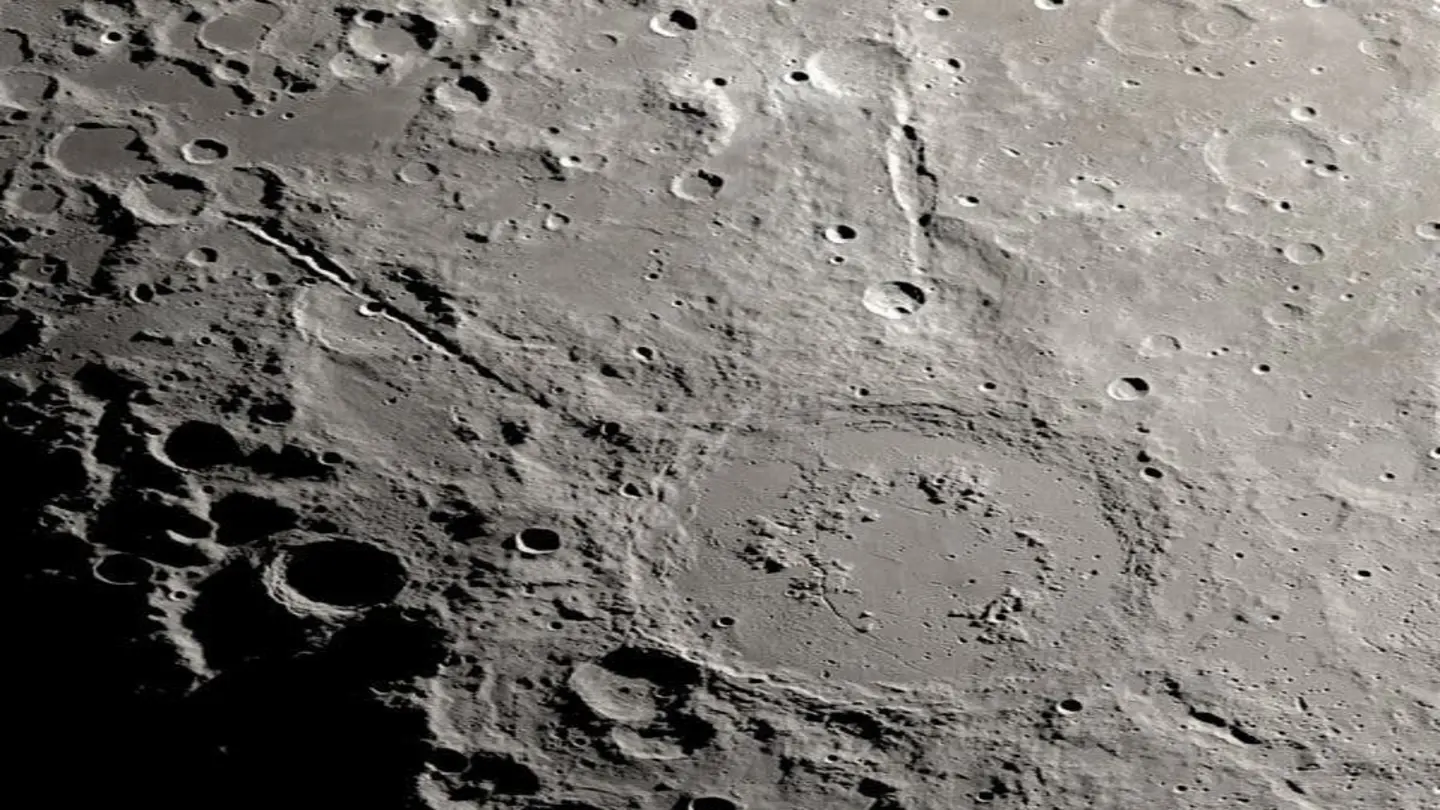
For those captivated by Earth’s celestial companion, the Moon, there’s always more to discover beyond its familiar glow. The Moon, a constant presence in our night sky, holds secrets and fascinating details that even avid skywatchers might not know. Here are seven lesser-known, interesting facts about the Moon that every selenophile (Moon lover) should know.
The Moon’s Wobbly Orbit
While often perceived as orbiting Earth in a perfect circle, the Moon’s orbit is actually elliptical. This means its distance from Earth varies, resulting in changes in its apparent size. Additionally, the Moon experiences a ‘wobble’ known as libration, allowing us to see slightly more than half of its surface over time.
Moonquakes: Lunar Tremors
Similar to earthquakes on Earth, the Moon experiences moonquakes. These tremors are generally weaker than earthquakes and are believed to be caused by tidal forces from Earth’s gravity, as well as the cooling and shrinking of the Moon’s interior.
The Moon’s Magnetic Field (or Lack Thereof)
Unlike Earth, the Moon does not have a global magnetic field. However, scientists have discovered localized magnetism in certain regions of the lunar surface. The origin of these magnetic anomalies is still a topic of research, but they are believed to be remnants of an ancient, global magnetic field that faded billions of years ago.
Water on the Moon
For a long time, scientists believed the Moon was completely dry. However, recent missions have confirmed the presence of water ice in permanently shadowed craters near the lunar poles. This discovery has significant implications for future lunar exploration, as the water ice could potentially be used as a resource for drinking water, oxygen, and rocket fuel.
The Moon’s Slow Retreat
The Moon is gradually drifting away from Earth at a rate of about 3.8 centimeters per year. This is due to tidal interactions between the Earth and Moon. As the Moon moves further away, Earth’s rotation is slowing down, resulting in slightly longer days.
Lunar Dust: A Sticky Nuisance
Lunar dust, also known as regolith, is a fine, abrasive powder that covers the Moon’s surface. It is extremely clingy and poses a challenge to lunar exploration. The dust can get into spacesuits, equipment, and even human lungs, potentially causing health problems.
The Moon’s Influence on Tides
While most people know the Moon influences Earth’s tides, the extent of its impact is often underestimated. The Moon’s gravitational pull is the primary driver of tides, causing the rise and fall of ocean waters. The Sun also plays a role, but its influence is less significant compared to the Moon.
These are just a few of the fascinating facts about the Moon. Further exploration and research will undoubtedly reveal even more secrets about our celestial neighbor, solidifying the Moon’s place as a subject of endless wonder.
Image Source: Google | Image Credit: Respective Owner