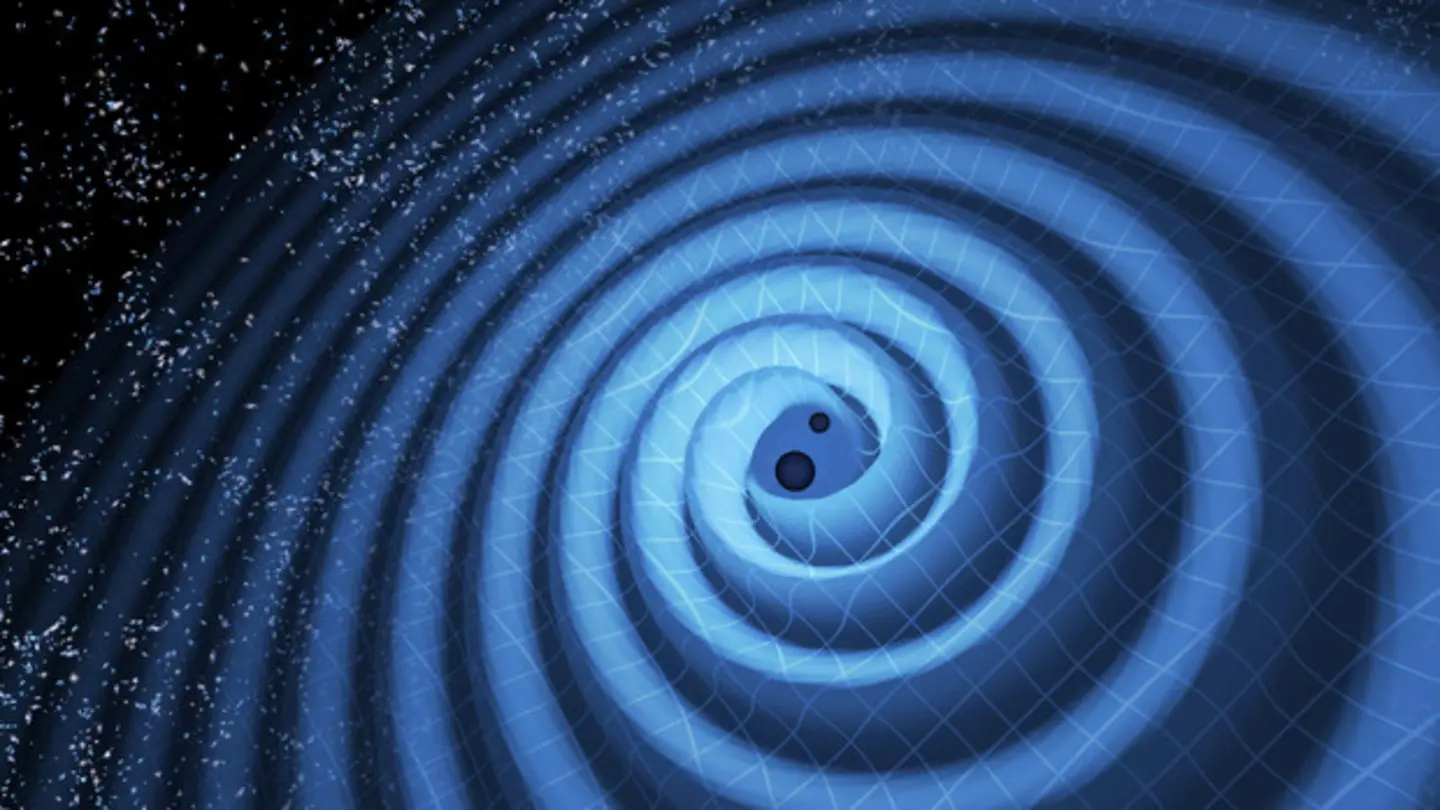
Scientists are looking to the moon as a potential site for a revolutionary observatory, aiming to detect extremely faint gravitational waves, often described as “spacetime’s faintest music.” This ambitious project leverages the moon’s unique environment to overcome limitations faced by Earth-based detectors. The lunar environment, with its relative seismic quiet and lack of atmospheric interference, offers an ideal location to capture these elusive cosmic signals.
The Challenge of Detecting Gravitational Waves
Gravitational waves, ripples in the fabric of spacetime caused by accelerating massive objects like black holes and neutron stars, were predicted by Albert Einstein over a century ago. Detecting them is a monumental challenge due to their incredibly weak interaction with matter. Earth-based detectors like LIGO (Laser Interferometer Gravitational-Wave Observatory) have successfully detected gravitational waves from relatively strong sources, but they are limited by seismic noise, human activity, and the curvature of the Earth.
The moon offers several advantages. Its seismic activity is far lower than Earth’s, reducing background noise. Furthermore, the absence of an atmosphere eliminates atmospheric disturbances that can interfere with measurements. Additionally, the far side of the moon is shielded from much of the radio interference emanating from Earth.
Lunar Observatory Design and Functionality
The proposed lunar observatory would likely consist of a network of highly sensitive detectors spread across the lunar surface. These detectors would employ various technologies, including laser interferometry, similar to LIGO, and potentially new techniques specifically adapted for the lunar environment. One concept involves using the moon itself as a giant detector, monitoring subtle changes in its shape caused by passing gravitational waves.
Such an observatory could detect gravitational waves from a wider range of sources than currently possible, including those from the very early universe. This could provide unprecedented insights into the Big Bang, the formation of galaxies, and the nature of dark matter and dark energy.
International Collaboration and Future Prospects
The realization of a lunar gravitational wave observatory would require a significant international collaboration, bringing together experts from various fields, including astronomy, physics, and engineering. The project would also necessitate advancements in lunar robotics, power generation, and data transmission.
While the challenges are substantial, the potential rewards are immense. A lunar observatory could usher in a new era of gravitational wave astronomy, providing a deeper understanding of the universe and our place within it. This endeavor aligns with broader efforts to establish a permanent human presence on the moon and utilize its resources for scientific exploration.
The concept is gaining traction within the scientific community, with preliminary studies and feasibility assessments underway. The next decade could see concrete steps towards realizing this ambitious vision, potentially revolutionizing our understanding of the cosmos.
Image Source: Google | Image Credit: Respective Owner