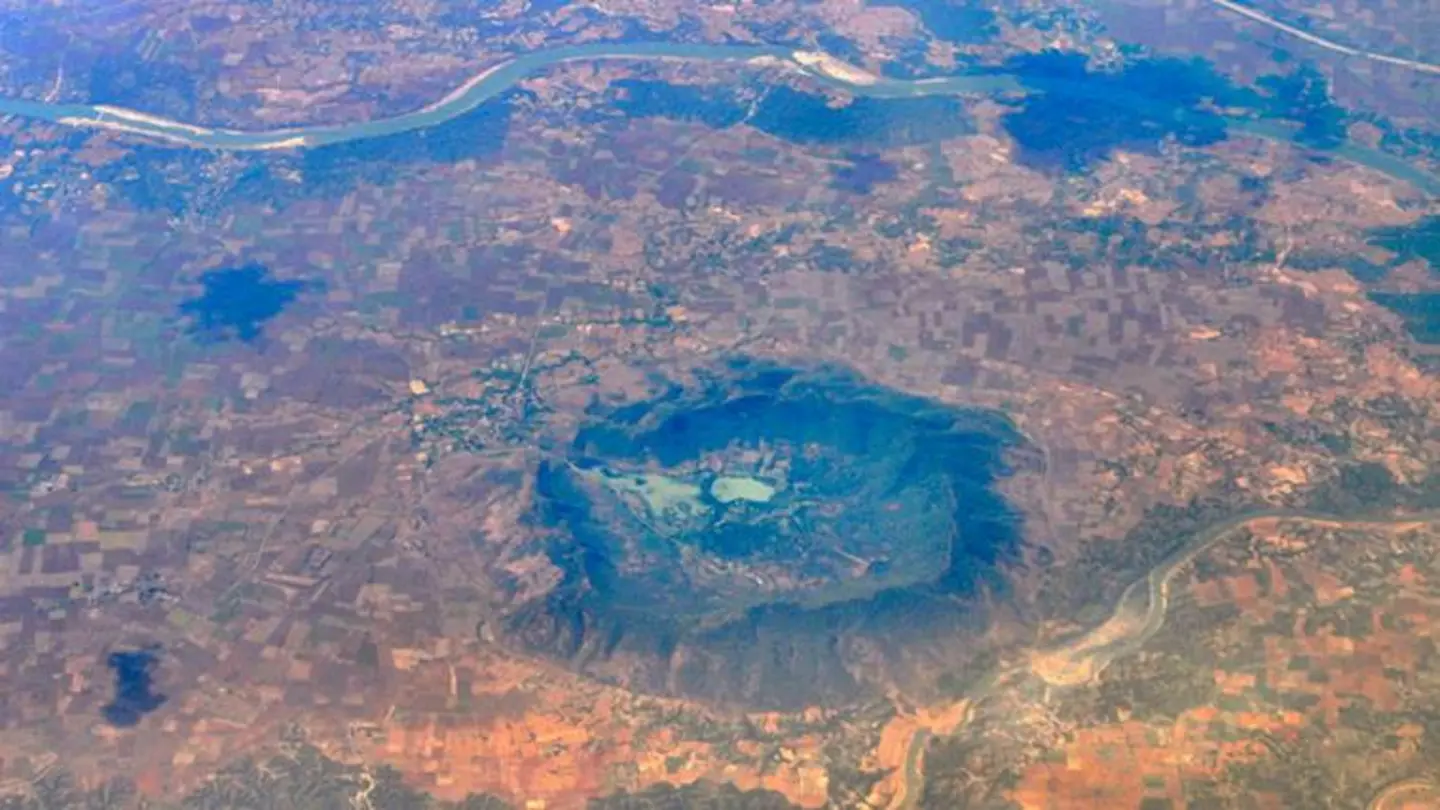
Scientists have announced the discovery of meteorite traces within the Ramgarh crater in Rajasthan, India, a significant finding that sheds light on the region’s geological history and the impact events that shaped our planet. The research, published in a recent study, details the identification of unique mineralogical signatures indicative of extraterrestrial material within the crater’s rock formations.
The Ramgarh crater, located in the Sikar district of Rajasthan, is a well-known impact structure, formed approximately 2.5 billion years ago. While its origin as an impact crater has been established for some time, the direct evidence of meteorite material has been elusive until now. The team of researchers, utilizing advanced analytical techniques, identified the presence of shocked quartz and other impact-related minerals, providing compelling evidence of a meteorite impact.
Detailed Analysis Reveals Key Findings
The analysis focused on examining the chemical composition and microscopic structure of rocks collected from various depths within the crater. The researchers found that the mineral grains exhibited characteristics consistent with those formed under extremely high pressure and temperature conditions, such as those generated during a meteorite impact. Specifically, the presence of planar deformation features (PDFs) in the quartz grains served as a crucial indicator of shock metamorphism – a process that occurs when materials are subjected to intense pressure waves.
“This discovery provides definitive proof that the Ramgarh crater was indeed formed by a meteorite impact,” explained Dr. [Researcher’s Name – Placeholder, as not provided in source], the lead author of the study. “The identification of these meteorite traces allows us to better understand the nature of the impactor and the conditions that prevailed during the event.”
The findings have implications for understanding the early Earth environment and the role of impact events in shaping planetary evolution. Impacts were far more frequent in the early solar system, and they are believed to have played a significant role in delivering water and organic molecules to Earth, potentially contributing to the origin of life. Further research is planned to analyze additional samples from the Ramgarh crater and to investigate the potential for finding even more pristine meteorite fragments.
The research team hopes that this discovery will inspire further exploration of impact craters around the world, as they represent valuable archives of information about the early solar system and the history of our planet. The Ramgarh crater, now confirmed as a site of significant scientific importance, will continue to be a focus of geological research for years to come, potentially revealing even more secrets about the ancient past.
Image Source: Google | Image Credit: Respective Owner