New research reveals that Mercury, the smallest planet in our solar system, has shrunk by about 11 kilometres since its birth and continues to contract slowly. This study offers clearer measurements of Mercury’s ongoing shrinkage, improving our understanding of the planet’s evolution.
New Findings on Mercury’s Shrinking Radius
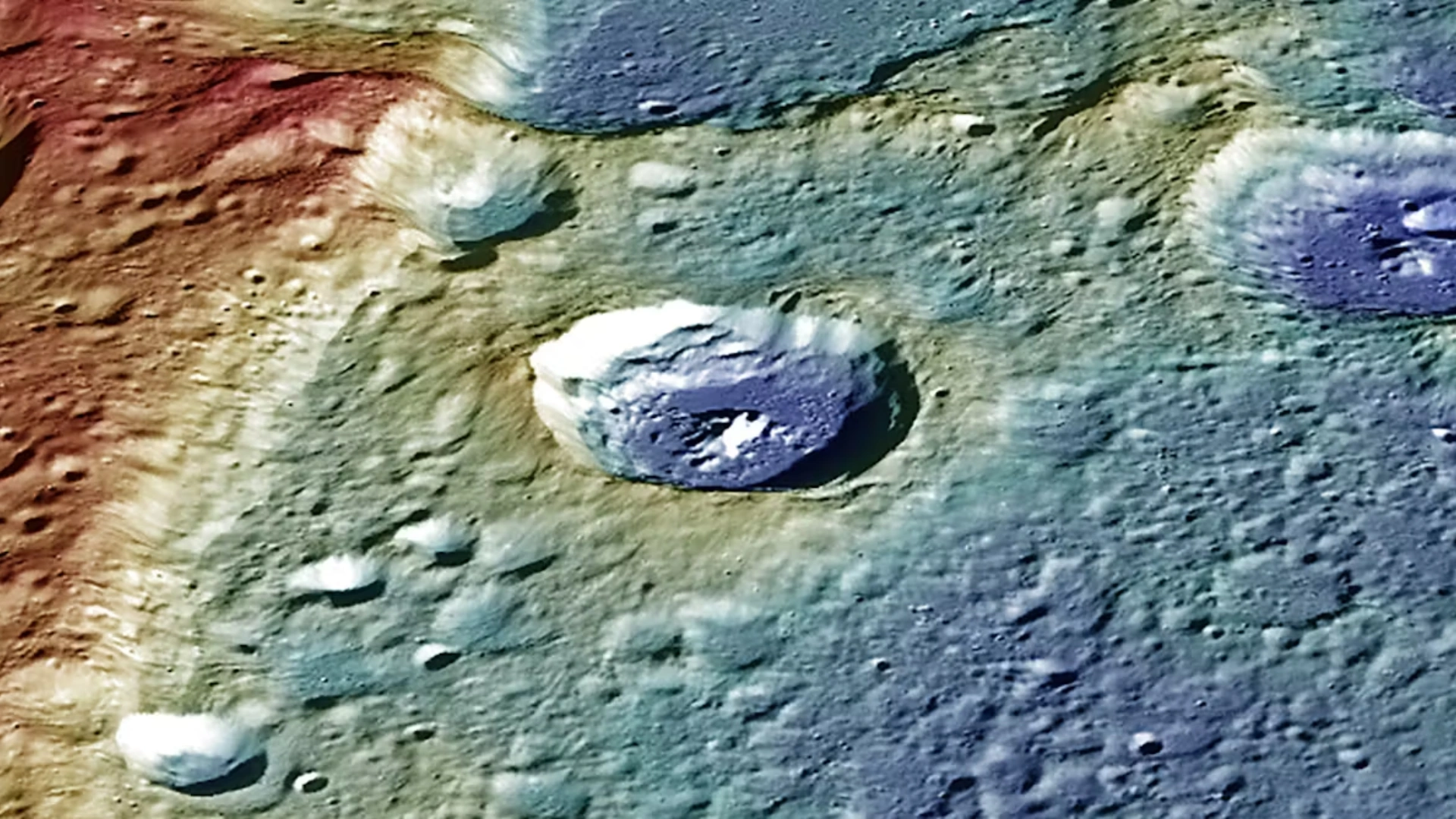
Scientists have found that Mercury’s radius has decreased by 2.7 to 5.6 kilometres. This is more precise than earlier estimates, which ranged from one to seven kilometres, creating uncertainty. The planet’s interior has been cooling, causing the rocky crust to adjust. As a result, huge thrust faults have formed, creating cliff-like scarps on its surface. Previous studies estimated shrinkage based on the heights and lengths of these faults, but results varied significantly.
A New Approach to Measuring Contraction
Researchers Stephan R. Loveless and Christian Klimczak introduced a fresh method to measure Mercury’s contraction. They focused on the largest faults within three datasets, which ranged from 100 to nearly 6,000 faults. Their approach suggested that Mercury’s shrinkage, from faulting alone, was between two to 3.5 kilometres. When other cooling processes were taken into account, the total contraction reached up to 5.6 kilometres.
Why is Mercury Shrinking?
Mercury’s shrinkage occurs because its iron-rich core loses heat more quickly than Earth’s core. As the core contracts, the crust adjusts to a smaller volume beneath, causing the planet to shrink. Since Mercury’s formation, its total diameter has reduced by nearly 11 kilometres.
Wider Implications for Planetary Science
This method could be applied to study tectonics on other rocky worlds like Mars, offering further insights into the evolution of planets over time. Researchers hope that this new understanding will help unlock more about the inner workings and history of planetary bodies in our solar system and beyond.
Image Source: Canva | Image Credit: Respective Owner