Recent observations during the powerful May 2024 geomagnetic superstorm have provided scientists with unprecedented detail regarding the process of magnetic reconnection at Earth’s magnetopause. A study published on the ESS Open Archive details findings about the diffusion region where magnetic field lines break and reconnect, specifically focusing on the role of high-density oxygen ions (O+).
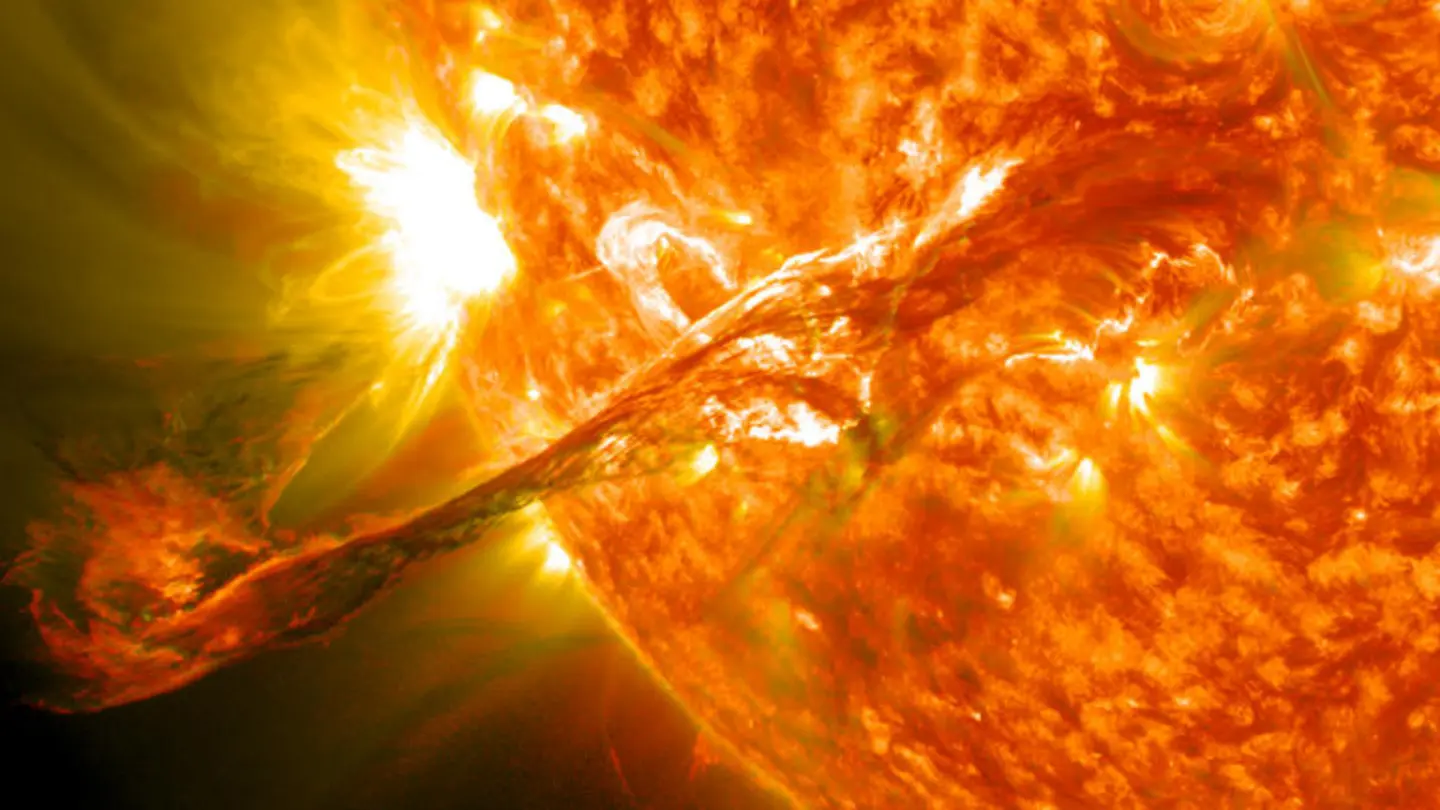
The magnetopause is the boundary between Earth’s magnetic field and the solar wind – a stream of charged particles constantly emitted by the Sun. Magnetic reconnection is a fundamental process that occurs at this boundary, releasing energy that drives space weather phenomena like auroras and geomagnetic storms. Understanding this process is crucial for predicting and mitigating the potential impacts of severe space weather on technological infrastructure.
This research centers on the ‘ion diffusion region,’ a relatively small area within the reconnection site where the normal behavior of ions is disrupted. Typically, studies of this region have focused on protons and alpha particles. However, the May 2024 superstorm presented a unique opportunity to observe the behavior of O+ ions, which are significantly more abundant in Earth’s magnetosphere than previously considered during such events. The increased density of O+ ions altered the dynamics of the diffusion region in ways not fully understood before.
Key Findings
The study reveals that the high concentration of O+ ions significantly influences the electric and magnetic fields within the diffusion region. These ions, being heavier than protons, respond differently to the changing fields, leading to a more complex and structured environment. Researchers found evidence of enhanced turbulence and wave activity associated with the O+ ions, suggesting a more efficient energy transfer mechanism than previously thought.
Data was collected using a variety of instruments, allowing for a multi-point analysis of the reconnection event. This comprehensive approach enabled scientists to map the three-dimensional structure of the diffusion region and track the movement of ions with greater precision. The findings challenge some existing models of magnetic reconnection, highlighting the importance of including O+ ion dynamics for accurate simulations.
The May 2024 superstorm, one of the most intense in recent years, provided an ideal natural laboratory for this research. The storm’s strength created a highly disturbed magnetosphere, making the reconnection process more pronounced and easier to observe. The researchers emphasize that continued monitoring of space weather events, coupled with advanced modeling techniques, is essential for improving our ability to forecast and protect against the disruptive effects of geomagnetic storms. Future research will focus on quantifying the impact of O+ ions on the overall reconnection rate and the subsequent evolution of the magnetosphere. This includes investigating how the observed changes affect the generation of auroral displays and the potential for damage to satellites and power grids.
The study’s authors believe these findings have broad implications for our understanding of magnetic reconnection not only at Earth but also at other planets with magnetospheres, such as Jupiter and Saturn. The presence and density of different ion species can vary significantly across the solar system, and this research provides a framework for investigating their influence on reconnection dynamics in diverse space environments.
Image Source: Google | Image Credit: Respective Owner