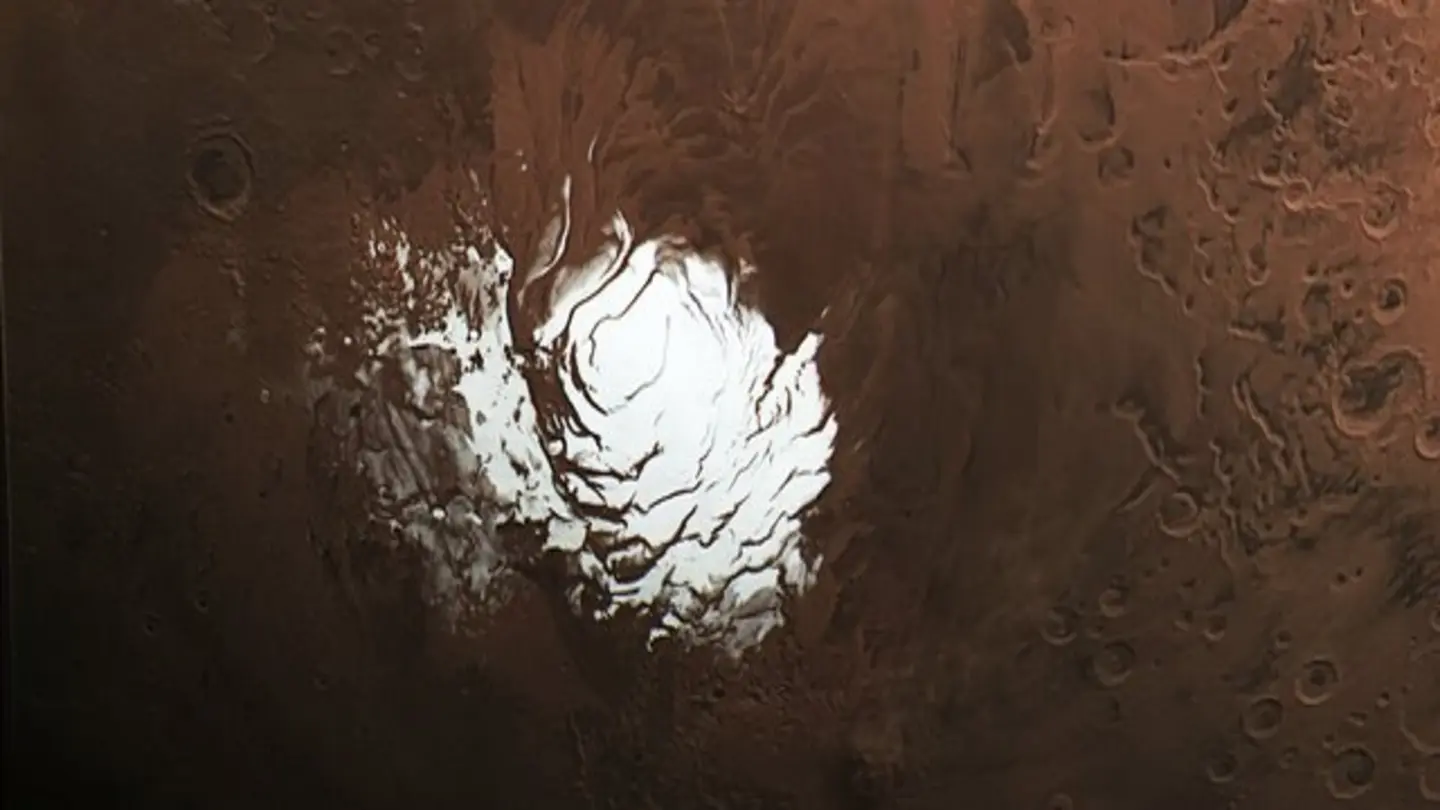
NASA’s Mars Reconnaissance Orbiter (MRO) has provided compelling new evidence supporting the existence of a subglacial lake of briny water beneath the Red Planet’s south polar region. This discovery, meticulously analyzed from years of radar data collected by the MRO, sheds light on the potential for liquid water to persist in extremely cold environments on Mars, offering valuable insights into the planet’s past and present habitability.
The initial findings, published several years ago, hinted at a bright radar reflection beneath the Martian ice cap, interpreted as a possible subglacial lake. However, the scientific community debated the interpretation, suggesting that the bright reflection could be due to other materials, such as mineral deposits or frozen carbon dioxide. The new research, leveraging a more extensive dataset and advanced analysis techniques, strengthens the case for liquid water.
Refining the Radar Data
The team of researchers, led by scientists at NASA’s Jet Propulsion Laboratory (JPL), meticulously processed and analyzed radar data collected by MRO’s Shallow Radar (SHARAD) instrument over a period of years. SHARAD transmits radio waves that can penetrate the Martian surface and ice, reflecting back information about subsurface features. By analyzing the strength and timing of these reflections, scientists can infer the composition and structure of the materials below.
The updated analysis identified a more extensive and consistent pattern of bright radar reflections in the same region, spanning a larger area than previously detected. Crucially, the characteristics of the reflections are consistent with those expected from liquid water, considering the extreme temperatures and pressures at that depth. The water is presumed to be briny – a highly concentrated salt solution – which lowers its freezing point, allowing it to remain liquid even in the frigid Martian environment.
Implications for Martian Habitability
The discovery of a potential subglacial lake has profound implications for the search for life beyond Earth. While the extreme salinity and cold temperatures would pose significant challenges for life, some organisms on Earth, known as extremophiles, thrive in similarly harsh conditions. The presence of liquid water, even if briny, suggests that subsurface environments on Mars could potentially harbor microbial life.
Future missions to Mars could target these subsurface regions to directly investigate the composition and potential habitability of the briny water lake. Such investigations would require advanced drilling technologies capable of penetrating the thick ice cap and collecting samples without contaminating the pristine environment.
Unraveling the Martian Mystery
While the evidence for a subglacial lake is compelling, further research is needed to definitively confirm its existence and characterize its properties. Future studies could involve developing more sophisticated radar models, analyzing data from other Martian orbiters, and potentially even deploying robotic probes to directly explore the region. The ongoing exploration of Mars continues to unveil its secrets, bringing us closer to understanding the planet’s past, present, and potential for life.
Image Source: Google | Image Credit: Respective Owner