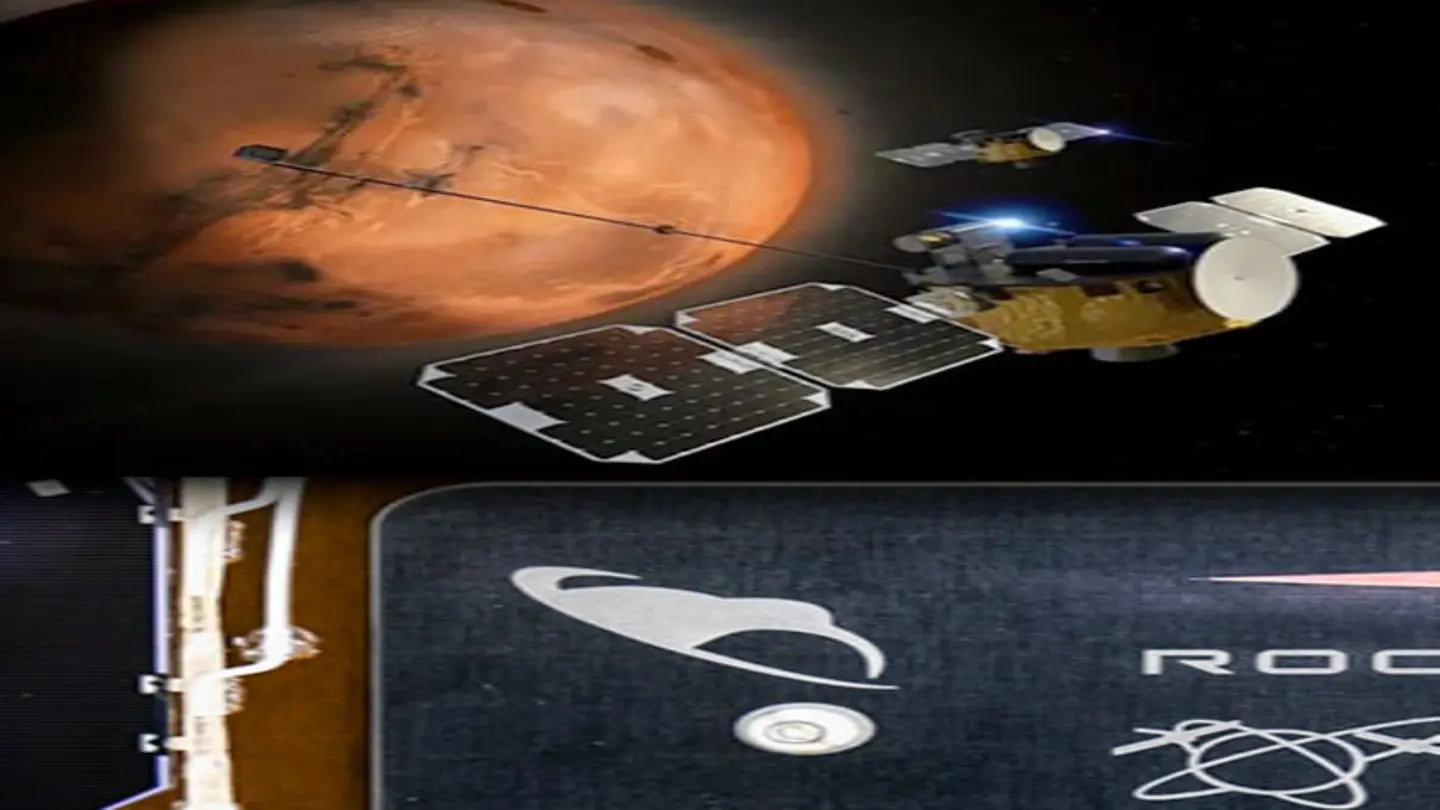
Geneva, Switzerland – A collaborative research effort utilizing data from the Mars Express and MAVEN spacecraft has yielded new insights into the complex and dynamic nature of Mars’ ionosphere. Published in the ESS Open Archive, the study focuses on the spatio-temporal variability of topside layers – the uppermost region of the ionosphere – revealing a more intricate and fluctuating environment than previously understood. Researchers analyzed near-simultaneous observations from these two missions, capitalizing on their orbital conjunctions to gain a more comprehensive picture of the ionosphere’s behavior.
The ionosphere, a region of the upper atmosphere, is significantly influenced by solar activity and the interaction of solar wind with the Martian atmosphere. It plays a crucial role in radio wave propagation, impacting communication systems on and around the planet. Previous studies have often relied on data from a single spacecraft, limiting the ability to fully characterize the spatial and temporal variations.
Understanding Martian Atmospheric Dynamics
This new research demonstrates the value of combining data from multiple spacecraft. By analyzing the simultaneous measurements of the Mars Express and MAVEN, scientists were able to identify distinct layers within the topside ionosphere and track their evolution over time. The study highlights the significant variability in these layers, influenced by factors such as solar flares, coronal mass ejections, and the planet’s magnetic field. The findings suggest that the ionosphere is not a static entity but rather a highly responsive system reacting to a constant barrage of external influences.
The data reveals that the ionosphere’s structure and composition can change dramatically within relatively short periods. Specific regions exhibit distinct characteristics, influenced by localized variations in solar wind density and velocity. The research team employed sophisticated data processing techniques to remove instrumental noise and accurately extract the relevant ionospheric signals. This meticulous approach ensured the reliability and validity of the results.
The implications of this research extend beyond fundamental scientific understanding. Improved knowledge of the Martian ionosphere is essential for planning future robotic missions and, potentially, human exploration. Accurate modeling of the ionosphere is critical for predicting radio signal interference and ensuring reliable communication with spacecraft operating on the Martian surface. Furthermore, the study contributes to our broader understanding of planetary atmospheres and the processes that shape them. The research team plans to continue analyzing the data and exploring the underlying physical mechanisms driving the observed variability. Future work will focus on incorporating additional data sources and developing more detailed models of the Martian ionosphere.
Image Source: Google | Image Credit: Respective Owner