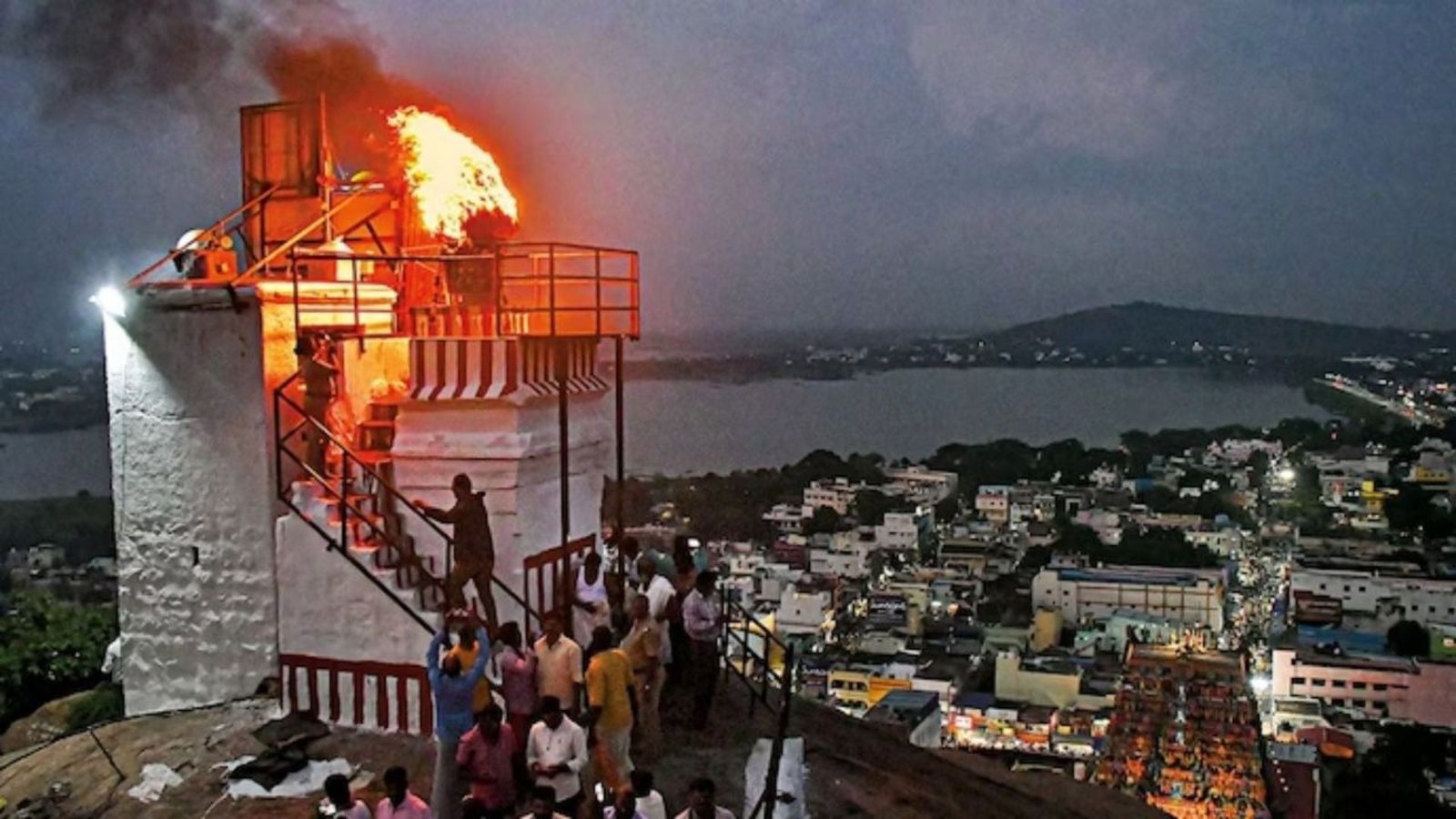
The Madras High Court has affirmed an order requiring state authorities to acknowledge an “imaginary ghost” as a necessary party in proceedings concerning the lighting of lamps in a Tamil Nadu temple. The peculiar case stems from a dispute over who is responsible for ensuring the continued illumination of the premises in the Arulmigu Thaanthonreeswarar Temple in Senganoor, Tiruchirappalli district.
Justice S.M. Subramaniyam, while dismissing a plea from the Hindu Religious and Charitable Endowments (HR&CE) Department challenging a lower court’s directive, stated that the department failed to demonstrate sufficient grounds to overturn the original order. The court’s ruling effectively upholds the inclusion of the ‘ghost,’ identified as Madhoruban, in the legal proceedings.
The initial order arose from a petition filed by devotees who claimed Madhoruban, a historically recognised individual associated with the temple, was being unjustly excluded from decisions impacting the sacred space. They argued that traditional customs necessitate his representation, even symbolically, when altering longstanding practices like lamp lighting.
The HR&CE Department contested this claim, asserting that acknowledging a non-existent entity would be legally unsound and create an administrative nightmare. They argued that Madhoruban was a figure from the past and had no standing in modern legal contexts. However, Justice Subramaniyam found their arguments unconvincing, particularly given the department’s lack of proactive engagement with temple traditions and customs throughout the years.
Historical Context and Court Reasoning
The judgment delved into the history of the temple, citing ancient records that validated the importance of Madhoruban in its affairs. Court records indicate Madhoruban was a responsible person for maintaining the temple’s lamps centuries ago. The judge highlighted the department’s negligence in upholding these traditions and its failure to provide compelling evidence to disprove the devotee’s claims of the continuous presence of Madhoruban.
Justice Subramaniyam emphasized the need for the HR&CE Department to demonstrate respect for religious sentiments and long-held beliefs. The court observed that a blanket dismissal of traditional practices without proper investigation or consideration could erode public trust and lead to further disputes. The judge underscored that the court is bound to uphold not only the letter of the law but also the spirit of religious customs.
The court specifically directed the HR&CE Department to either address the concerns raised by the devotees regarding Madhoruban’s representation or provide a detailed justification for its continued exclusion. The department’s inability to do so ultimately led to the dismissal of its appeal. The judgment also makes a pointed recommendation about better documentation and preservation of the temple’s history and customs by the HR&CE Department to prevent similar issues from arising in the future. This case has garnered significant attention, highlighting the intersection of law, religion, and tradition in India.
Furthermore, the court emphasized the need for a harmonious balance between administrative efficiency and the reverence owed to centuries-old religious practices. The department was urged to adopt a more collaborative approach, engaging with devotees and temple stakeholders to resolve disputes in a respectful and transparent manner.
Image Source: Google | Image Credit: Respective Owner