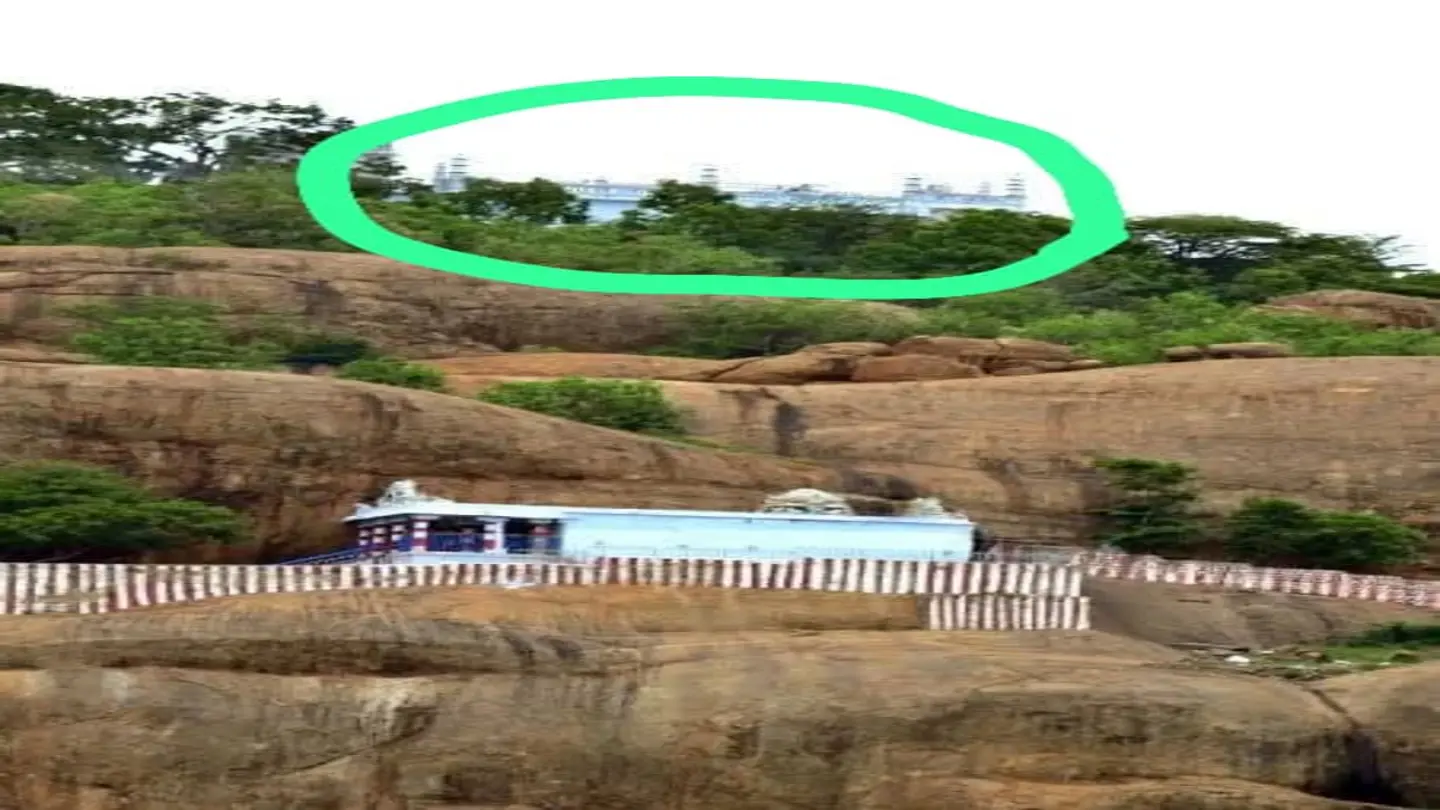
The Madras High Court has expressed its surprise and concern regarding the absence of a formal complaint lodged against a Dargah situated on the Thiruparankundram hill, despite accusations of encroachment and illegal construction. The court was hearing petitions concerning alleged illegal activities and expansion of the Dargah onto land traditionally associated with the Thiruparankundram Murugan Temple. The issue revolves around claims that the Dargah is expanding its premises, potentially trespassing on land belonging to the temple and disrupting the sanctity of the hill.
During the hearing, Justice S.S. Sundar questioned the authorities as to why a trespass complaint hadn’t been filed, especially given the ongoing disputes and the visible expansion. The Judge specifically enquired about the inaction, suggesting that if there was no formal complaint, it indicated a lack of seriousness in addressing the grievances. The court emphasized the need for the police to take appropriate action if evidence of encroachment exists. This line of questioning suggests a dissatisfaction with how the situation has been handled thus far by local authorities.
Background of the Dispute
The Thiruparankundram hill is a significant religious site, revered by both Hindu and Muslim communities. The Murugan Temple, dedicated to Lord Murugan, is a prominent landmark, attracting devotees from across Tamil Nadu and beyond. The Dargah, believed to be the resting place of a Sufi saint, has coexisted on the hill for centuries. However, recent years have witnessed escalating tensions due to the Dargah’s alleged expansion, leading to concerns among temple devotees and administrators.
Petitioners have argued that the Dargah’s expansion is not only encroaching upon temple land but also causing damage to the natural environment of the hill. They have submitted photographic evidence and survey reports to support their claims. Temple authorities have previously voiced their concerns to the local administration, requesting measures to prevent further encroachment, but allege that no significant action has been taken. The lack of response is at the core of why the matter is now before the High Court.
The court has directed the authorities, including the police and the district administration, to file detailed reports outlining the steps taken to investigate the allegations and address the concerns raised by the petitioners. It has also requested clarification on why a formal complaint hasn’t been registered, and what criteria were used to determine the legitimacy of claims regarding encroachment. The next hearing is scheduled for [Date – information not provided in source, so omission is correct] where the authorities are expected to present their findings. The High Court’s intervention highlights the sensitivity of the issue and the importance of resolving the dispute in a fair and transparent manner, respecting the religious sentiments of all communities involved.
The court’s focus on the absence of a formal complaint underscores a key legal principle: documentation and official reports are crucial for initiating investigations and taking appropriate legal action. The direction to file detailed reports signals the court’s intention to thoroughly examine the matter and hold the authorities accountable for their responses.
Image Source: Google | Image Credit: Respective Owner