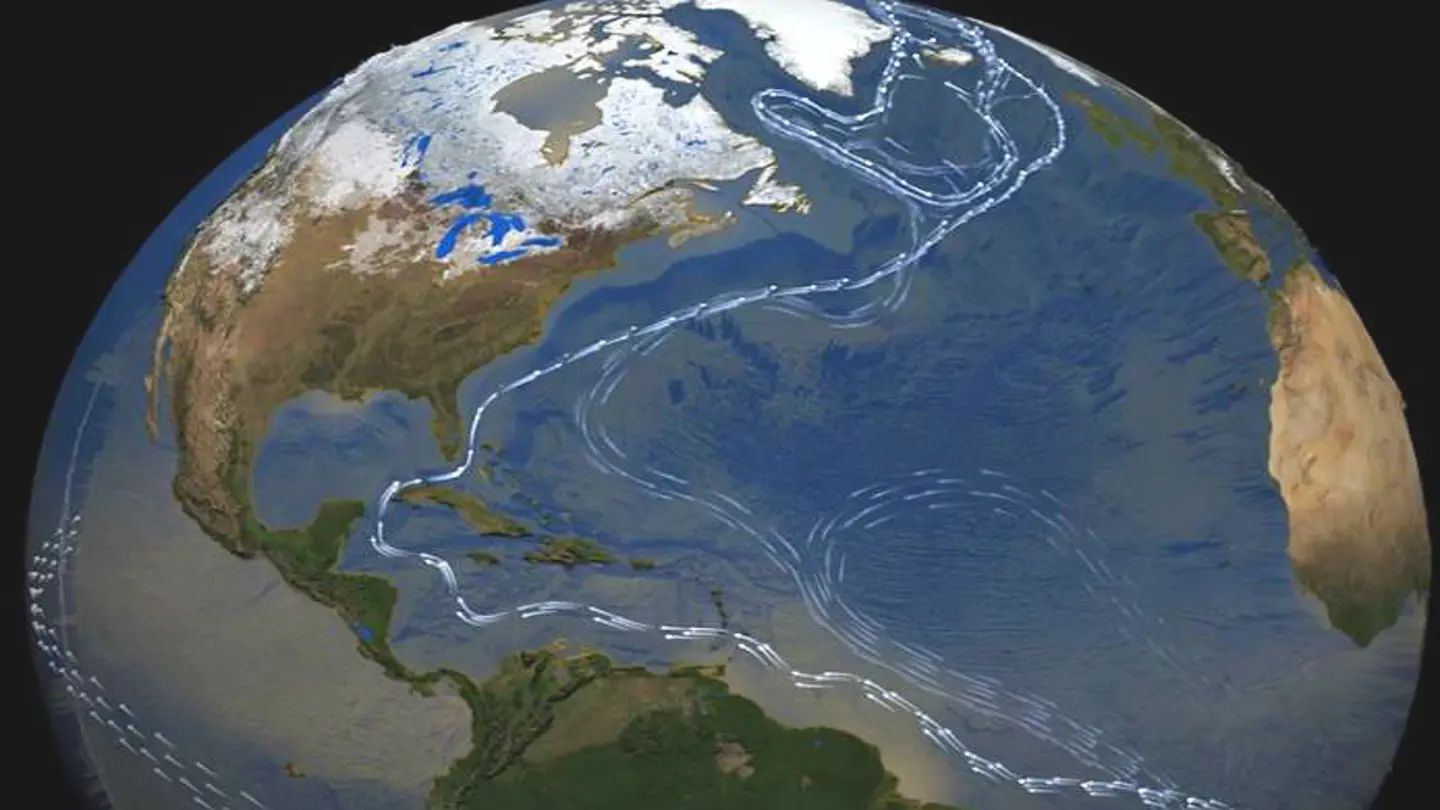
Recent research leveraged machine learning to decode ocean mixed layer dynamics, offering new insights into climate systems. The study, published in the ESS Open Archive, utilized data from NASA’s Surface Water Ocean Topography (SWOT) mission to model complex oceanic processes. By training algorithms on vast datasets, scientists identified patterns in water mass distribution that traditional methods might overlook. This advancement aids in tracking heat absorption and carbon cycling, critical for understanding climate change impacts.
The SWOT mission, a joint project between NASA and CNES, provides high-resolution measurements of ocean surfaces. The machine learning model processed this data to reconstruct variability in the mixed layer—the upper ocean layer where temperature and salinity mix. Such variability influences weather patterns and marine ecosystems. The researchers emphasized that their approach reduces computational time compared to conventional numerical models.
Methodology Breakthrough
Traditional oceanography relies on physical equations to simulate fluid movements. However, these models are computationally intensive and may miss subtle interactions. The new method combines SWOT’s spatial data with neural networks, enabling faster, more granular analysis. Researchers trained the model on historical SWOT data, allowing it to predict mixed layer depth and composition under varying conditions. Validation against field measurements confirmed the model’s accuracy, suggesting it could become a standard tool for oceanography.
One key finding was the model’s ability to distinguish between natural variability and long-term climate trends. Ocean mixing rates, often assumed stable, were shown to fluctuate unpredictably. This has implications for climate forecasting, as accurate mixing data is essential for predicting sea-level rise and ocean acidification. The team plans to apply the technique to other variables, such as salinity and temperature gradients.
Collaboration between data scientists and marine researchers was pivotal. The study involved institutions from the U.S., France, and Germany, highlighting interdisciplinary innovation. Open-source code and datasets ensure reproducibility, fostering further research. The ESS Open Archive publication underscores global efforts to democratize climate science tools.
While promising, challenges remain. Machine learning models require high-quality input data, which SWOT provides, but gaps in coverage limit scope. Future missions aiming for higher resolution could enhance the model’s predictive power. Skeptics argue that over-reliance on algorithms might obscure physical understanding. However, proponents view it as complementary to traditional methods, accelerating discoveries in a time-sensitive field.
Applications extend beyond climate science. Fisheries management could benefit from improved mixing layer predictions, as nutrient availability affects marine life. Coastal communities might use the data for flood risk assessment. The study’s success also paves the way for integrating AI into other environmental domains, from forest monitoring to atmospheric studies.
This research exemplifies how emerging technologies solve longstanding scientific puzzles. By merging SWOT’s observational capabilities with machine learning’s analytical power, the team has unlocked a faster, more precise way to study Earth’s oceans. As climate change accelerates, such tools are vital for informed policy-making and conservation strategies. The work not only advances scientific knowledge but also demonstrates the transformative potential of AI in tackling global challenges.
Readers interested in the technical details can access the full study via the ESS Open Archive link. Meanwhile, the implications of this research are far-reaching, offering a blueprint for future Earth observation missions employing AI. The intersection of satellite data and machine learning marks a new era in environmental science, where predictive accuracy and efficiency are paramount.
Image Source: Google | Image Credit: Respective Owner