A new study by the Indian Institute of Astrophysics (IIA) has revealed a connection between lithium-rich red giant stars and their enhanced helium abundance. This research sheds light on the evolutionary processes of these peculiar stars and offers insights into the nucleosynthesis that occurs within them.
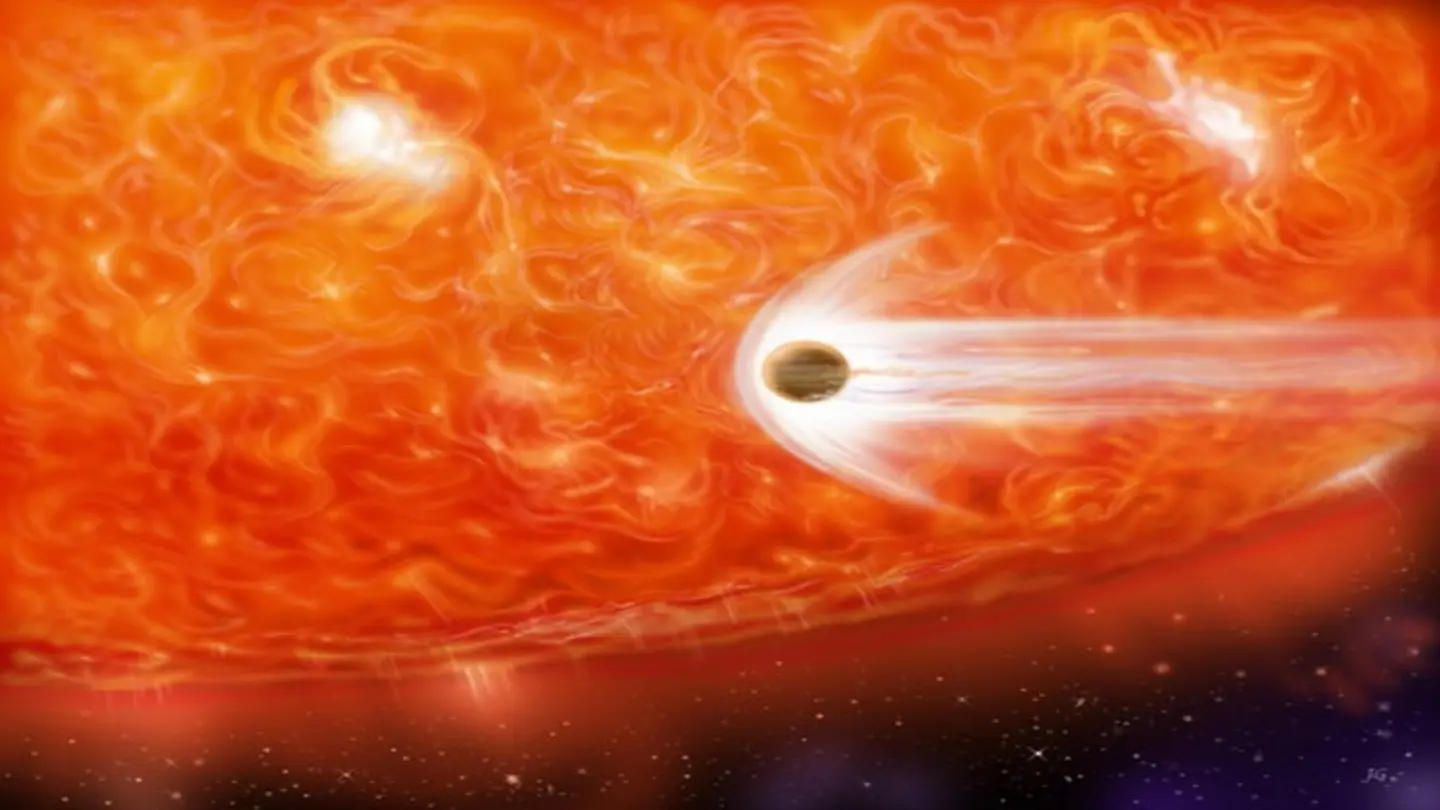
Red giant stars are evolved stars that have exhausted the hydrogen fuel in their cores and have expanded significantly. Some red giants exhibit unusually high levels of lithium, an element that is typically destroyed in stellar interiors. The origin of this lithium enhancement has been a long-standing mystery in astrophysics.
The IIA Study
The IIA study, published in a leading astronomy journal, focused on a sample of lithium-rich red giants and analyzed their atmospheric compositions. The researchers found a strong correlation between lithium abundance and helium abundance in these stars. Specifically, stars with higher lithium levels also tended to have higher helium levels.
“This correlation suggests that the lithium enhancement in these red giants is related to the mixing of material from the stellar interior to the surface,” explained Dr. Anita Iyer, the lead author of the study. “During the red giant phase, stars undergo complex mixing processes that can bring elements synthesized in the core to the surface layers.”
The researchers propose that the enhanced helium abundance is a result of hydrogen burning in the star’s interior. As hydrogen is converted to helium, some of the helium is mixed to the surface along with lithium produced through a specific nuclear reaction known as the Cameron-Fowler mechanism. This mechanism involves the capture of a helium-3 nucleus by a beryllium-7 nucleus, resulting in the formation of lithium-7.
The study also found that the lithium-rich red giants tend to be more massive than typical red giants. This suggests that the mass of the star plays a role in the mixing processes that lead to lithium enhancement. More massive stars have hotter cores and more vigorous mixing, which can facilitate the transport of elements from the interior to the surface.
The findings of the IIA study provide valuable constraints on the models of stellar evolution and nucleosynthesis. By understanding the origin of lithium enhancement in red giants, astronomers can gain a better understanding of the processes that shape the chemical composition of the universe. Future research will focus on studying a larger sample of lithium-rich red giants and using more sophisticated models to simulate the mixing processes in these stars.
The IIA’s work emphasizes the importance of studying peculiar stars to probe the inner workings of stellar evolution. These stars often exhibit extreme properties that challenge our understanding of stellar physics and provide valuable clues about the processes that occur in stellar interiors.
Image Source: Google | Image Credit: Respective Owner