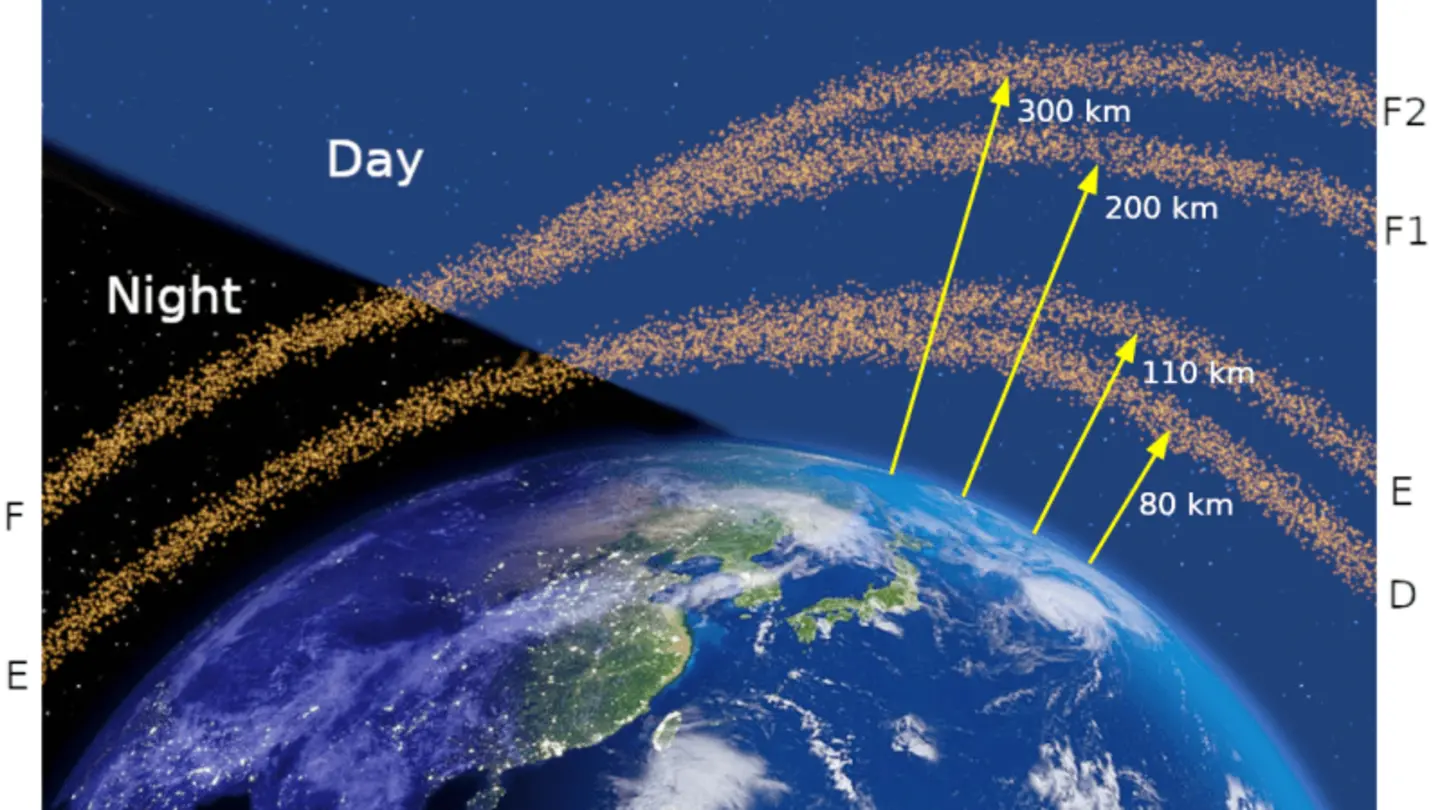
A groundbreaking study utilizing novel lidar observations has uncovered details about the dynamic layers within Earth’s upper atmosphere, specifically the region between 75 and 150 kilometers. Published in the ESS Open Archive, the research details the discovery of Aerosol Optical (AO) and Strong Aerosol Optical (SAO) layers within the Thin Ionized Neutral Atmosphere (TINa), achieved through the first comprehensive climatology of this atmospheric portion.
The significance of these findings rests on the unveiled connections between these TINa layers and various atmospheric processes. Researchers demonstrate correlations between the layers’ characteristics and the presence of metallic ions, suggesting a source tied to meteoric dust. The study posits that ablation of meteors entering the atmosphere provides a significant source of these metallic ions, and consequently, contributes to the formation and behavior of the AO and SAO layers.
Wave and Eddy Transport Mechanisms
Furthermore, the lidar data indicates a crucial role for wave and eddy transport mechanisms in shaping these atmospheric features. Atmospheric waves, generated by disturbances in the lower atmosphere, and eddies, swirling masses of air, appear to be responsible for both the creation and the distribution of aerosols at these altitudes. Understanding these transport processes is vital for accurately modeling the upper atmosphere’s response to changes originating at lower levels.
The lidar system used in this research allowed for detailed observations of the scattering of laser light by particles in the atmosphere. By analyzing the intensity and polarization of the backscattered light, scientists could determine the presence, altitude, and optical properties of the AO and SAO layers. This represents a significant advancement over previous observational techniques, which provided only limited information about these complex atmospheric structures.
Previous studies have hinted at the existence of these layers, but this research provides the first solid, climatological evidence, based on extended observations. The findings challenge some existing models of the upper atmosphere, emphasizing the need for improved representations of aerosol formation, metallic ion chemistry, and atmospheric transport processes. The varying concentrations and distributions of these layers demonstrate the inherent complexity of the region.
The implications of this research are far-reaching. The upper atmosphere plays a vital role in the global atmospheric system, impacting space weather, satellite drag, and even climate patterns. By gaining a better understanding of the TINa layers and their associated phenomena, scientists can improve their ability to predict and mitigate potential impacts on technological infrastructure and the environment. Future research will likely focus on refined modelling techniques that incorporate these newly observed interactions.
The study underscores the importance of continued atmospheric research, employing cutting-edge technologies like lidar to probe the mysteries of the upper atmosphere and improve our understanding of the Earth system as a whole. This finding opens the door for deeper investigation into the specific composition of the metallic ions and the precise mechanisms behind their influence on atmospheric dynamics.
Image Source: Google | Image Credit: Respective Owner