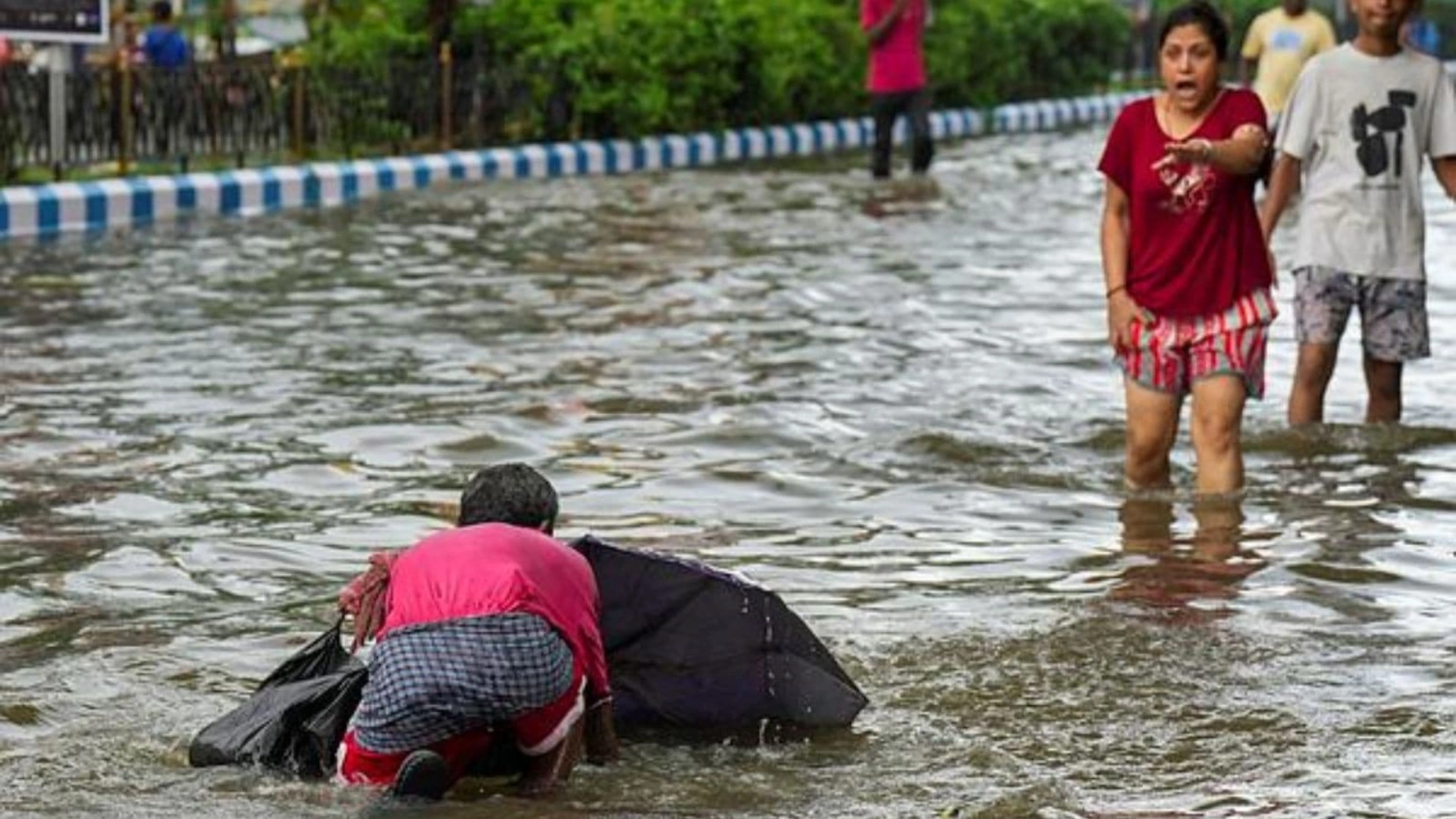
Kolkata experienced its third-highest single-day rainfall since 1978, prompting questions about whether it was a cloudburst. The intense downpour caused widespread waterlogging, traffic disruptions, and general chaos across the city. The India Meteorological Department (IMD) has addressed the queries, providing data and explanations regarding the rainfall event.
Rainfall Statistics
According to the IMD, the Alipore observatory recorded a staggering 143.2 mm of rainfall within a 24-hour period. This significant amount places it as the third-highest single-day rainfall recorded in Kolkata since 1978. The highest rainfall recorded was 167.9 mm on September 15, 2007, followed by 154.6 mm on August 4, 1999. The recent rainfall event has brought renewed focus on the city’s vulnerability to extreme weather conditions.
Was it a Cloudburst?
Following the intense rainfall, many residents speculated whether Kolkata had experienced a cloudburst. The IMD clarified that a cloudburst is typically defined as rainfall exceeding 100 mm in one hour within a specific geographical region, usually around 20-30 square kilometers. While Kolkata witnessed heavy rainfall, it did not technically qualify as a cloudburst according to the IMD’s criteria, as the rainfall was distributed over a longer period.
The IMD attributed the heavy rainfall to a combination of factors, including a trough of low pressure extending from northwest Uttar Pradesh to Gangetic West Bengal, and strong moisture incursion from the Bay of Bengal. These conditions created an environment conducive to intense convective activity, resulting in the heavy downpour.
Impact and Response
The heavy rainfall led to significant waterlogging in several parts of Kolkata, disrupting normal life. Many roads were submerged, causing traffic jams and delaying commutes. Local authorities were deployed to manage the situation, pumping out water from affected areas and providing assistance to residents. The Kolkata Municipal Corporation (KMC) worked to clear drainage systems and restore normalcy.
The IMD has forecast more rainfall in the coming days, albeit not as intense as the recent event. The authorities have issued advisories, urging residents to take precautions and avoid unnecessary travel during periods of heavy rainfall. The focus remains on managing waterlogging and ensuring the safety of citizens.
The recent extreme weather event serves as a reminder of the increasing frequency and intensity of rainfall. Climate change is expected to exacerbate these trends, posing significant challenges for urban areas like Kolkata. Adaptation measures, including improved drainage infrastructure and better weather forecasting systems, are essential to mitigate the impacts of future extreme weather events.
The event has highlighted the need for long-term strategies to address urban flooding and climate resilience. The city’s infrastructure needs significant upgrades to cope with increasing rainfall intensity, ensuring that Kolkata is better prepared for future weather-related challenges.
Image Source: Google | Image Credit: Respective Owner