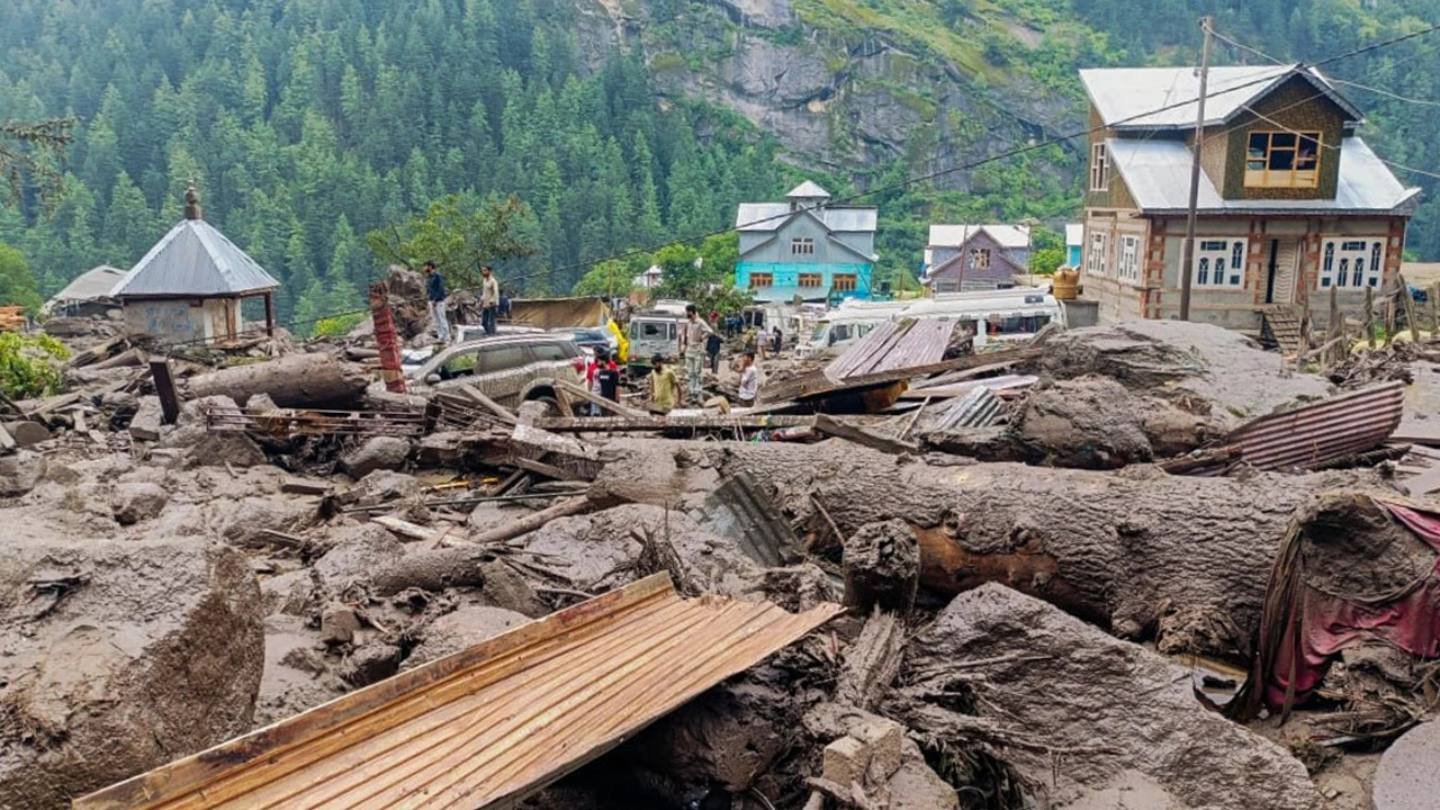
Kishtwar (J&K): The devastating cloudburst that struck Chasoti village in Kishtwar on August 14 has left at least 65 people dead and 32 missing, exposing deep gaps in disaster preparedness for the annual Machail Mata Yatra. The incident has sparked urgent questions over ignored weather warnings, poor infrastructure, and the absence of safety planning for one of Jammu and Kashmir’s biggest religious pilgrimages.
Pilgrimage Turned Into Tragedy
Chasoti, the last motorable point on the way to the Machail Mata temple, serves as the base for nearly 3 lakh pilgrims every year. But when heavy rains triggered flash floods, the force of water destroyed 16 houses, three temples, four water mills, a bridge, vehicles, and even a market and community kitchen set up for pilgrims.
The disaster occurred despite repeated alerts. Locals say flooding had damaged roads weeks earlier, raising doubts about whether the yatra should proceed. A cloudburst had even struck a day before the pilgrimage began, briefly halting it, but the yatra resumed without stronger precautions.
Political Reactions and Accountability
J&K Chief Minister Omar Abdullah admitted that the government should be held accountable, questioning whether more could have been done to prevent loss of life. Congress leader Tariq Hameed Karra was more direct, criticizing the decision to reopen the yatra after initial warnings and pointing to the lack of a registration system for pilgrims.
Experts also flagged systemic failures. Parineeta, of the South Asia Network on Dams, Rivers and People (SANDRP), highlighted that the Paddar valley has a long history of flash floods and landslides, yet no risk assessment was conducted during the peak monsoon season.
Infrastructure and Environmental Gaps
The pilgrimage route, particularly the Gulabgarh–Chasoti road, remains in poor condition and has not been upgraded despite the rising influx of devotees. Critics argue that the government has ignored both infrastructure needs and ecological sensitivities, with unchecked tourism and hydropower projects adding to the region’s fragility.
J&K Chief Secretary Atal Dulloo admitted that the state lacks sufficient facilities to support the growing yatra and stressed the need to cap pilgrim numbers and expand medical, security, and shelter services along the route.
Rescue and Relief
Rescue operations involved the Army, NDRF, SDRF, and local volunteers, with over 300 personnel deployed. Relief measures announced include ₹2 lakh compensation for the families of the dead, ₹1 lakh for the severely injured, and financial aid for those whose homes were destroyed. NGOs are also stepping in to support the displaced.
Lessons for the Future
The Kishtwar cloudburst has underscored the urgent need for a structured disaster management plan for the Machail Mata Yatra. Experts and locals have called for:
- A mandatory pilgrim registration system.
- Real-time weather monitoring and strict suspension of the yatra during high-risk periods.
- Road and infrastructure upgrades, with proper shelters and medical facilities.
- Locally stationed rescue teams and regular emergency drills.
- A sustainable pilgrim cap based on the region’s capacity.
As prayers continue at the Machail Mata temple, survivors and families of victims are demanding not just relief but also long-term safeguards. For the lakhs of devotees who visit every year, faith in the goddess remains strong, but their safety now depends on foresight, accountability, and respect for the fragile Himalayan ecosystem.
Image Source: Google | Image Credit: Respective Owner