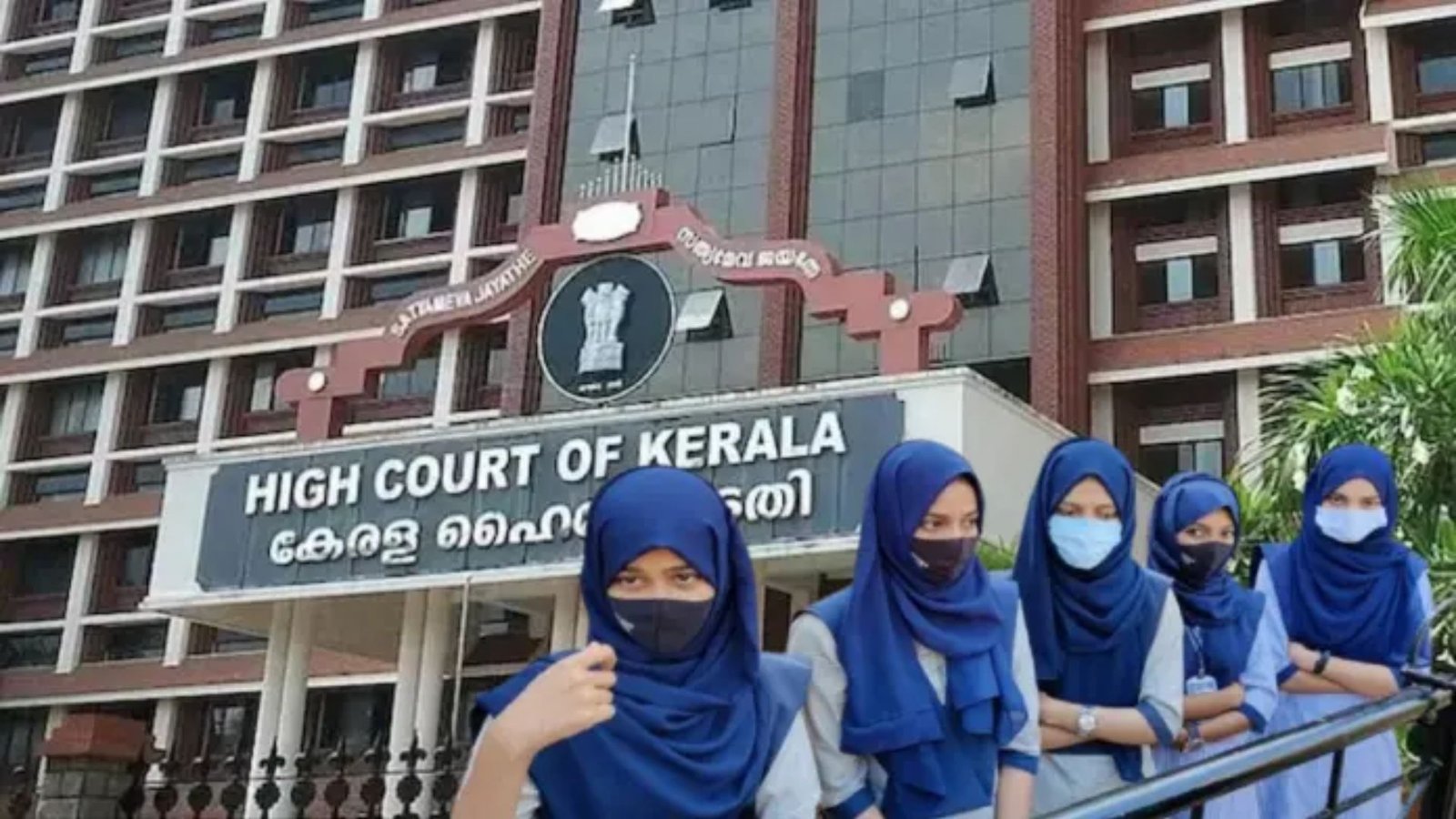
The Kerala High Court has declined to stay, for now, an order by the Director of Distance Education (DDE) permitting a Muslim girl to wear a headscarf. The court’s decision came in response to a petition challenging the DDE’s order, sparking a debate over religious freedom and educational regulations in the state.
The case revolves around a Muslim student enrolled in a distance education program who sought permission to wear a hijab during classes and examinations. The DDE granted this request, citing religious freedom as a valid justification. However, this decision was challenged by those who argued it violated the uniform rules and regulations of the educational institution.
Arguments Presented
The petitioners argued that allowing the hijab would set a precedent and potentially disrupt the uniformity and discipline within the educational environment. They contended that the existing regulations are designed to ensure a fair and equitable learning atmosphere for all students, irrespective of their religious beliefs. Conversely, the student and her supporters maintained that the hijab is an essential part of her religious practice and that denying her the right to wear it would infringe upon her fundamental rights.
The court, after hearing arguments from both sides, decided not to issue an immediate stay on the DDE’s order. Justice [Judge’s Name – if available, otherwise omit] stated that the matter required further examination and consideration. The court acknowledged the sensitivity of the issue, balancing religious freedom with the need to maintain institutional regulations.
Court’s Observations
During the proceedings, the High Court observed that the DDE’s order was based on the premise of religious freedom, a constitutional right guaranteed to all citizens. The court also noted that while institutions have the right to enforce reasonable regulations, these regulations should not unduly infringe upon fundamental rights unless there is a compelling reason to do so. The court indicated it would carefully assess whether the DDE’s order struck a fair balance between these competing interests.
The case has drawn significant attention in Kerala, a state known for its diverse religious and cultural landscape. Various student organizations and religious groups have expressed their views on the matter, highlighting the broader implications for religious freedom and educational policies. The court has adjourned the hearing to a later date, during which it is expected to consider additional arguments and evidence before making a final decision.
The High Court’s decision to not issue an immediate stay means that the Muslim girl can continue to wear her headscarf while the case is being deliberated. However, the final outcome of the case remains uncertain, and its implications could extend beyond this particular instance, potentially influencing similar cases in the future.
The legal and social ramifications of this case are considerable, touching upon the delicate balance between individual religious rights and institutional regulations in educational settings. The Kerala High Court’s eventual ruling will likely set an important precedent for how such matters are handled in the state and possibly across the country.
Image Source: Google | Image Credit: Respective Owner