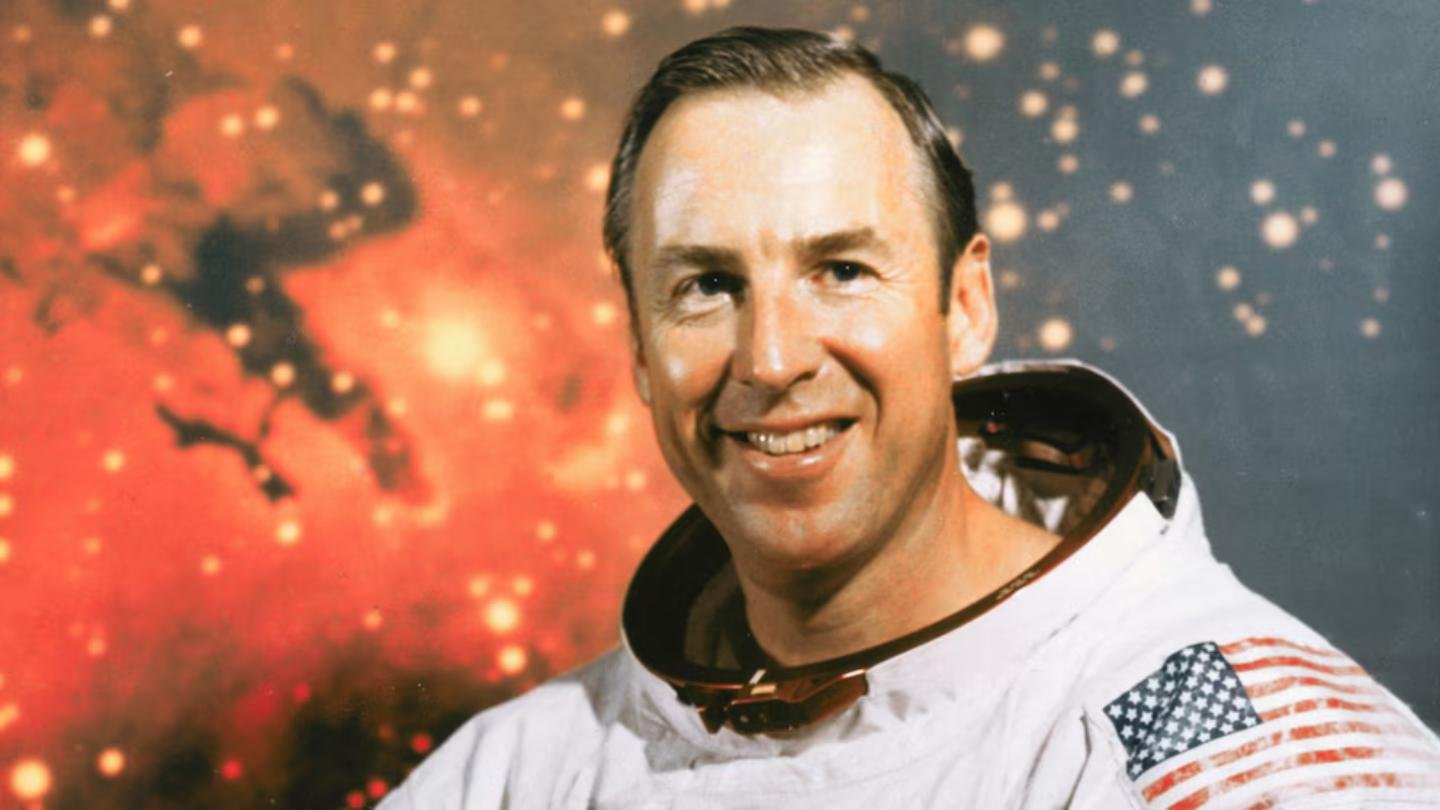
Captain Jim Lovell, the American astronaut who led NASA’s dramatic Apollo 13 rescue mission, has passed away at the age of 97. His leadership in the face of disaster transformed what was meant to be a Moon landing into one of the most remarkable survival stories in space history.
Lovell’s role in the 1970 Apollo 13 mission — later immortalized in Ron Howard’s film Apollo 13 starring Tom Hanks — showcased extraordinary teamwork and ingenuity when an oxygen tank explosion crippled the spacecraft nearly 320,000 km from Earth. Working with astronauts Jack Swigert and Fred Haise, and in constant coordination with Mission Control, Lovell helped improvise life-saving measures that brought the crew home safely.
A Four-Mission NASA Career
Lovell flew four space missions. He first served on Gemini 7 in 1965, a two-week endurance flight that achieved the first manned spacecraft rendezvous. In 1966, he commanded Gemini 12 alongside Buzz Aldrin, successfully concluding the Gemini program. Two years later, he piloted Apollo 8, the first mission to orbit the Moon, alongside Frank Borman and William Anders — making them the first humans to leave Earth’s gravitational field.
Apollo 13, Lovell’s final spaceflight, denied him the chance to walk on the Moon — an opportunity he never had again. He retired from NASA and the U.S. Navy in 1973 after logging over 7,000 flight hours, including more than 3,500 in jet aircraft.
The Apollo 13 Crisis
Launched on April 11, 1970, Apollo 13 was intended to be the third Moon landing mission. But just two days in, disaster struck. The crew faced freezing temperatures, cramped quarters, and rationed food and water, converting the lunar module Aquarius into a makeshift lifeboat to conserve resources until their return.
Even before liftoff, the mission saw challenges — Ken Mattingly was replaced by Jack Swigert after exposure to German measles, just days before launch.
Life Beyond Space
Born March 25, 1928, in Cleveland, Ohio, Lovell lost his father at the age of five and grew up in Milwaukee. Fascinated by flight from a young age, he graduated from the U.S. Naval Academy in 1952, later becoming a test pilot and safety engineer.
After NASA, Lovell transitioned into business leadership roles, including president of Fisk Telephone Systems and Executive Vice President at Centel Corporation. He also chaired the President’s Council on Physical Fitness and Sports from 1970 to 1978.
Lovell co-authored Lost Moon: The Perilous Voyage of Apollo 13, the book that inspired the Oscar-winning film. NASA honored him by naming a crater on the Moon after him.
Lovell’s career remains a testament to courage, problem-solving, and leadership under the most extreme conditions imaginable.
Image Source: Google Images
Image Credit: Respective Owner