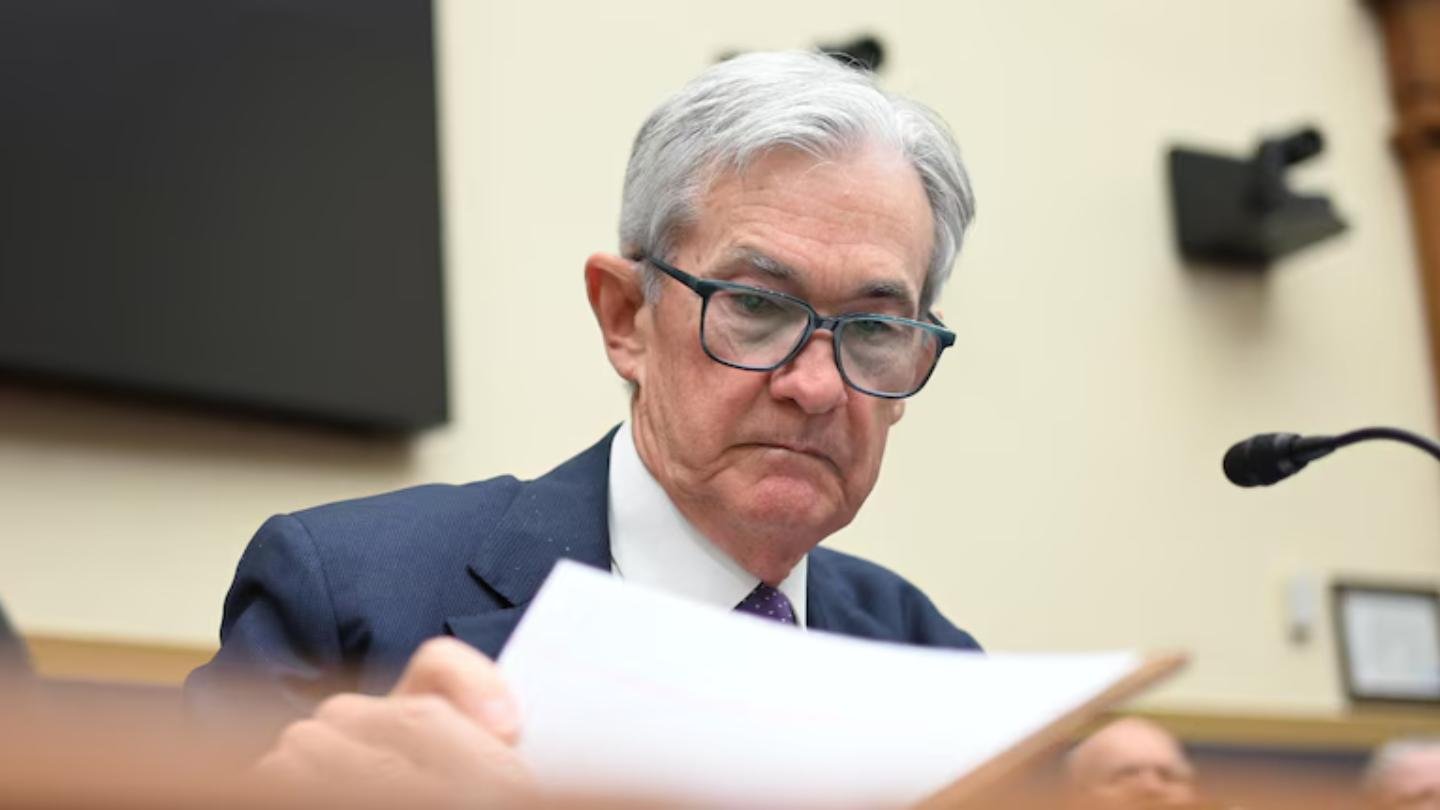
U.S. Federal Reserve Chairman Jerome Powell, in his speech at the Jackson Hole Economic Policy Symposium, hinted at a potential rate cut in September, but he also cautioned about the ongoing risks posed by inflation and employment issues. His remarks, while signaling a dovish stance, emphasized the complexity of the economic environment and the challenges ahead.
Hints at Potential Rate Cuts in September
Powell acknowledged the slowing economy and suggested that the Fed might reduce interest rates soon, balancing the risks of inflation with employment concerns. He stated, “Risks to inflation are tilted to the upside and risks to employment to the downside, a challenging situation when our goals call for us to balance both sides of our dual mandate.” Powell also noted that while inflation remains a concern, the labor market is showing signs of weakening, which may warrant a shift in policy.
However, Powell was careful not to commit fully to rate cuts, emphasizing that the Fed’s decisions would be based on data and economic outlook. He stated, “Our policy rate is now 100 basis points closer to neutral than it was a year ago,” signaling a more cautious approach as the Fed adjusts to economic conditions.
Economic Slowdown and Labor Market Concerns
Powell highlighted that GDP growth has slowed, dropping to 1.2% in the first half of the year compared to 2.5% in 2024, largely due to a slowdown in consumer spending. While the labor market shows balance, Powell described this balance as fragile, pointing to a significant slowdown in both the supply and demand for workers. “This unusual situation suggests that downside risks to employment are rising,” Powell said, indicating that job losses could escalate rapidly if these risks materialize.
Concerns Over Tariffs and Immigration Policies
A significant part of Powell’s speech focused on the economic challenges posed by U.S. trade and immigration policies, particularly the tariffs imposed under President Trump’s administration. Powell acknowledged that “significantly higher tariffs” and “tighter immigration policies” are remaking the global trading system and slowing labor force growth. He cautioned that the lasting effects of these policies are still uncertain and could impact economic growth and productivity in the long term.
“The economy has faced new challenges, significantly higher tariffs across our trading partners are remaking the global trading system,” Powell stated. He also noted that the Fed’s role is to stabilize cyclical fluctuations but emphasized that monetary policy cannot address structural changes such as trade and immigration policy shifts.
Inflation and Long-Term Economic Risks
Despite these challenges, Powell indicated that the Fed’s current policy stance is aimed at addressing the inflationary pressures that remain a significant concern. He noted that inflation risks are tilted to the upside, and the ongoing uncertainties related to tariffs and trade policies could exacerbate these pressures in the coming months.
“Changes in trade and immigration policies are affecting both demand and supply in this environment,” Powell explained, underscoring the difficulty in distinguishing cyclical developments from longer-term structural changes.
Trump’s Criticism of Powell
Throughout his tenure, President Trump has been a vocal critic of Powell, calling him “too late” in reducing interest rates and even labeling him a “numbskull” at times. While Trump later softened his stance on Powell, he continued to criticize the Fed’s actions, particularly in relation to interest rates and its handling of the U.S. economy.
Looking Ahead: September’s Fed Meeting
Powell’s speech comes ahead of the Fed’s next policy meeting in mid-September, where analysts are expecting a rate cut. Despite the uncertainty surrounding inflation and tariffs, Powell’s remarks suggest that the Fed may ease rates to support the economy, though he remains cautious about the long-term impacts of the current policy framework.
This Jackson Hole speech marks Powell’s final one as Federal Reserve Chair before his term concludes in May 2026. His tenure has been marked by significant economic challenges, and the upcoming decisions on interest rates will be pivotal in shaping the economic outlook for the U.S.
Image Source: AP (Associated Press)