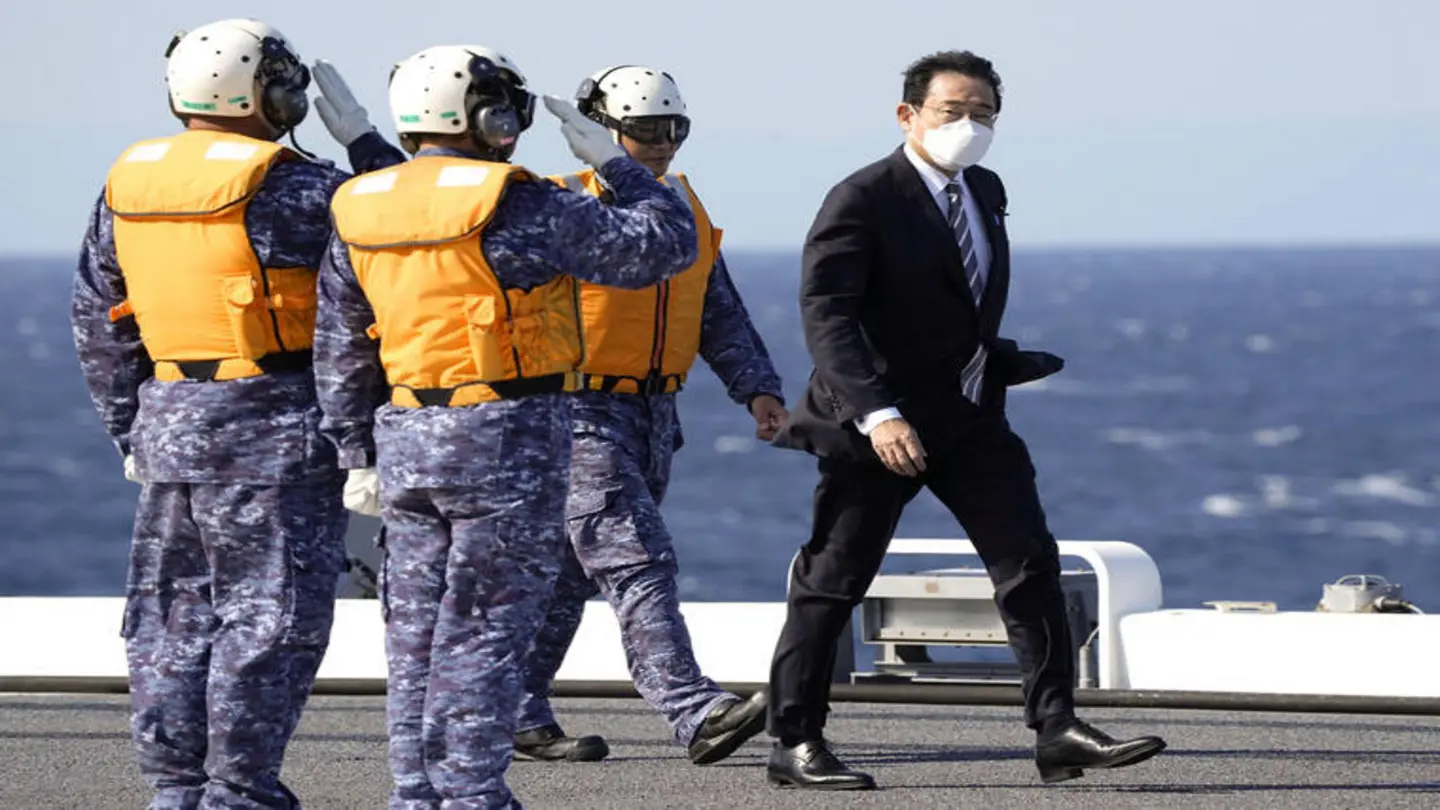
TOKYO, Oct 11 (Reuters) – Japanese Prime Minister Fumio Kishida warned on Tuesday of increasing coercion by China and vowed a sweeping overhaul of Japan’s national security strategy, including a significant boost in defense spending, to counter what he described as the nation’s most challenging security environment since World War II.
Kishida, speaking at a parliamentary session, emphasized the need for Japan to bolster its defense capabilities and strengthen its alliances, particularly with the United States, in the face of growing tensions in the Indo-Pacific region. He cited China’s assertive actions in the East China Sea, its military buildup, and its attempts to alter the status quo in disputed areas as key concerns.
Security Strategy Review
The planned overhaul of Japan’s national security strategy, the first in several years, comes as Kishida’s government seeks to address evolving threats and adapt to a rapidly changing geopolitical landscape. The review is expected to outline a more proactive defense posture and potentially allow Japan to counterattacks against its allies, a significant departure from its long-standing pacifist constitution.
“We must recognize that Russia’s aggression against Ukraine has shaken the foundations of the international order,” Kishida stated. “We cannot be complacent about the possibility of similar incidents happening in Asia.” He added that Japan needs to be prepared for any contingency, including the potential for conflict.
The government is considering a substantial increase in defense spending, potentially doubling it to reach 2% of Japan’s gross domestic product (GDP) by 2027. This would mark a significant shift in Japan’s defense budget, which has traditionally been capped at around 1% of GDP.
Kishida also highlighted the importance of strengthening Japan’s partnerships with other countries in the region, including Australia, India, and South Korea. He expressed a desire to work with these nations to promote stability and security in the Indo-Pacific.
The Prime Minister’s remarks reflect a growing sense of unease within Japan regarding China’s expanding military and economic influence. While Japan maintains diplomatic ties with China, there is increasing concern about Beijing’s actions in the region and its potential impact on Japan’s security.
Analysts say Kishida’s commitment to strengthening Japan’s defense capabilities signals a significant shift in Japan’s security policy, moving away from a purely defensive posture towards a more proactive and assertive approach. The changes are expected to be met with scrutiny both domestically and internationally, particularly from China, which views Japan’s military buildup with suspicion.
The government plans to present the revised national security strategy, along with related defense policy guidelines and a medium-term defense program, later this year. These documents will outline Japan’s vision for its future security role and its approach to addressing the challenges posed by a rising China and a volatile international environment.
Image Source: Google | Image Credit: Respective Owner