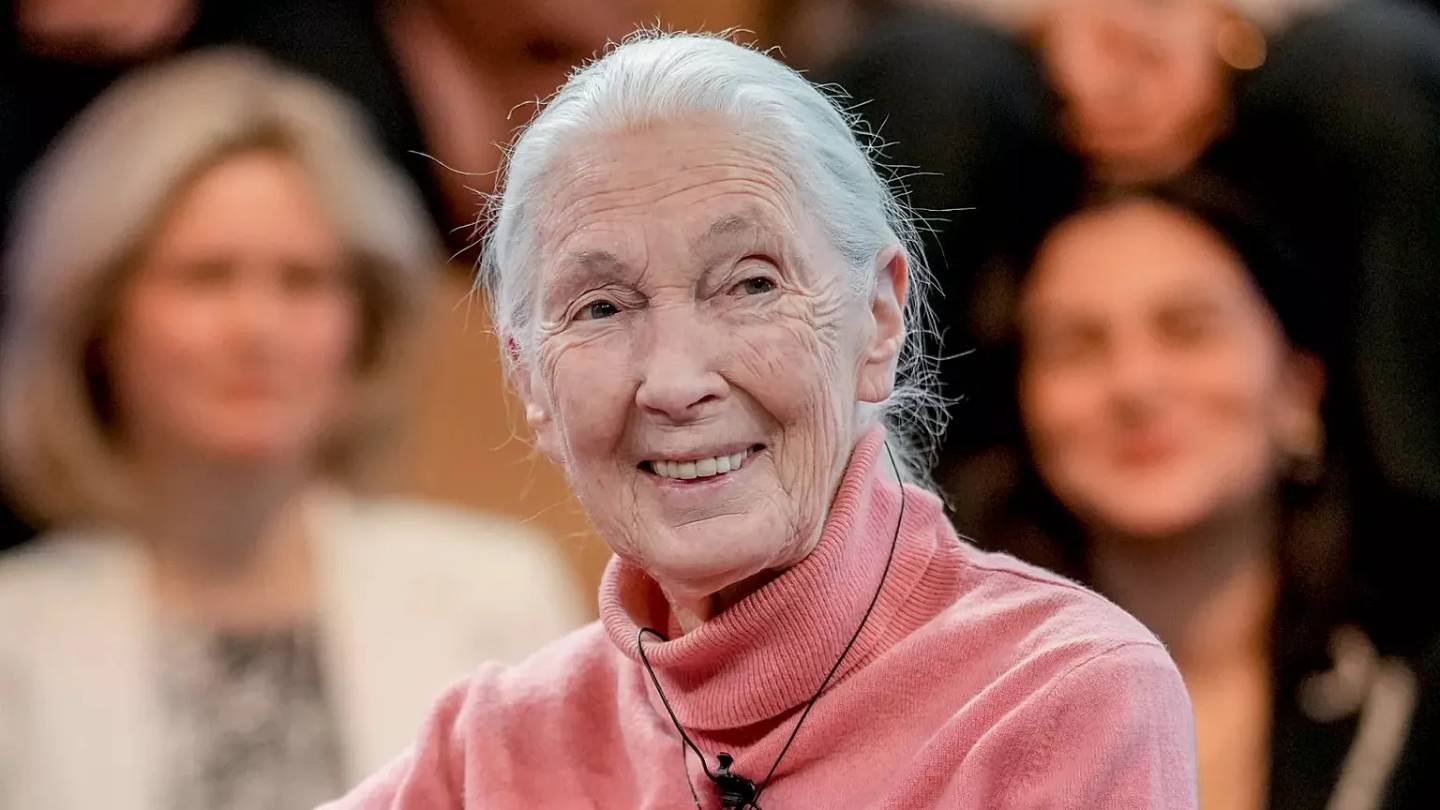
Jane Goodall, the world-renowned primatologist, conservationist, and UN Messenger of Peace, has died at the age of 91. Her groundbreaking research on chimpanzees in Gombe Stream National Park, Tanzania, revolutionized our understanding of primates and human evolution. Goodall’s decades-long dedication to conservation and animal welfare made her a global icon.
Early Life and Groundbreaking Research
Born in London in 1934, Jane Goodall harbored a lifelong fascination with animals and Africa. Despite facing societal expectations that discouraged women from pursuing scientific careers, Goodall persevered. In 1957, she traveled to Kenya at the invitation of Louis Leakey, a prominent paleontologist. Leakey recognized Goodall’s potential and sent her to Gombe Stream National Park in 1960 to study chimpanzees.
Goodall’s research at Gombe challenged conventional wisdom about chimpanzees. She observed them using tools, such as sticks to extract termites from mounds, demonstrating that tool use was not exclusive to humans. She also documented their complex social behaviors, including aggression, cooperation, and empathy. Her findings shattered the notion of chimpanzees as peaceful creatures and revealed the intricate dynamics of their societies. Goodall’s work earned her a PhD from Cambridge University, making her one of the few people to earn a doctorate without first holding a bachelor’s degree.
Conservation and Advocacy
As the years passed, Goodall became increasingly concerned about the threats facing chimpanzees and their habitats. In 1977, she founded the Jane Goodall Institute (JGI), a global organization dedicated to conservation, animal welfare, and community development. JGI works to protect chimpanzees and their habitats through research, education, and community-based conservation programs.
Goodall traveled the world, raising awareness about the plight of chimpanzees and the importance of conservation. She advocated for sustainable development, ethical treatment of animals, and empowering local communities to protect their natural resources. Her tireless efforts inspired millions to take action for the environment.
Legacy
Jane Goodall’s legacy extends far beyond her scientific contributions. She inspired generations of scientists, conservationists, and activists. Her work transformed our understanding of chimpanzees and their relationship to humans. Goodall’s unwavering commitment to conservation and animal welfare serves as a powerful example for us all.
Goodall authored numerous books and articles, including her seminal work, “In the Shadow of Man.” She received countless awards and honors, including the National Geographic Society’s Hubbard Medal, the Tyler Prize for Environmental Achievement, and the French Legion of Honor. Her death marks the end of an era, but her legacy will continue to inspire and guide future generations of conservationists.
She is survived by her son, Hugo Eric Louis van Lawick, from her marriage to Baron Hugo van Lawick, a wildlife photographer.
Image Source: Google | Image Credit: Respective Owner