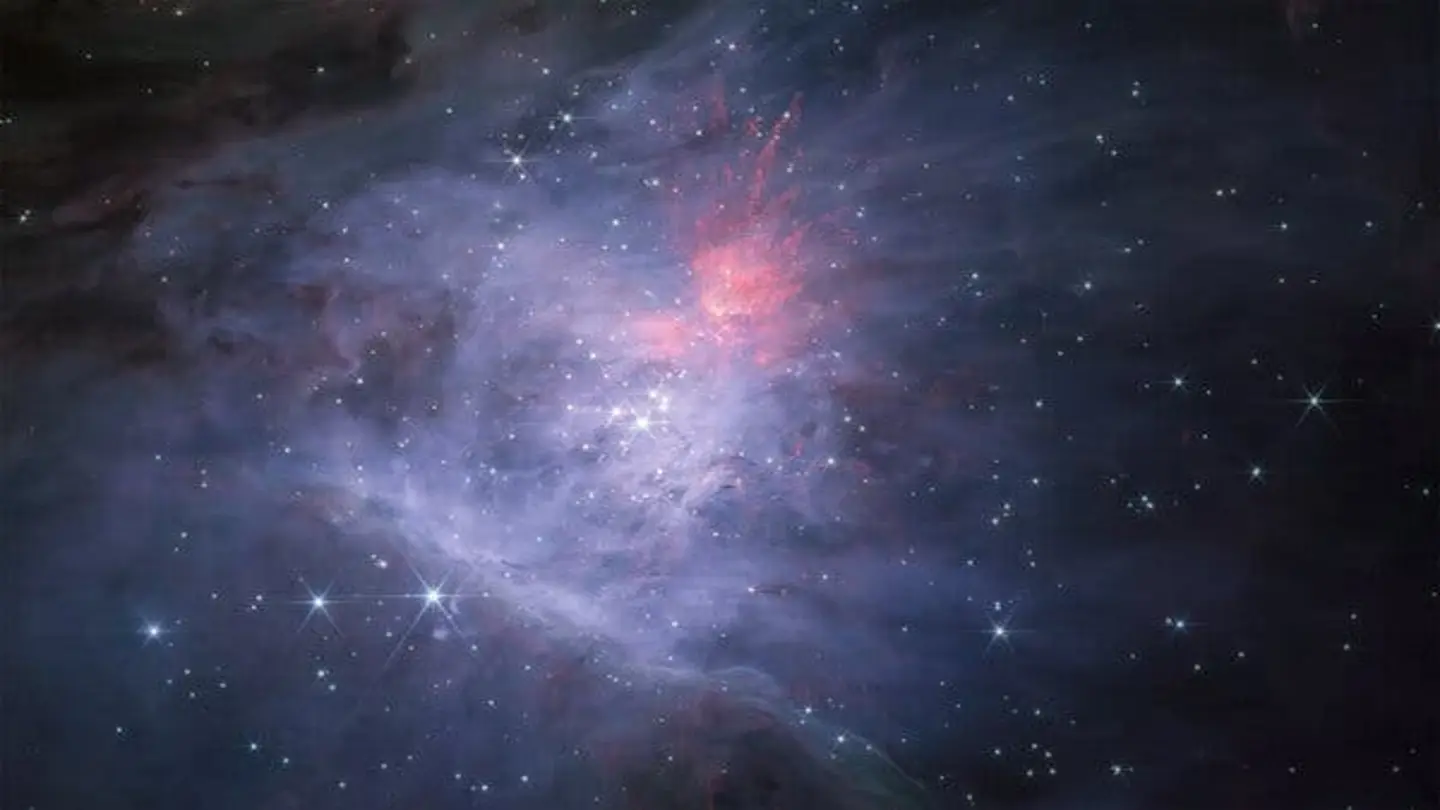
The James Webb Space Telescope (JWST) has once again delivered breathtaking images, this time capturing the intricate details of the Milky Way Galaxy’s largest star-forming cloud. These images provide unprecedented insight into the processes of stellar birth and the composition of interstellar gas and dust.
The newly released images showcase the Orion Nebula, a sprawling region of gas and dust located approximately 1,350 light-years from Earth. This stellar nursery is a prime location for observing the formation of new stars, and JWST’s advanced infrared capabilities allow scientists to peer through the obscuring dust clouds and witness these processes in remarkable detail.
Unveiling the Secrets of Star Formation
JWST’s observations are transforming our understanding of star formation. By analyzing the infrared light emitted by the Orion Nebula, astronomers can determine the temperature, density, and chemical composition of the gas and dust. This information is crucial for understanding how stars are born and how they influence their surrounding environment. The telescope’s ability to penetrate dense clouds reveals previously hidden protostars, the earliest stages of stellar development.
The telescope’s Near-Infrared Camera (NIRCam) and Mid-Infrared Instrument (MIRI) are instrumental in capturing the stunning visuals. NIRCam excels at detecting the light from young, hot stars, while MIRI is sensitive to the cooler temperatures of dust and gas. Combining data from these instruments allows scientists to create composite images that reveal the full complexity of the Orion Nebula.
These images are not just visually stunning; they are also incredibly valuable for scientific research. By studying the Orion Nebula, astronomers hope to gain insights into the formation of our own solar system. The conditions within the nebula are thought to be similar to those that existed in the early solar system, providing a glimpse into the past.
Furthermore, the observations will help refine models of stellar evolution and improve our understanding of the role of star formation in the evolution of galaxies. The images reveal the presence of protoplanetary disks, swirling disks of gas and dust around young stars, which are the birthplaces of planets. Studying these disks will shed light on the process of planet formation and the conditions necessary for the emergence of life.
Future Research
The data collected by JWST on the Orion Nebula will continue to be analyzed by scientists for years to come. These observations represent a significant leap forward in our understanding of the cosmos and highlight the power of advanced telescopes to unlock the secrets of the universe. Further research will explore the chemical composition of the nebula, the dynamics of the gas and dust, and the interaction between young stars and their environment. The James Webb Space Telescope promises to revolutionize our understanding of the universe, one breathtaking image at a time.
Image Source: Google | Image Credit: Respective Owner