New observations of the interstellar comet 3I/ATLAS have sparked debate among astronomers after the comet appeared to execute an unusual post-perihelion maneuver. This unexpected change in trajectory has led to speculation about the comet’s composition, origin, and whether non-gravitational forces are at play.
Background of Comet 3I/ATLAS
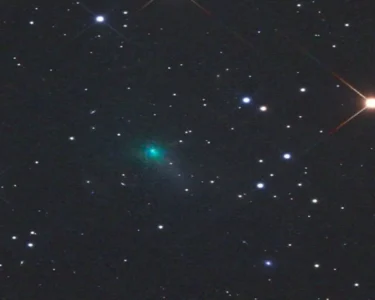
Comet 3I/ATLAS was first discovered by the Asteroid Terrestrial-impact Last Alert System (ATLAS) in 2019, quickly gaining attention as only the second confirmed interstellar object to be observed passing through our solar system, following ‘Oumuamua in 2017. Unlike ‘Oumuamua’s highly elongated shape and mysterious nature, 3I/ATLAS appeared more like a typical comet, exhibiting a coma and a tail as it approached the Sun.
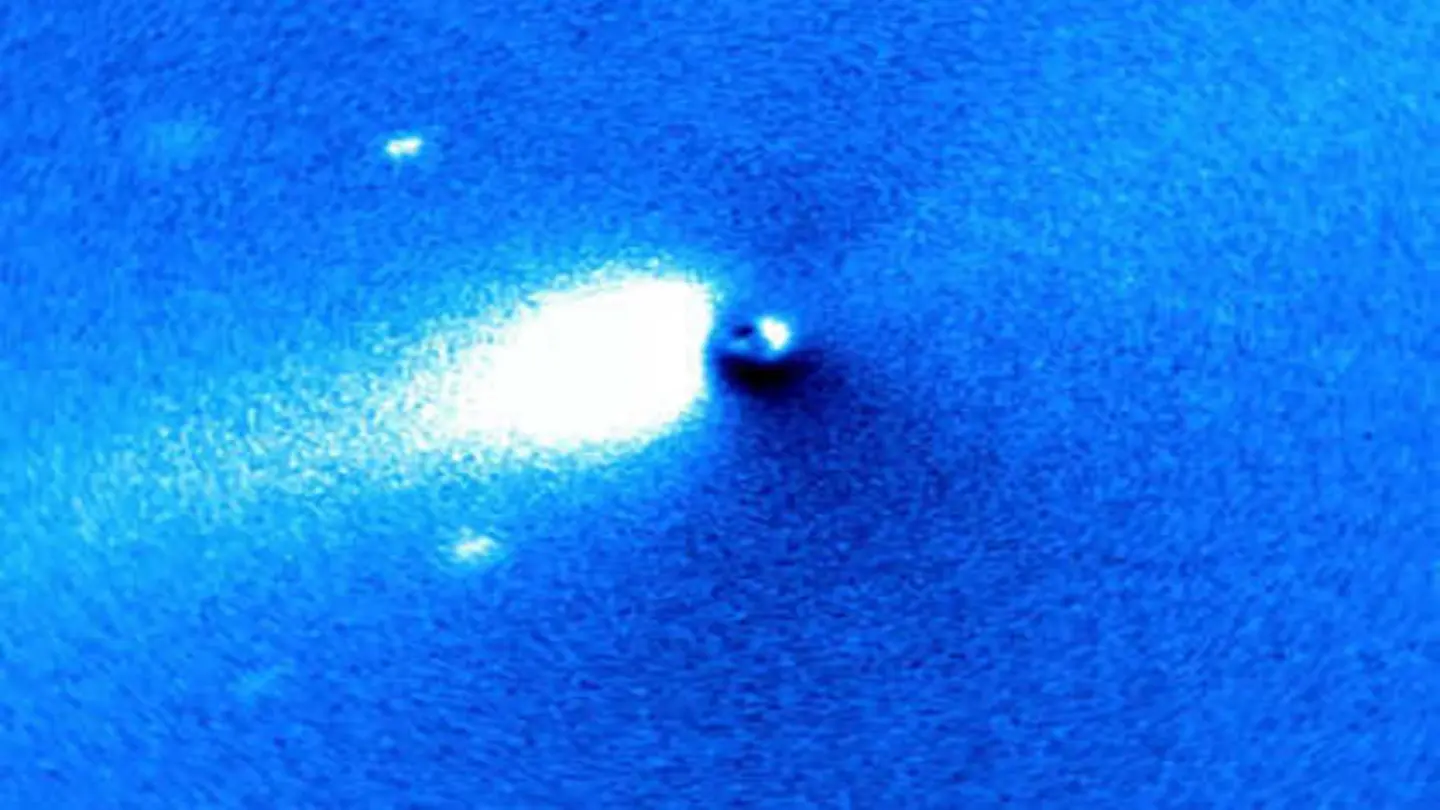
As 3I/ATLAS approached its closest point to the Sun (perihelion), astronomers eagerly anticipated observing its behavior. Comets typically brighten as they near the Sun due to increased sublimation of ices, releasing gas and dust that form the coma and tail. However, after passing perihelion, 3I/ATLAS exhibited a change in its trajectory that couldn’t be explained by gravitational forces alone.
This unexpected maneuver has led scientists to consider various explanations. One possibility is that the comet’s nucleus is highly irregular in shape, causing uneven outgassing that acts as a sort of propulsion. Another theory involves the presence of volatile compounds on the comet’s surface that sublimate rapidly, creating jets of gas that alter its course. The composition of these volatiles could be different from those typically found in solar system comets, hinting at a different formation environment.
“The observed change in trajectory suggests that 3I/ATLAS might be more complex than initially thought,” said Dr. Emily Carter, an astrophysicist at the Harvard-Smithsonian Center for Astrophysics. “Further observations are crucial to determine the exact cause of this maneuver and to learn more about the comet’s properties.”
The investigation into 3I/ATLAS continues with astronomers using telescopes around the world to gather more data on its behavior. Spectroscopic analysis of the comet’s coma and tail could reveal the types of molecules present, providing clues about its origin and the conditions in its parent star system. Additionally, precise measurements of its position and velocity will help refine models of its trajectory and assess the magnitude of the non-gravitational forces acting upon it.
Understanding interstellar objects like 3I/ATLAS is crucial for gaining insights into the formation and evolution of planetary systems beyond our own. By studying these cosmic travelers, scientists can learn about the diversity of materials and processes that shape the universe. The ongoing investigation of 3I/ATLAS promises to reveal new details about the nature of comets and the environments in which they form, potentially revolutionizing our understanding of the cosmos.
The Economic Times reports that these observations underscore the importance of continued monitoring of interstellar objects and the development of advanced observational techniques to study them in detail. As more interstellar visitors are discovered, our knowledge of the universe and our place within it will undoubtedly expand.
Image Source: Google | Image Credit: Respective Owner