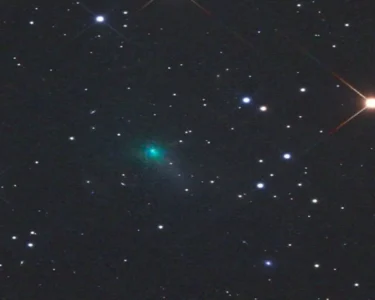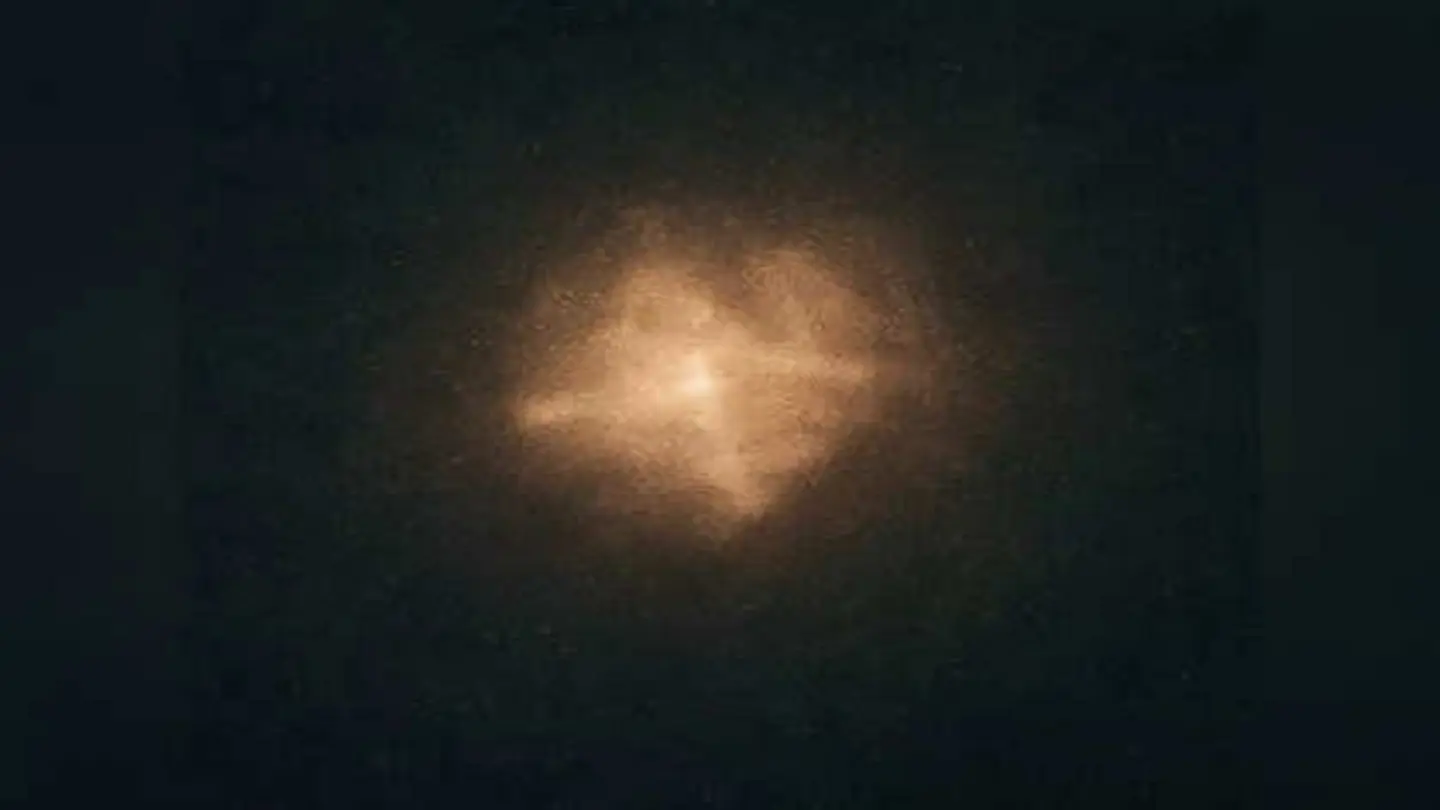
New footage of interstellar comet 3I/ATLAS has ignited debate within the scientific community, raising questions about its rotation and overall behavior. The Economic Times reports that the comet, originally discovered in 2019, continues to fascinate researchers due to its unusual properties and the challenges it presents to existing models of cometary formation and dynamics.
The recently released footage, captured by advanced astronomical observatories, appears to show 3I/ATLAS exhibiting a distinct spin. This observation has led to speculation about the comet’s composition and the forces acting upon it as it traverses interstellar space. Some scientists suggest that the spin could be a result of uneven outgassing, where volatile materials on the comet’s surface vaporize at different rates, creating a torque that causes rotation.
Composition and Origin
One of the key areas of interest is the comet’s composition. Unlike comets originating within our solar system, 3I/ATLAS hails from another star system, offering a unique glimpse into the building blocks of planetary systems beyond our own. Spectroscopic analysis of the comet’s coma, the cloud of gas and dust surrounding its nucleus, has revealed the presence of various organic molecules, hinting at the potential for complex chemistry in other regions of the galaxy. Determining the precise composition of 3I/ATLAS could provide valuable insights into the conditions under which it formed and the processes that shaped its evolution.
The origin of 3I/ATLAS remains a subject of intense research. Scientists are using sophisticated simulations to trace the comet’s trajectory back to its likely point of origin. This endeavor involves accounting for the gravitational influences of various stars and planets along its path. Understanding the comet’s origin could shed light on the frequency of interstellar object ejections from other star systems and the role these objects play in the transport of matter and potentially life across the galaxy.
Shocking Claims and Further Research
Beyond the scientific analysis, some “shocking claims” have emerged, although details of these claims are not specified in the provided title. These claims likely relate to the potential implications of 3I/ATLAS’s composition or behavior, possibly touching on theories about panspermia, the idea that life can spread throughout the universe via objects like comets and asteroids. While such claims remain speculative, they underscore the profound questions that interstellar objects raise about the nature of life and its distribution throughout the cosmos.
Future research on 3I/ATLAS will likely involve continued observations from ground-based and space-based telescopes. These observations will aim to refine our understanding of the comet’s spin, composition, and trajectory. Additionally, scientists will continue to develop and refine theoretical models of cometary behavior to better explain the unique characteristics of this interstellar visitor. The study of 3I/ATLAS serves as a reminder of the vastness and complexity of the universe, and the endless possibilities for discovery that lie beyond our solar system.
The ongoing research into 3I/ATLAS highlights the collaborative nature of modern science, with researchers from around the world pooling their resources and expertise to unravel the mysteries of the cosmos.
Image Source: Google | Image Credit: Respective Owner