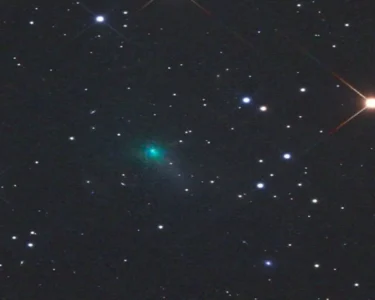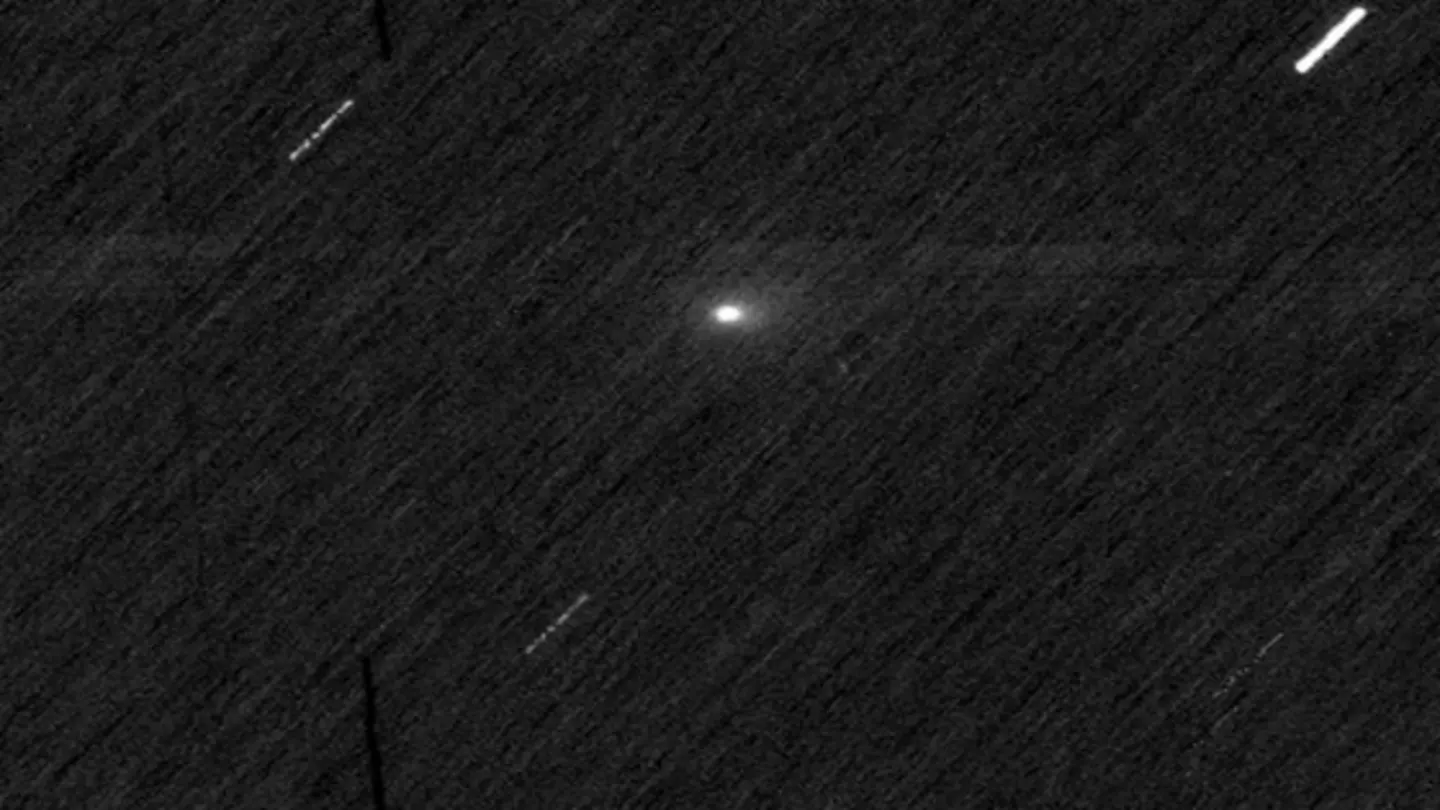
Interstellar comet 3I/ATLAS, which zipped past the Sun, exhibited a rapid increase in brightness and a distinct blue color, according to a new study. The comet’s behavior challenges existing models of cometary composition and behavior.
Unprecedented Brightening
Researchers observed that 3I/ATLAS experienced a significant surge in brightness as it approached and subsequently moved away from the Sun. This rapid brightening far exceeded expectations based on typical cometary activity. The study suggests that the comet’s composition might be more volatile than previously assumed, leading to increased sublimation and gas production as it neared the solar radiation.
The unusual brightening was documented through detailed observations of the comet’s light curve. Scientists analyzed the intensity of light emitted by the comet over time, revealing a steep increase in brightness followed by a gradual decline. The data indicates that the comet underwent a period of intense activity during its closest approach to the Sun, indicating a unique response to solar heating.
Distinct Blue Hue
Another key finding of the study is the comet’s exceptionally blue color. The researchers determined that 3I/ATLAS reflects light in a way that gives it a bluer appearance compared to typical comets in our solar system. The study notes, “it’s bluer than our star,” highlighting the unusual nature of the observation. This color suggests that the comet is composed of smaller dust particles and different materials than those commonly found in comets originating from our own solar system.
The blue hue is believed to be caused by the scattering of sunlight by tiny dust grains in the comet’s coma. The smaller the dust particles, the more effectively they scatter blue light, giving the comet its characteristic color. The composition of these dust grains could provide insights into the comet’s origin and the conditions in the interstellar environment where it formed.
Scientists emphasize that further research is needed to fully understand the properties and behavior of interstellar comets. These objects offer a unique opportunity to study the composition and characteristics of planetary systems beyond our own. By analyzing the light, dust, and gases emitted by interstellar comets, researchers hope to gain insights into the diversity of planetary formation processes throughout the galaxy.
The study of 3I/ATLAS underscores the importance of continued monitoring and observation of celestial objects. The discovery of new and unusual phenomena, such as the rapid brightening and blue color of this interstellar comet, highlights the dynamic nature of the universe and the potential for future discoveries.
The findings were published in a peer-reviewed scientific journal, adding to the growing body of knowledge about interstellar objects and their significance in understanding the cosmos.
Image Source: Google | Image Credit: Respective Owner