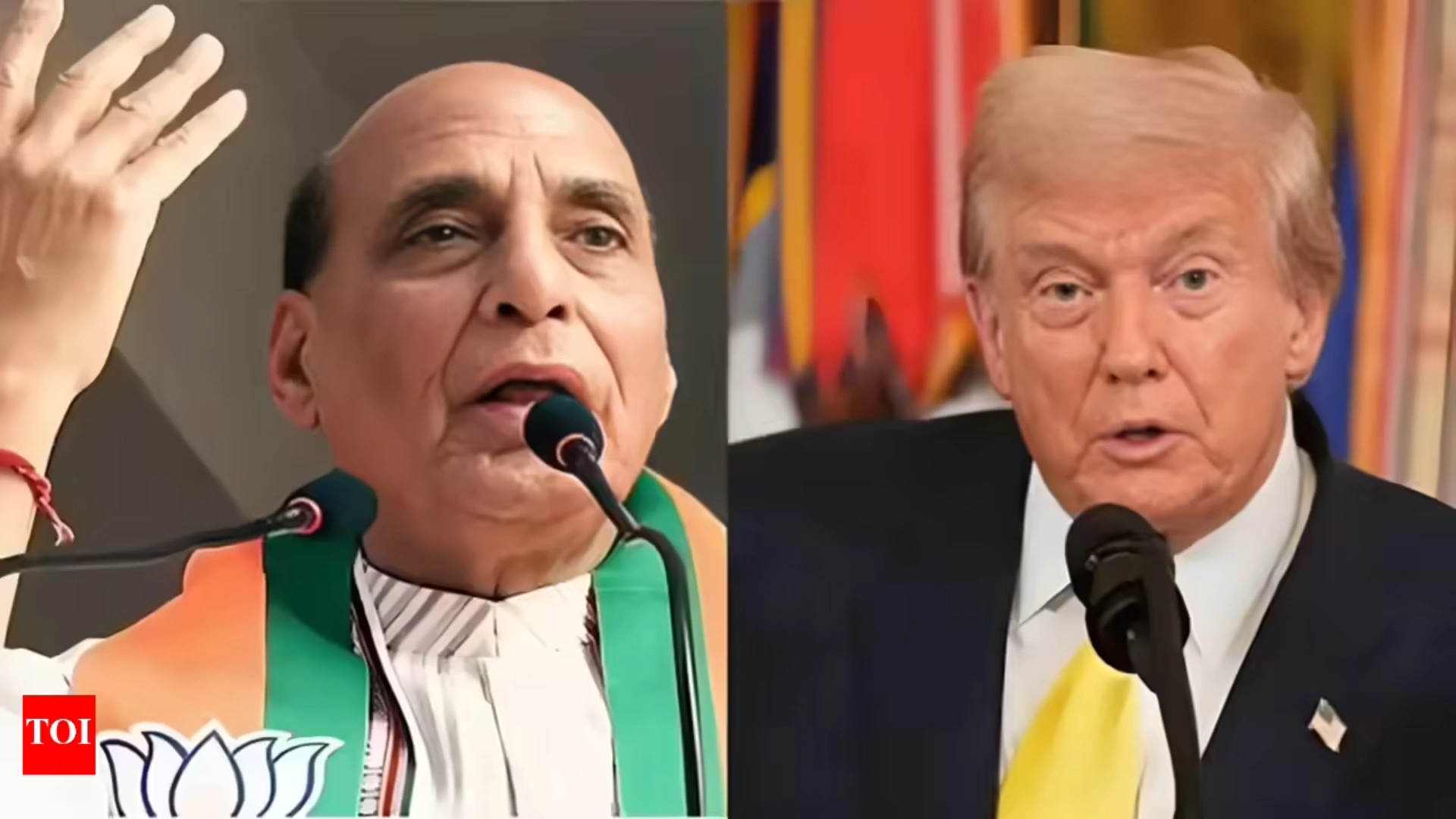
Defence Minister Rajnath Singh addressed the reasons behind India’s delayed response to tariffs imposed by the United States under the Trump administration. Speaking at a recent event, Singh emphasized that the Indian government carefully considered various factors before formulating its response, prioritizing the nation’s economic interests and strategic partnerships.
Singh highlighted that India’s approach to international trade disputes is always measured and deliberate. He stated that the government seeks to resolve such matters through dialogue and negotiation, avoiding hasty decisions that could have adverse consequences for the Indian economy or its relations with other countries. The Defence Minister underscored the importance of maintaining a stable and predictable trade environment, which is crucial for attracting foreign investment and promoting economic growth.
Strategic Considerations
According to Singh, the government had to carefully analyze the implications of Trump’s tariffs on various sectors of the Indian economy. This involved assessing the impact on Indian exports to the United States, as well as the potential repercussions for domestic industries that rely on imported goods from the US. The government also had to consider the broader geopolitical context, including India’s strategic partnership with the United States and its commitment to multilateral trade agreements.
Singh further elucidated that India’s response was also influenced by ongoing discussions with the US administration. The Indian government sought to engage in constructive dialogue with its American counterparts to address concerns and find mutually acceptable solutions. This approach reflected India’s commitment to resolving trade disputes through diplomatic channels, rather than resorting to retaliatory measures that could escalate tensions.
Economic Impact Assessment
The Defence Minister noted that the government conducted a thorough economic impact assessment to determine the most appropriate course of action. This assessment took into account the potential impact on various stakeholders, including exporters, importers, consumers, and small and medium-sized enterprises (SMEs). The government also sought input from industry associations and experts to gain a comprehensive understanding of the challenges and opportunities presented by the tariffs.
Singh reiterated that the government’s ultimate goal was to safeguard India’s economic interests while maintaining a cordial relationship with the United States. He stressed that India values its strategic partnership with the US and is committed to working together to address common challenges, including trade imbalances and protectionist measures. The Defence Minister’s remarks provide valuable insight into the complexities of international trade relations and the importance of careful deliberation in formulating policy responses. The delay, therefore, was a calculated move to ensure a well-informed and strategic response, aligning with India’s long-term economic and diplomatic objectives.
Image Source: Google | Image Credit: Respective Owner