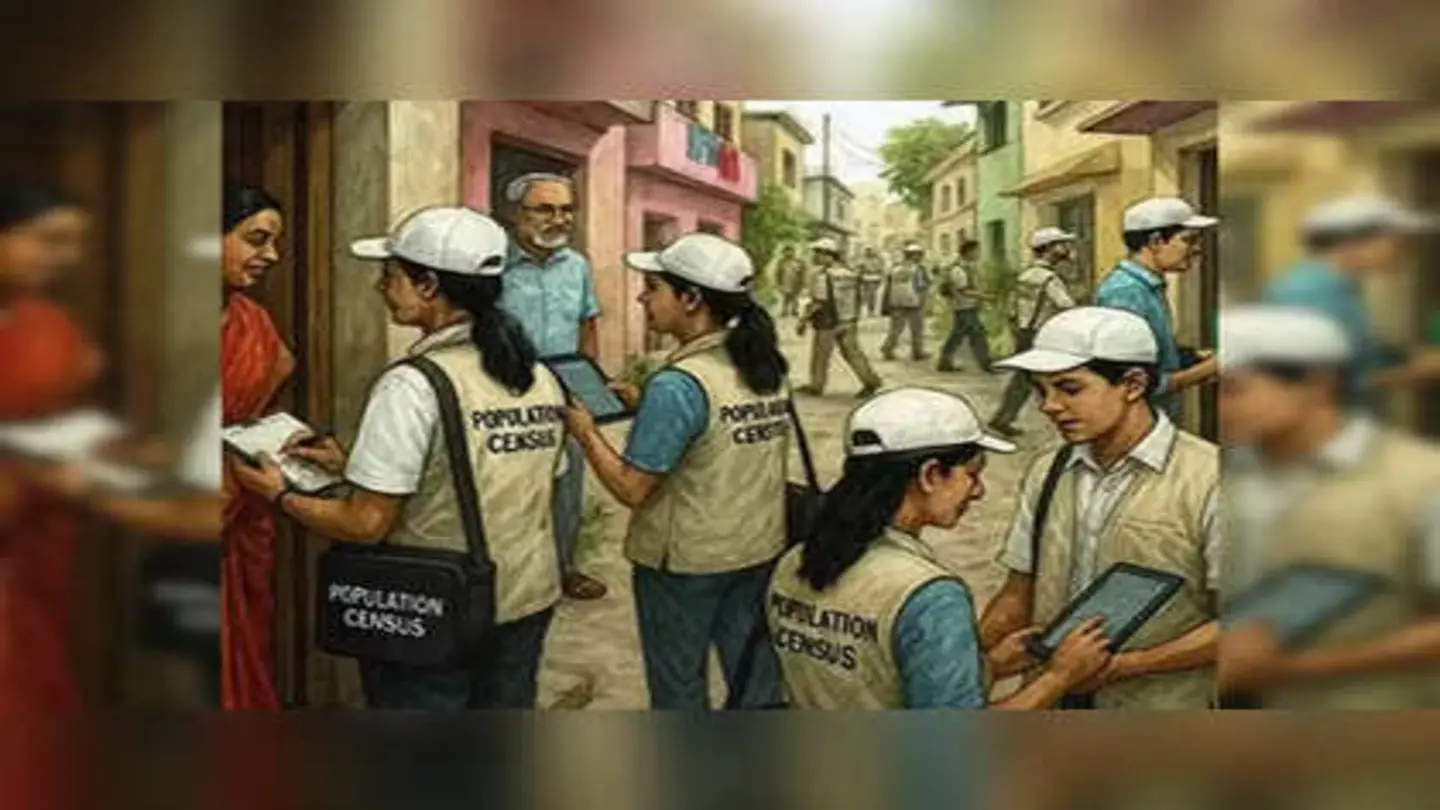
New Delhi – The first phase of India’s decennial census, a gargantuan undertaking to collect demographic data of the nation, is scheduled to run from April 1st to September 30th, 2024. This announcement, made by the Union Ministry of Home Affairs, signals the resumption of a process significantly delayed due to the COVID-19 pandemic and subsequent logistical challenges.
The census, a constitutionally mandated exercise, provides vital statistics for policy-making, allocation of resources, and socio-economic planning. It covers a wide range of data points, including population count, household amenities, migration patterns, literacy levels, and employment details. The data gathered is crucial for understanding the changing demographics of the country and addressing emerging needs.
This initial phase will primarily focus on the preparation of the Census and related registers. This includes extensive fieldwork to update the ‘house listing’ and ‘house numbering’ operations. Provisional data collected during this stage forms the base for the subsequent population enumeration. Officials will be revisiting households across the country to verify addresses and collect basic information needed for accurate counts.
The second phase, the actual enumeration of the population, is expected to begin sometime after September 30th, though a firm date hasn’t yet been officially declared. This is where enumerators will directly interact with citizens, asking detailed questions to compile comprehensive demographic profiles. Concerns around data privacy and collection methodologies have been raised in the past, and authorities have assured robust safeguards will be implemented to protect citizen information.
The government has allocated a substantial budget for the census operations, recognizing its importance. The logistical challenges are immense, involving the deployment of millions of enumerators, trainers, and supervisors across diverse terrains, including remote villages and densely populated urban centers. Adequate training and support infrastructure is being put in place to ensure efficiency and accuracy.
Challenges and Preparations
The delay caused by the pandemic presented several hurdles. The mobility of enumerators was restricted, and there were concerns about conducting door-to-door surveys safely. The use of technology has been significantly scaled up to streamline the process and minimize manual errors. A dedicated census website and mobile application have been launched to facilitate data collection and dissemination.
Furthermore, the inclusion of a new question regarding the identification of transgender individuals has been a notable addition to this year’s census. This reflects a growing societal awareness and the government’s commitment to inclusive data collection. The Ministry of Home Affairs hopes this will improve data on this marginalized community and better inform related policy decisions.
The successful completion of the census is critical for effective governance and development planning. The data will not only aid in the delimitation of constituencies but also in the formulation of targeted programs for various sections of society. All citizens are urged to cooperate with census officials and provide accurate information.
The timeline and procedures outlined by the government will be closely monitored to ensure a smooth and efficient census process, delivering timely and reliable demographic insights for India’s future. The Ministry expects a full report to be available within a year of the completion of the enumeration phase.
Image Source: Google | Image Credit: Respective Owner