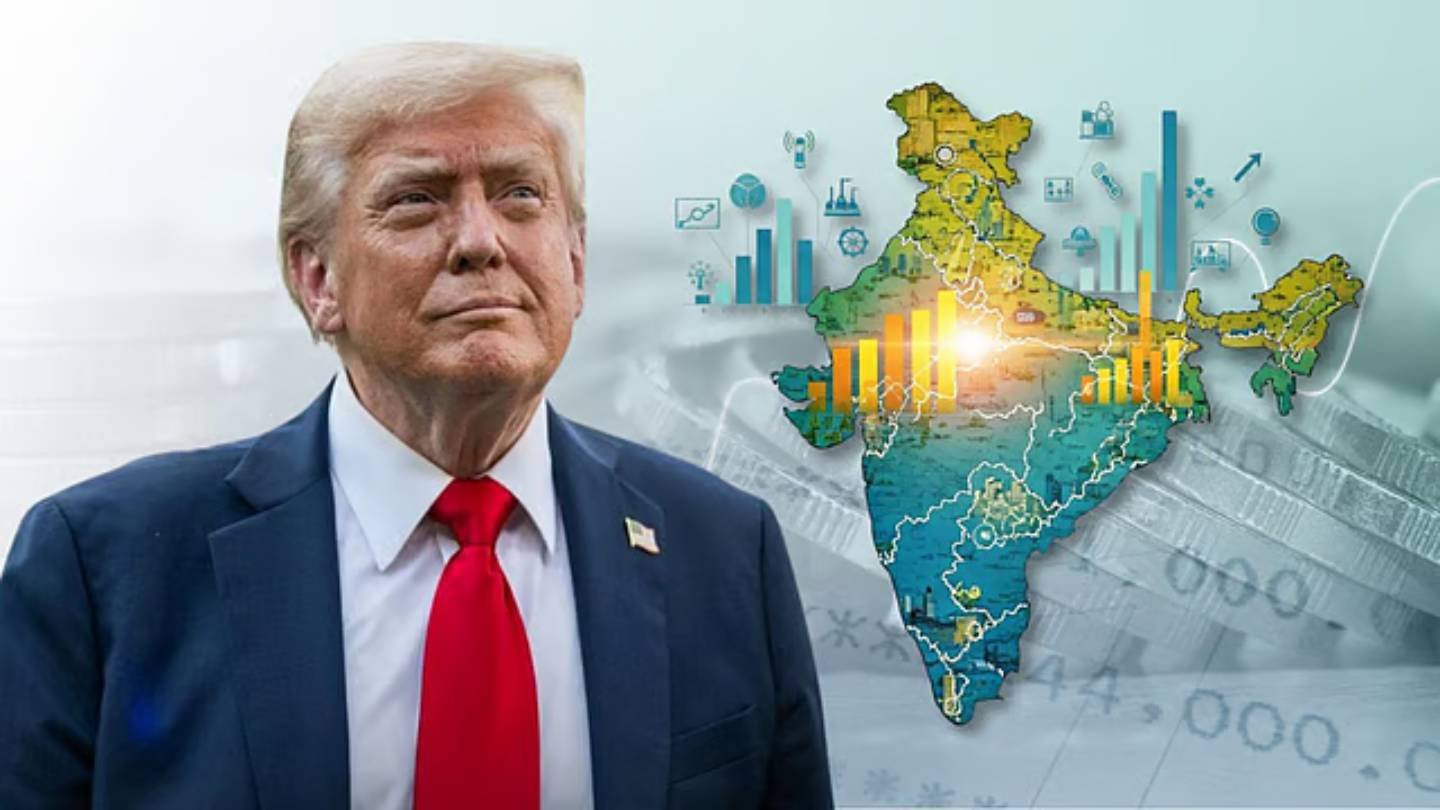
India’s economy has surprised many, including US President Donald Trump, with its remarkable 7.8% GDP growth for the April-June quarter. This marks the fastest growth in five quarters, defying expectations and showcasing resilience across key sectors such as agriculture, manufacturing, and services.
Trump had previously referred to India’s economy as “dead” in a post on Truth Social, dismissing its growth. However, the GDP data released by India’s National Statistics Office (NSO) tells a different story. The growth was driven by solid farm output, a booming services sector, and strong private consumption, all of which contributed to India’s status as the world’s fastest-growing major economy.
Despite this impressive performance, India faces significant challenges ahead, particularly with the looming threat of US tariffs. The recent escalation of tariffs, set at 50%, could have serious repercussions for India’s export-driven growth, with potential negative impacts on jobs, wages, and private investment. Some analysts predict these tariffs could reduce India’s growth rate by 0.6-0.8 percentage points in the upcoming year.
Sectoral Performance: Key Growth Drivers
India’s agricultural sector expanded by 3.7%, up from 1.5% in the same quarter last year, thanks to a strong sowing season. Manufacturing grew by 7.7%, slightly below last year’s growth but still above the 4.8% seen in the previous quarter. The services sector led the charge with an impressive 9.3% expansion, driven by growth in trade, hotels, transport, and financial services.
Private consumption, which makes up nearly 60% of India’s GDP, rose by 7.0%, supported by increased rural spending, demand for consumer durables, and tax relief measures. Government expenditure also jumped by 9.7%, reversing a contraction from the previous quarter, while capital formation grew by 7.8%.
The Impact of US Tariffs
While India’s GDP growth is strong, analysts are concerned about the longer-term effects of the US tariffs. Economists warn that the full impact of the tariffs could cause a slowdown in exports, which would in turn affect jobs, wages, and consumer spending. Experts from institutions like ICRA and Emkay Financial have expressed concerns about the potential ripple effect on private investment and business confidence.
The tariff dispute has its roots in India’s continued purchase of discounted Russian oil, which the US claims is financing Russia’s war in Ukraine. In response, the US has imposed the steep tariff hike, which has particularly impacted Indian exports. As much as 55% of India’s $87 billion in annual exports to the US could be affected, giving an edge to competitors like Vietnam, Bangladesh, and China.
Government Measures to Counteract Slowdown
In response to the potential export slowdown, the Indian government has pledged support to affected sectors, including tax cuts aimed at boosting domestic consumption. The government has also rationalized GST rates, which are expected to support demand as the festive season approaches. Analysts predict that these measures could lift nominal GDP by 0.6 percentage points over the next year.
Looking Ahead: What’s Next for India’s Economy?
Despite the tariff challenges, India’s economy continues to outperform China’s. In the same quarter, China posted a growth rate of 5.2%, highlighting India’s relative strength in the global economic landscape. The Reserve Bank of India has projected a 6.5% growth rate for FY26 and is expected to keep interest rates steady in its upcoming review.
While the growth in Q1FY26 is promising, economists remain cautious about the export sector’s future performance. The government’s strategies to offset the impact of tariffs will be crucial in maintaining momentum and ensuring that India’s economy stays on track in the coming quarters.
Image Source: Times of India