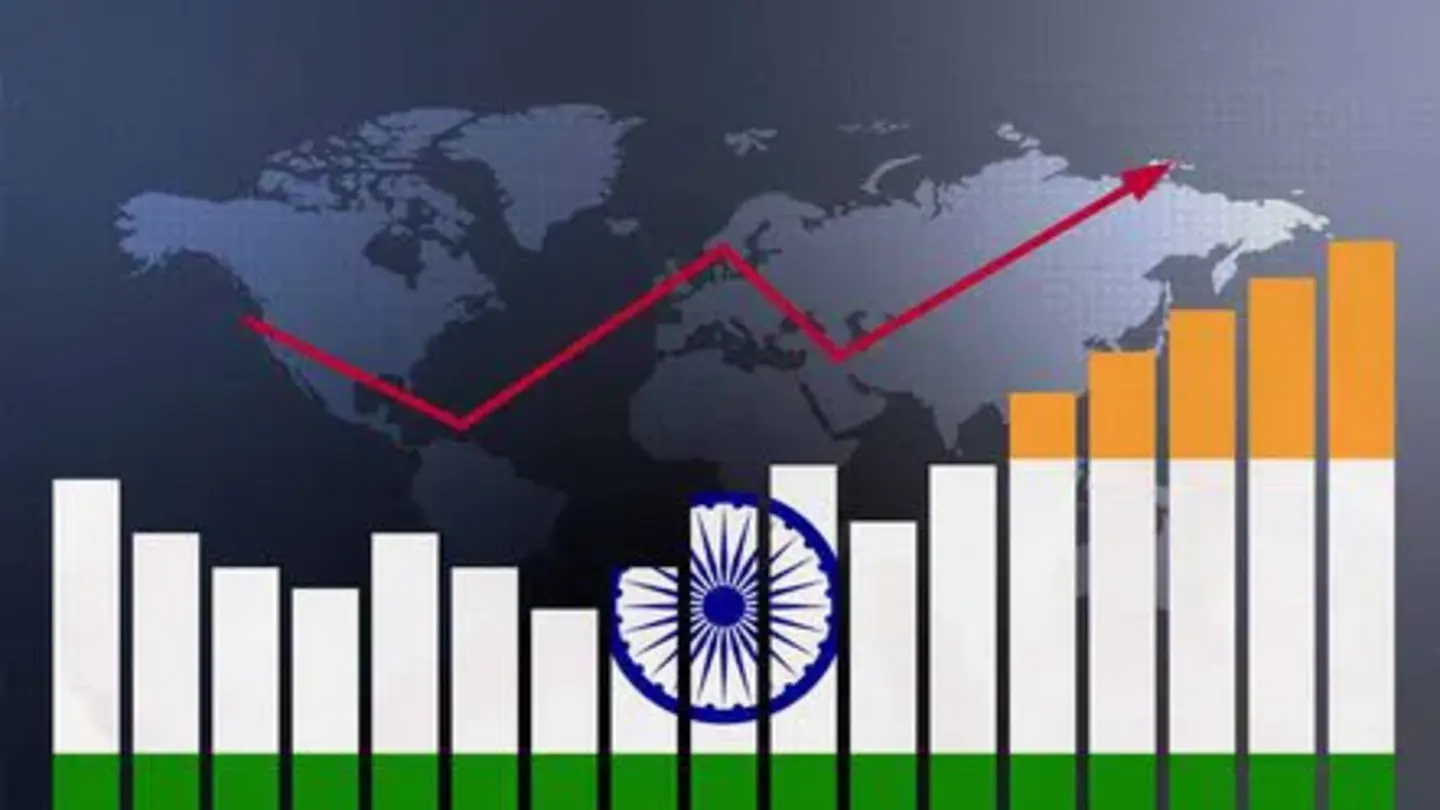
India has officially surpassed Japan to become the world’s fourth-largest economy, according to a report by Bloomberg. The shift, propelled by India’s robust economic growth and a weakening Japanese yen, marks a significant milestone in India’s rise as a global economic power.
The report, released Sunday, calculates economies using US dollar terms. While India’s economy is estimated at $3.47 trillion, Japan’s stands at $4.23 trillion. However, the value of the yen has fallen to its lowest level in decades. When converting both nations’ GDP to US dollars, India’s has overtaken Japan’s.
This change doesn’t necessarily reflect a dramatic shift in the overall production or standard of living within either country. It is largely a result of currency fluctuations. The Japanese yen has experienced considerable depreciation against the US dollar this year, easing the impact of inflation, but simultaneously reducing Japan’s economic standing when assessed in dollar terms.
Economists are cautious about reading too much into the nominal GDP rankings. India’s GDP per capita remains significantly lower than Japan’s, implying a lower average income and standard of living for its citizens. Despite this, India’s large population and rapidly expanding middle class contribute to its impressive overall economic size.
Growth Drivers & Future Outlook
India’s economic growth is driven by several factors, including strong domestic demand, a growing services sector, and increased government investment in infrastructure. Recent reforms aimed at attracting foreign investment and boosting manufacturing have also played a role. The country’s robust digital infrastructure expansion has further fueled economic gains.
Japan, on the other hand, is grappling with an aging population, deflationary pressures and relatively slow economic growth. While it retains a highly advanced and innovative economy and remains a major global economic player, its growth trajectory has been less dynamic than India’s in recent years. The Bank of Japan maintains ultra-loose monetary policy to stimulate growth, but it faces ongoing challenges.
Analysts predict that the trend of India gaining economic ground on Japan is likely to continue. As India’s economy continues to expand, it is projected to become the world’s third-largest economy in the coming years, potentially surpassing Germany and even challenging the United States and China.
However, it’s crucial to acknowledge that India faces its own set of hurdles, including income inequality, infrastructure deficits, and bureaucratic challenges. Addressing these issues effectively will be crucial for sustaining long-term economic growth and improving the lives of its citizens. Japan’s economic resilience and strong focus on innovation shouldn’t be underestimated either, offering lessons for India’s developmental path.
The ranking underlines the shifting global economic landscape and India’s emergence as a key engine of growth. This development is closely watched by investors and policymakers worldwide, as it signals a potential reshaping of global economic power dynamics.
Image Source: Google | Image Credit: Respective Owner