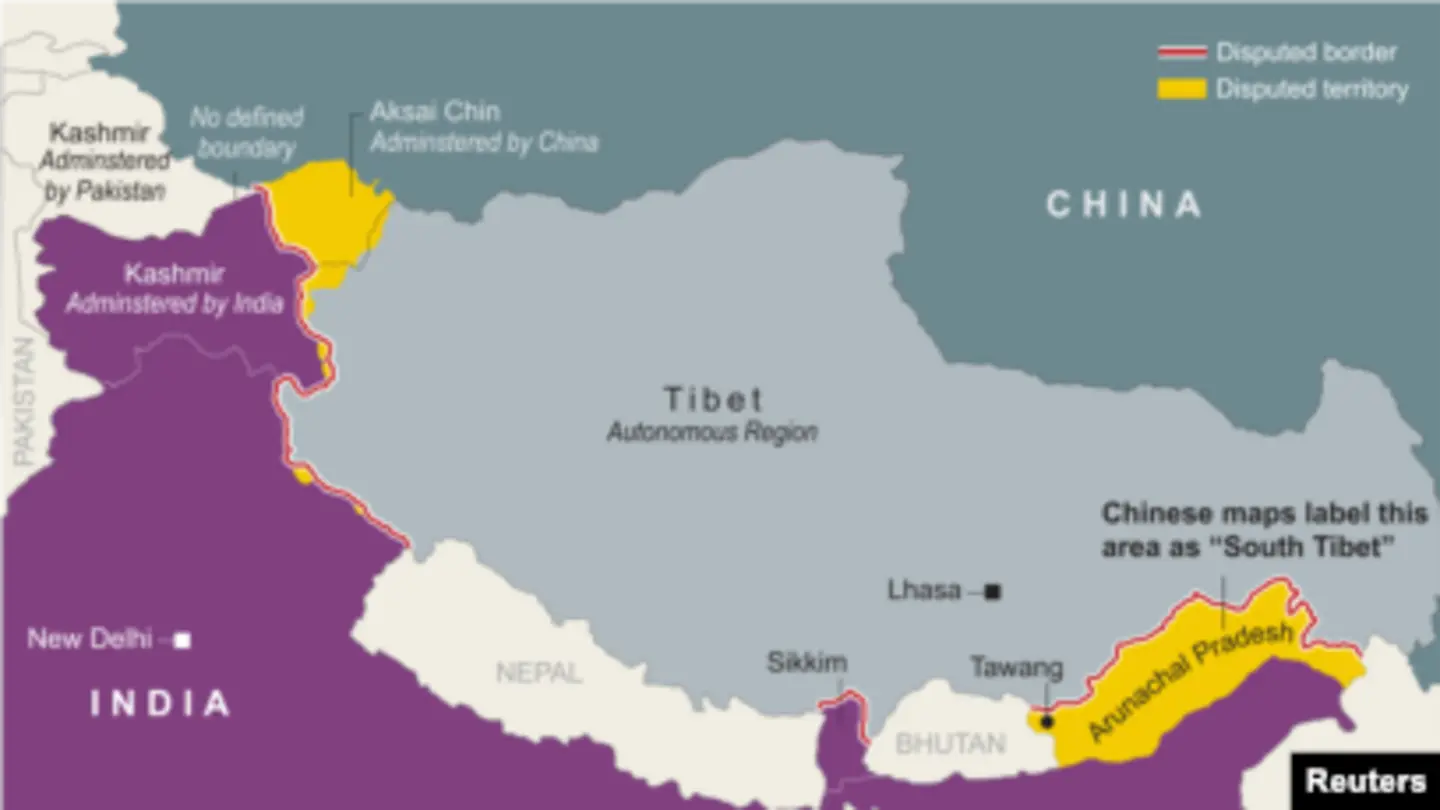
A renewed dispute between India and China over Arunachal Pradesh has surfaced, further straining relations between the two nations. The disagreement centers on territorial claims in the region, which China refers to as Zangnan and considers part of southern Tibet. India firmly asserts its sovereignty over Arunachal Pradesh, a state that has been an integral part of the country since its formation.
The Heart of the Dispute
The current escalation stems from objections raised by China regarding recent visits by Indian leaders and officials to Arunachal Pradesh. China views these visits as provocative and a challenge to its territorial claims. India, on the other hand, maintains that its leaders have the right to travel freely within its own borders and that such visits are a routine administrative matter. The issue is deeply rooted in the unresolved border dispute between the two countries, particularly the Line of Actual Control (LAC), which remains undefined in several sectors.
This is not the first time Arunachal Pradesh has been a point of contention. Tensions flared significantly during the 1962 Sino-Indian War, with Chinese forces briefly occupying parts of the region. Since then, several standoffs and skirmishes have occurred along the LAC, underscoring the fragile nature of the peace between the two countries. Diplomatic efforts to resolve the border dispute have yielded limited success, with both sides holding firm to their respective positions.
Implications and Geopolitical Context
The renewed spat carries significant geopolitical implications. The India-China border dispute is intertwined with broader strategic competition in the Indo-Pacific region. Both countries are vying for influence and dominance, and the border issue serves as a constant reminder of their underlying rivalry. The United States and other Western powers have expressed concern over China’s assertive behavior in the region, including its activities along the LAC. These countries have often supported India’s position on the border dispute, viewing it as a key element in maintaining regional stability.
The economic dimension also plays a crucial role. India and China are major trading partners, but the border dispute has cast a shadow over their economic relations. Tensions along the LAC have disrupted trade flows and led to calls for greater economic diversification to reduce dependence on China. The current standoff is likely to further complicate these economic ties and could lead to increased protectionism and trade restrictions. In recent times, India has taken steps to bolster its infrastructure along the border, including the construction of roads, bridges, and airfields. These measures are aimed at improving connectivity and strengthening India’s defense capabilities in the region. China has also been investing heavily in infrastructure development on its side of the border.
The ongoing dispute highlights the need for renewed diplomatic efforts to resolve the border issue peacefully. Both countries have a responsibility to exercise restraint and avoid actions that could further escalate tensions. A stable and secure border is essential for fostering a more cooperative and productive relationship between India and China, which is vital for regional and global stability.
Image Source: Google | Image Credit: Respective Owner