Chief Economic Advisor (CEA) Anantha Nageswaran has said the government is working “overtime” with industry bodies, export promotion agencies, and ministries to soften the blow of the steep US tariffs on Indian goods.
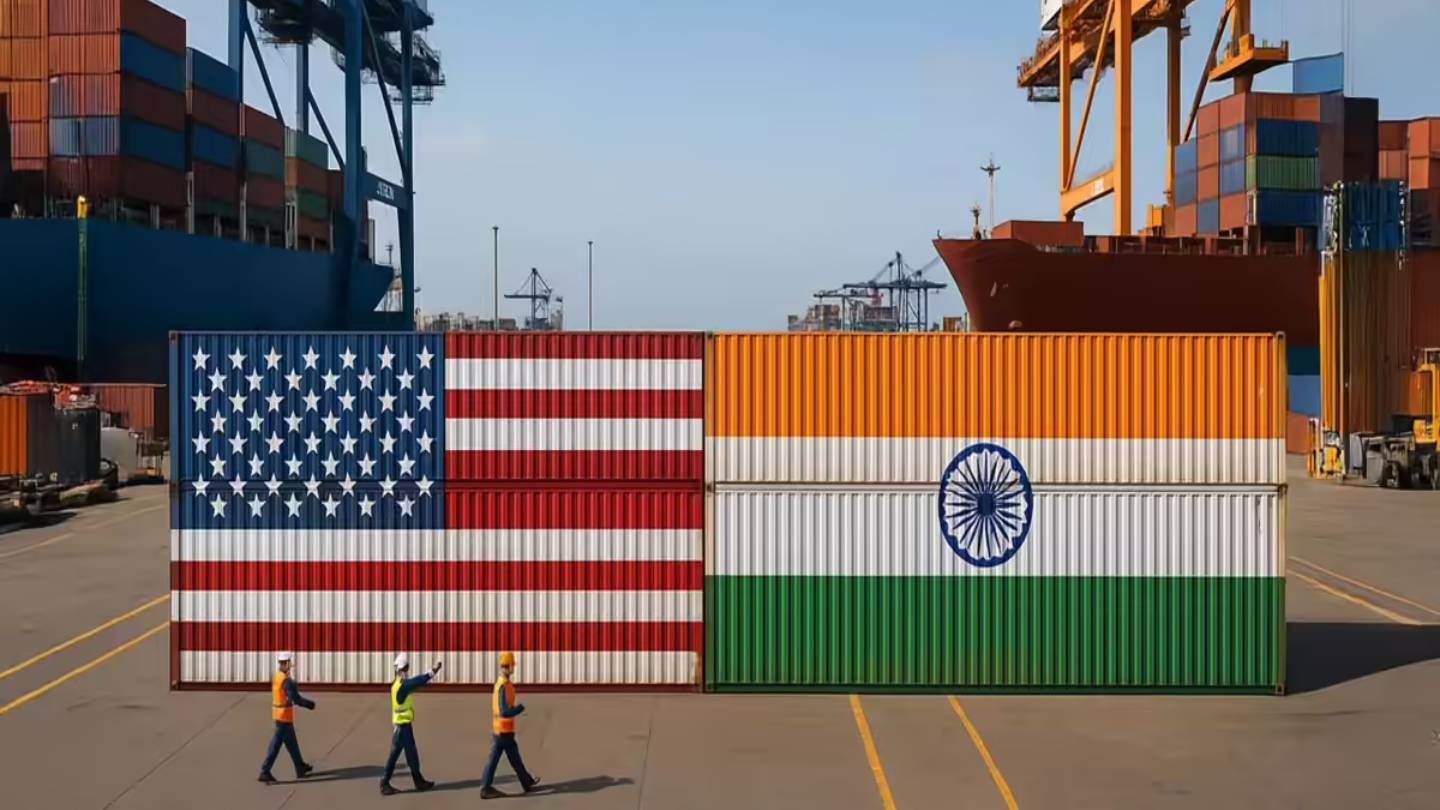
The United States recently imposed an additional 25% duty on Indian exports — on top of the existing 25% — taking the total tariff to 50%. The move, linked to India’s purchase of Russian crude oil, has been described by New Delhi as “unreasonable.”
Government Response
Speaking at an event organised by the Indian Chamber of Commerce, Nageswaran said the government is preparing a strategy to provide both a “time cushion” and a “financial cushion” to help exporters manage the crisis and emerge stronger. He expressed hope that the measure would be temporary, noting that a nearly-concluded trade agreement with the US had been delayed due to “unexpected developments.”
India’s Economic Resilience
Despite the tariff shock, Nageswaran pointed to “silver linings.” India’s real GDP grew 7.8% year-on-year in the first quarter, with nominal GDP rising 8.8%, higher than private forecasts. He attributed lower nominal growth to “good deflation” from falling input costs such as crude and metals, while manufacturing Gross Value Added rose 10.1% in nominal terms and 7.7% in real terms.
He said the numbers support optimism that full-year nominal GDP growth will remain near the 10.1% assumed in the Union Budget.
Reforms and Incentives
The CEA also highlighted:
- A household tax cut for incomes up to ₹26.7 lakh, already reflected in higher advance tax collections.
- A planned GST rationalisation to simplify compliance.
- A new employment-linked incentive scheme to encourage hiring while maintaining competitiveness in the AI era.
He added that fiscal prudence has boosted India’s credit standing, citing Standard & Poor’s recent upgrade — the first in 30 years — and said Fitch may follow. The fiscal deficit has been brought down to 4.4% from 9.2% in 2021, lowering borrowing costs and reducing the private sector’s cost of capital.
Trade Diversification
To reduce reliance on the US market, India is pursuing free trade agreements with the UAE, UK, Oman, and Bahrain, with some deals expected before year-end. Nageswaran urged exporters to diversify markets, invest in R&D, and innovate to stay competitive.
“Each one of us has an obligation to use this opportunity to improve the way we do business and strive for innovation and excellence,” he said, while stressing that the government will continue efforts to ease regulation, boost job creation, and engage with Washington to resolve the tariff dispute.
Source: TOI | Image Source: Google | Image Credit: Respective Owner