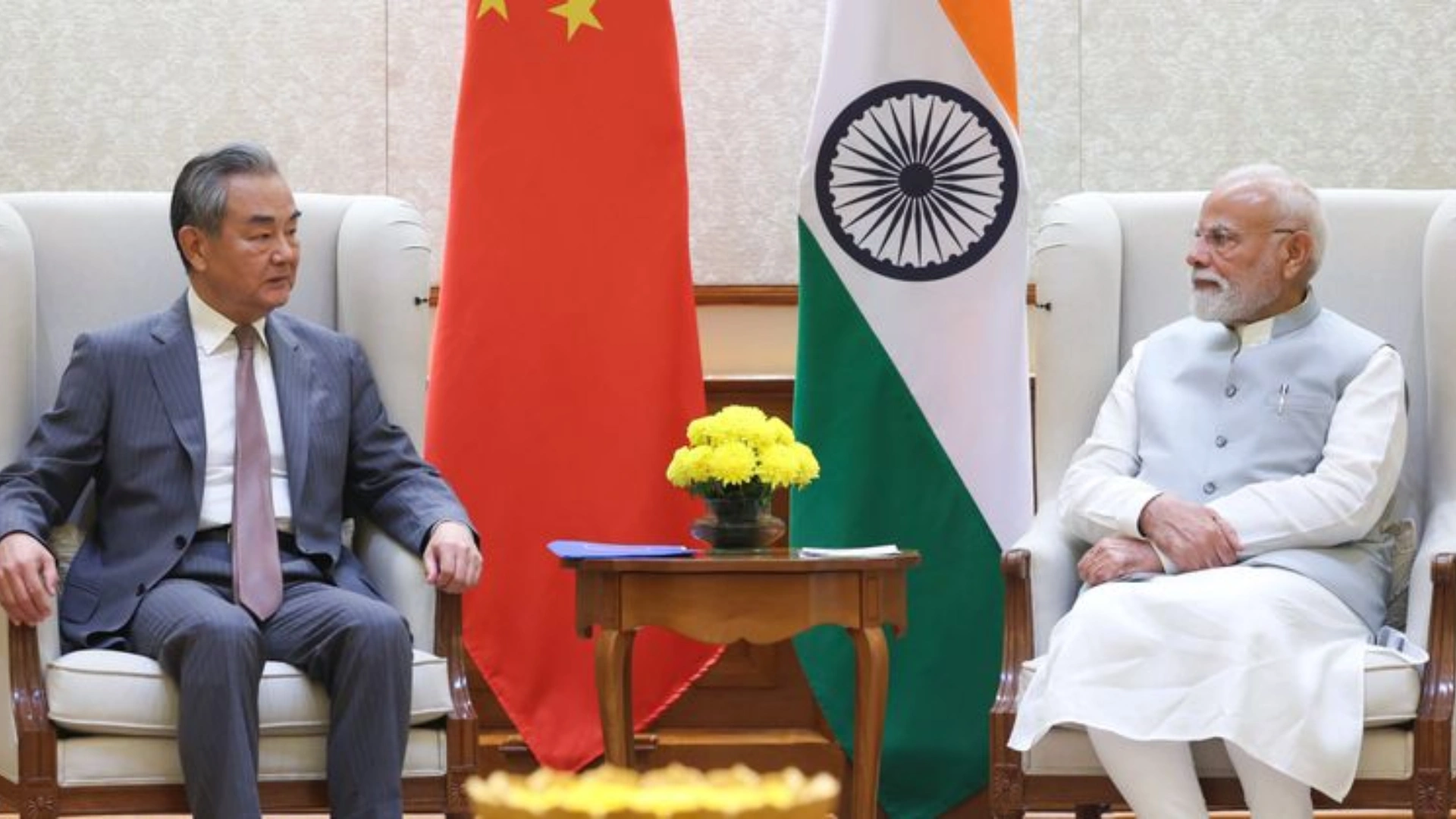
In a significant breakthrough for India-China relations, both countries have agreed to work towards resolving the boundary delimitation issue. The decision came after a high-level meeting involving Prime Minister Narendra Modi, External Affairs Minister S. Jaishankar, National Security Advisor Ajit Doval, and Chinese Foreign Minister Wang Yi.
During the meeting, the leaders decided to set up an expert group under the Working Mechanism for Consultation and Coordination on India-China Border Affairs (WMCC). The group will explore early solutions to the boundary delimitation, with the goal of settling the issue in a fair, reasonable, and mutually acceptable way.
Apart from focusing on the boundary issue, India and China also agreed to resume direct flight services at the earliest, improving people-to-people connectivity. The two countries will also facilitate an increase in Indian pilgrimage visits to Mount Kailash and Lake Manasarovar, which has long been a spiritual and cultural link between them.
Trade relations will also see a boost as both sides agreed to reopen border trade at three key points—Lipulekh Pass, Shipki La, and Nathu La. This move is expected to improve economic ties and facilitate the free flow of goods between the two nations.
In another significant move, Prime Minister Modi will attend the upcoming Shanghai Cooperation Organisation (SCO) summit in China, with both sides reaffirming their support for each other’s diplomatic events. India will host the 2026 BRICS summit, while China will host the 2027 summit.
A working group will also be established under the WMCC to ensure effective border management and maintain peace and tranquility along the India-China border. Both nations have agreed to further discuss de-escalation and management strategies in their bilateral dialogue.
The discussions between Special Representatives (SR) Ajit Doval and Wang Yi marked the 24th round of the SR dialogue. Both sides have emphasized the importance of maintaining peace along the border and building on the positive developments that have followed the 2020 Galwan clash and the subsequent military standoff.
With these decisions, India and China have taken significant steps toward strengthening their bilateral relationship and fostering deeper cooperation in key areas such as trade, diplomacy, and people-to-people connections.
Image Source: Google | Image Credit: Respective Owner