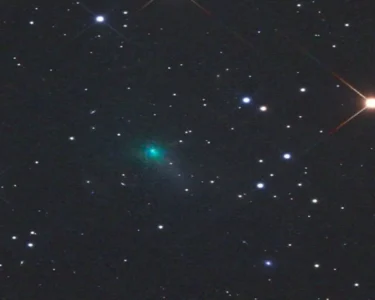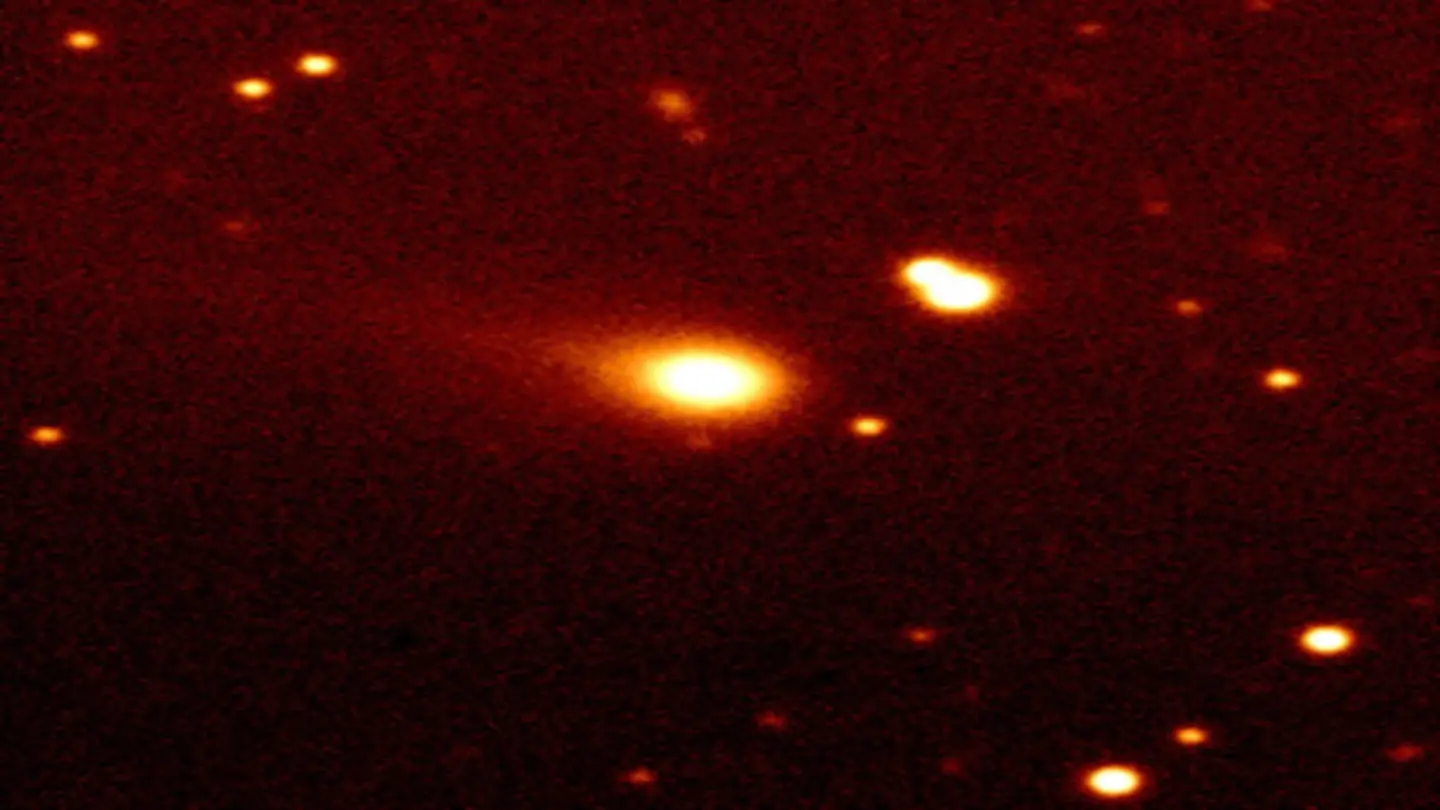
A Harvard scientist is standing by his controversial claims regarding the interstellar comet 3I/ATLAS, asserting that the object underwent “sudden changes” during its trajectory. The assertion comes amidst scrutiny from the scientific community regarding the nature and origin of the comet, and the scientist’s hypothesis about its potential artificial nature.
The comet 3I/ATLAS, discovered in 2017, has been of immense interest to astronomers due to its interstellar origin, making it a rare visitor from beyond our solar system. The comet’s unique trajectory and composition have spurred numerous studies attempting to understand its origins and properties. The Harvard scientist in question has proposed that the comet exhibited anomalies that could be indicative of artificial technology, a claim that has been met with both intrigue and skepticism.
Evidence and Counterarguments
The scientist cites observed changes in the comet’s speed and trajectory as evidence for the “sudden changes” he describes. These changes, he argues, cannot be fully explained by natural phenomena such as solar radiation or gravitational interactions. Specifically, the scientist points to an unexpected acceleration and variations in the comet’s light curve as indicators of potential artificial manipulation.
However, other scientists have countered these claims by suggesting more conventional explanations. Alternative theories propose that the observed changes could be the result of the comet’s volatile composition and interaction with solar radiation, leading to unpredictable outgassing and fragmentation. Data analysis from various observatories supports the hypothesis that the comet experienced a series of disintegration events, which could account for the observed anomalies without invoking artificial technology.
The debate surrounding the comet highlights the challenges of interpreting data from interstellar objects. These objects are often faint and distant, making it difficult to obtain high-resolution observations. Furthermore, the behavior of comets is notoriously unpredictable, adding complexity to the analysis. The scientific community emphasizes the need for rigorous peer review and replication of results before drawing definitive conclusions.
Implications and Future Research
The controversy surrounding 3I/ATLAS underscores the importance of open-mindedness and critical thinking in scientific exploration. While the hypothesis of artificial technology is considered highly speculative by the majority of scientists, it serves as a reminder to consider all possibilities and to continuously refine our understanding of the universe.
Further research is needed to gather more data on interstellar objects and to develop more sophisticated models for predicting their behavior. Future space missions and advanced telescopes could provide the detailed observations necessary to resolve the mysteries surrounding 3I/ATLAS and other interstellar visitors. As technology advances, scientists may be able to unlock further insights into the nature and origin of these enigmatic objects, potentially leading to groundbreaking discoveries about the composition and evolution of other star systems.
The debate is set to continue, with new research and data expected to further illuminate the behavior of this fascinating interstellar comet.
Image Source: Google | Image Credit: Respective Owner