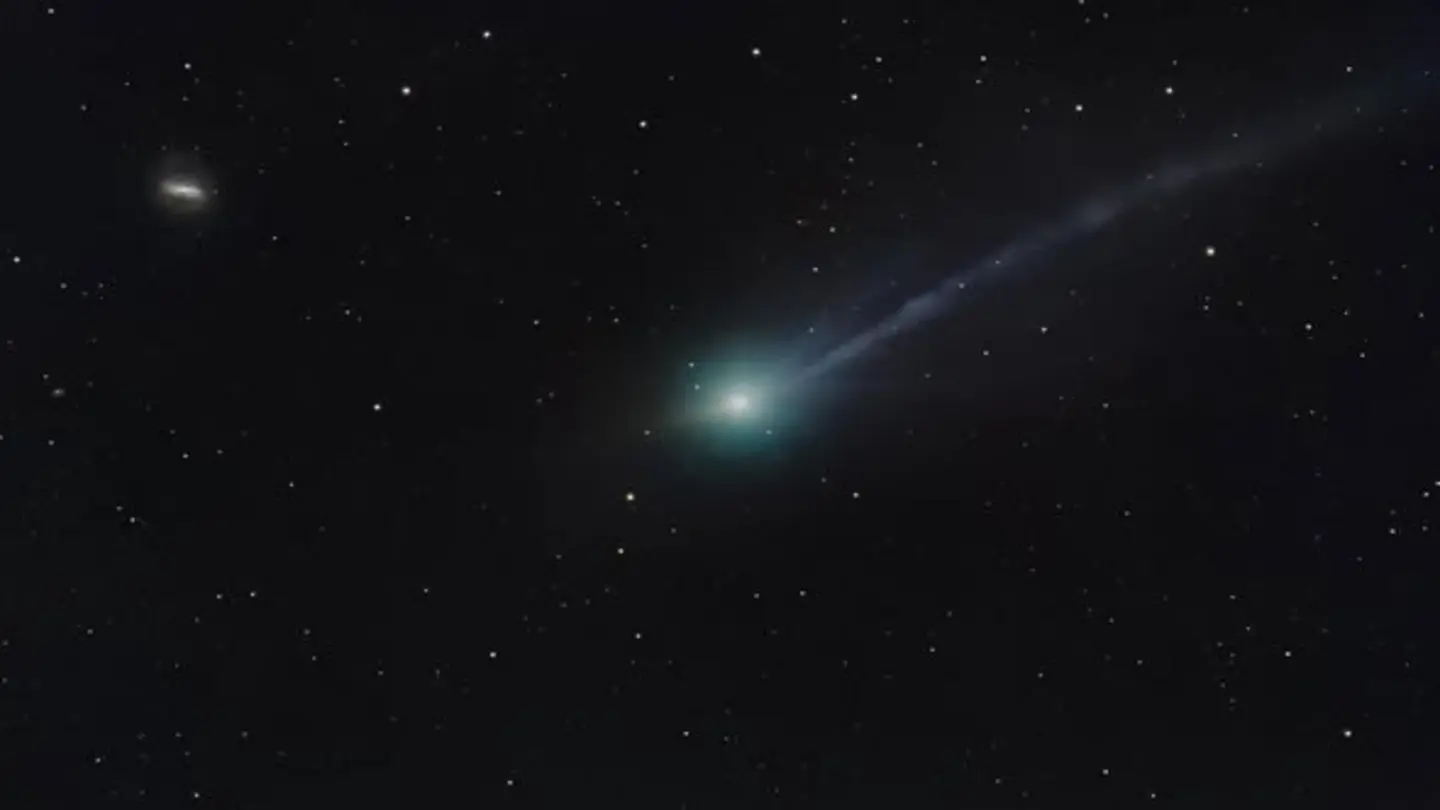
Harvard astrophysicist Avi Loeb has announced the decoding of new radio data pertaining to the interstellar object 1I/2017 U1 ‘Oumuamua’, and a recently discovered similar object, 2I/Borisov, both categorized as ‘exocomets’. The findings, published and discussed extensively, suggest these objects may not be entirely natural phenomena, prompting speculation about potential extraterrestrial origins or, more specifically, artificial composition.
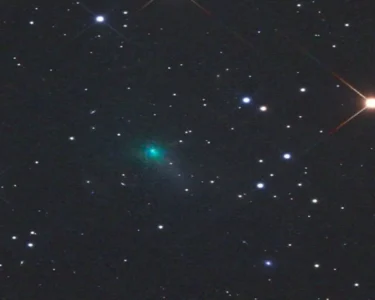
Loeb’s team focused on analyzing radio emissions detected from 2I/Borisov, a comet discovered in 2019. Unlike typical comets which exhibit a hydrogen “coma” – a diffuse cloud of gas surrounding the nucleus – 2I/Borisov displayed a surprisingly weak hydrogen emission. This anomaly, coupled with the object’s trajectory, led Loeb to hypothesize that it might be composed of hydrogen ice, a structure that would be fragile and less likely to survive interstellar travel unless actively shielded.
The Significance of Radio Emissions
The recent data analysis centers around the detection of a narrow-band radio signal associated with 2I/Borisov. Narrow-band signals are particularly intriguing to scientists searching for extraterrestrial intelligence (SETI) because they are not commonly produced by natural astrophysical processes. Natural radio emissions tend to be broad-spectrum. While Loeb acknowledges the possibility of an unknown natural source, he emphasizes the signal’s characteristics warrant further investigation.
Loeb’s previous work on ‘Oumuamua, the first interstellar object detected passing through our solar system in 2017, sparked considerable debate. ‘Oumuamua exhibited an unusual acceleration that couldn’t be fully explained by gravity alone, leading Loeb to suggest it could be a light sail propelled by an extraterrestrial civilization. This idea was met with skepticism from many in the scientific community, who proposed alternative explanations involving outgassing or other natural phenomena.
The current research builds on this foundation, applying similar analytical techniques to 2I/Borisov. The team utilized advanced signal processing methods to filter out terrestrial interference and identify potential signals originating from the exocomet. The detected signal, while faint, is consistent with a potential artificial origin, though definitive proof remains elusive.
Loeb stresses the importance of continued observation and data collection. He advocates for a more open-minded approach to investigating interstellar objects, arguing that dismissing the possibility of extraterrestrial technology prematurely could hinder scientific progress. He believes that these objects represent a unique opportunity to study materials and technologies from beyond our solar system, potentially revolutionizing our understanding of the universe and our place within it. The next target for observation is the exocomet currently heading towards Jupiter, offering another chance to gather crucial data. The team is preparing to utilize the Very Large Array (VLA) radio telescope for more detailed analysis.
The findings are not universally accepted, and many scientists remain cautious about attributing these signals to extraterrestrial intelligence. However, Loeb’s work continues to push the boundaries of conventional thinking and encourages a more thorough exploration of the possibilities presented by these enigmatic interstellar visitors.
Image Source: Google | Image Credit: Respective Owner