Background
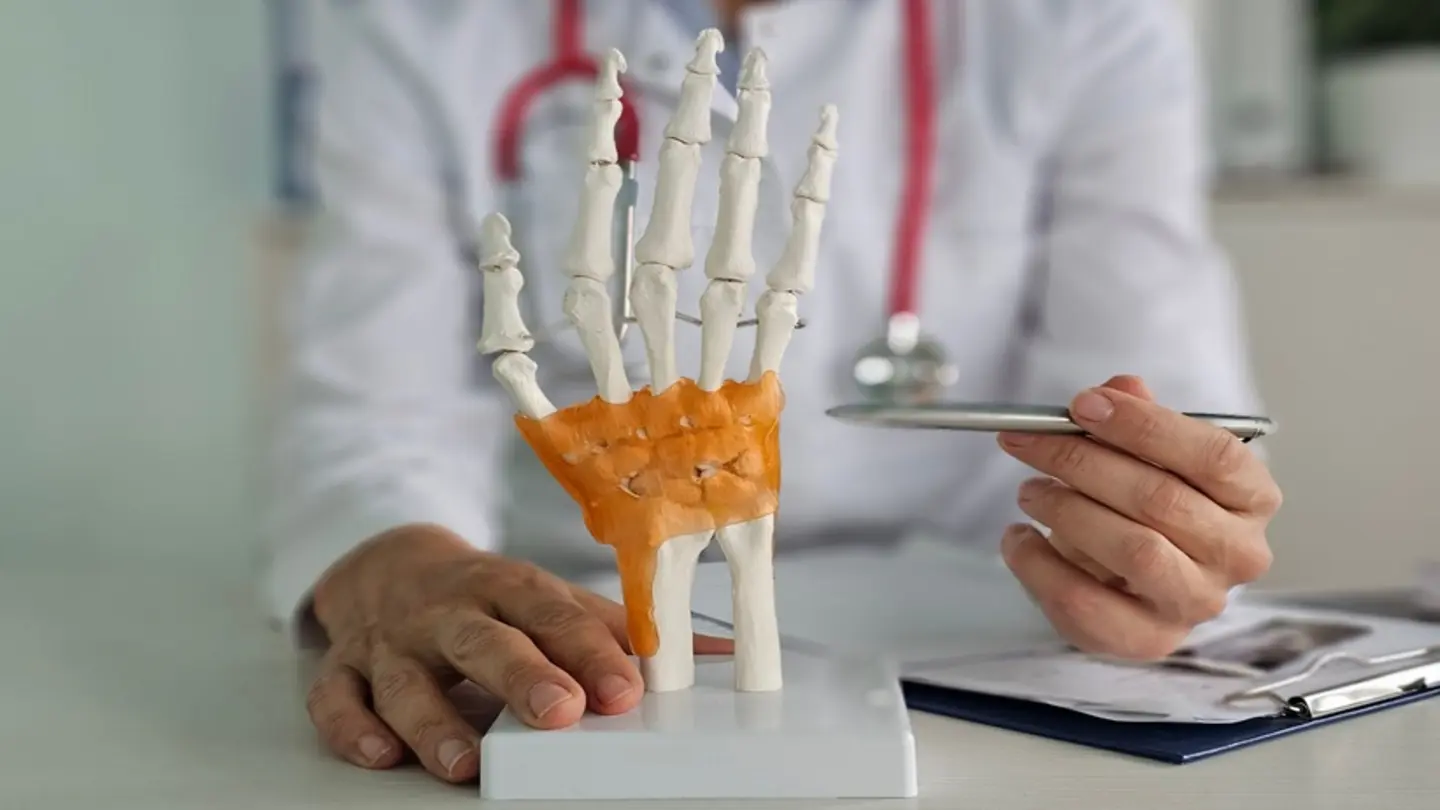
Scaphoid fractures are common wrist injuries, comprising roughly half of all carpal bone fractures. Most heal with casting or percutaneous screws, but proximal pole fractures often fail due to limited blood flow, leading to avascular necrosis and nonunion. Conventional reconstructions—iliac crest grafts, vascularised pedicle flaps, or synthetic scaffolds—carry donor‑site pain, infection risk, and lengthy operative times. A recent paper in the European Medical Journal introduces a new solution: an autograft harvested from the hamate bone to rebuild the proximal scaphoid.
Study Design
A retrospective case series of 23 patients with proximal scaphoid nonunion refractory to standard fixation was analysed. Inclusion required a stable distal fracture zone, a viable distal fragment, and no systemic contraindications to autograft harvesting. Two senior hand surgeons performed the procedures at a tertiary centre between January 2022 and December 2024. A dorsal approach accessed the hamate, preserving the ulnar collateral ligament. A rectangular graft about 4 mm × 8 mm was taken, trimmed, and secured with a two‑hole titanium press‑fit screw system. Post‑operative management consisted of four weeks in a functional wrist splint, followed by progressive physiotherapy aimed at grip strength and range of motion.
Results
With a mean follow‑up of nine months, 20 of 23 grafts achieved radiographic union, yielding an 87 % success rate. Three failures were linked to early graft resorption, likely from inadequate vascularisation. Clinically, 18 patients returned to pre‑injury work within eight weeks; VAS pain scores fell from 6.5 to 1.2 on average. DASH scores improved from a baseline of 42 % to 12 % after reconstruction. Complications were minimal: one case of transient ulnar neuropathy was managed conservatively, another needed a secondary tenosynovectomy for tendon irritation, both without lasting deficits.
Key Findings
The hamate‑derived autograft offers three main benefits. First, its size matches the proximal scaphoid closely, reducing need for reshaping. Second, the intra‑carpal donor site avoids the typical iliac crest morbidity of wound infection, chronic pain, or prolonged recovery. Third, the hamate retains a robust blood supply, potentially enhancing graft viability over non‑vascularised iliac grafts. The authors also stress that the technique can be combined with existing fixation hardware, useful when screw fixation alone is insufficient.
Clinical Implications
These data suggest hamate bone autograft may become a preferred option for proximal scaphoid nonunion, especially in younger, active individuals seeking early return to function. Larger prospective trials are needed to assess union durability and compare outcomes with traditional iliac crest grafts and newer biologic scaffolds. For now, the approach provides surgeons a minimally invasive, intra‑carpal alternative for a historically challenging problem.
Conclusion
Although not a cure‑all, the hamate bone autograft demonstrates promising union rates and a low complication profile, marking a meaningful advance in wrist reconstructive surgery. The European Medical Journal’s publication adds valuable evidence to orthopaedic literature on intra‑carpal donor sources and may soon shape clinical guidelines for scaphoid nonunion management.
Image Source: Google | Image Credit: Respective Owner