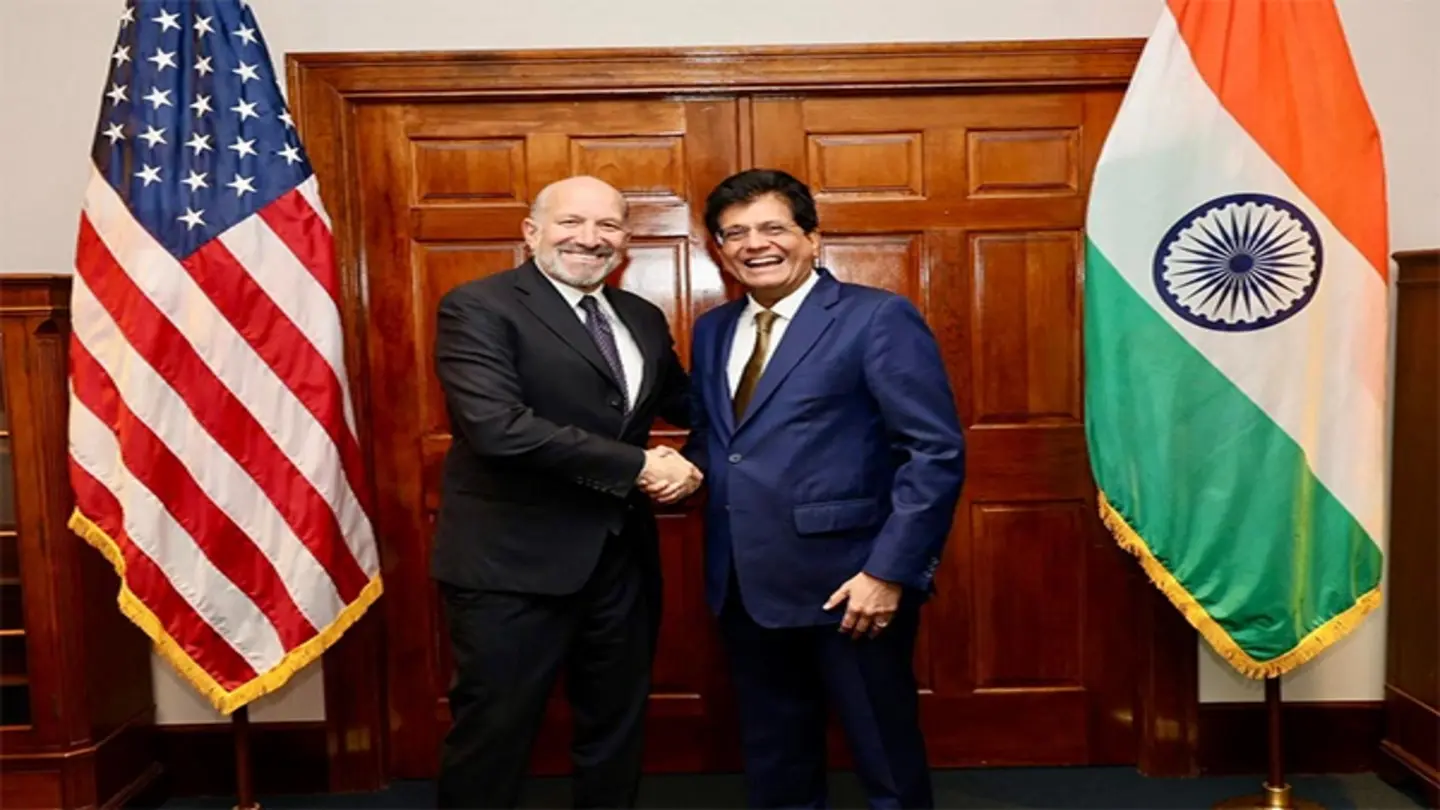
New Delhi, February 27, 2026 — India’s Commerce and Industry Minister Piyush Goyal held a series of “fruitful” talks with U.S. Commerce Secretary Howard Lutnick and U.S. Ambassador to India John S. Gor, signalling a fresh push to accelerate bilateral trade and deepen economic cooperation.
Trade and tariff issues
The discussion centered on Washington’s tariffs on Indian steel and aluminium imports, which Goyal identified as a lingering barrier to a seamless supply‑chain integration, while Lutnick indicated flexibility pending a broader bilateral trade review.
Digital economy and data‑flow agreements
Both sides agreed to expedite the implementation of a digital‑commerce framework that aligns customs data‑exchange protocols with the United States’ Trade Facilitation Agreement, aiming to reduce paperwork for tech imports.
Trade targets and growth aspirations
India’s current bilateral merchandise trade stands at roughly $130 billion, and the two delegations discussed concrete pathways to reach a $500 billion figure by 2030, leveraging expanded export baskets in pharmaceuticals, ICT, and sustainable energy.
Critical minerals and semiconductor cooperation
The delegation highlighted India’s reserves of critical minerals such as lithium and rare earths, urging joint research on semiconductor fabrication and urging U.S. firms to invest in ‘Make‑in‑India’ fabs, with Lutnick promising support for streamlined export licensing.
Supply‑chain resilience and joint working groups
In line with the Indo‑U.S. Strategic Partnership, ministers established a joint working group tasked with mapping global logistics bottlenecks, recommending mitigation measures, and preparing a resilience roadmap for the next G‑20 summit.
Investment incentives and regulatory reforms
Analysts noted that harmonising customs‑valuation rules and expediting clearance for high‑value tech goods could unlock immediate gains, while the Export‑Import Bank of India pledged clearer financing terms for American investors.
Industry reaction and next steps
Business chambers from both countries welcomed the dialogue, noting that clearer customs rules and stable intellectual‑property protections would bolster confidence among investors and help achieve the ambitious export targets.
Strategic outlook and emerging sectors
Both sides reaffirmed commitment to the ‘U.S.-India 2.0’ trade strategy, which envisions regular ministerial engagements and prioritises fintech, artificial intelligence, clean‑energy supply chains, and e‑commerce as growth pillars.
Next round of talks
A follow‑up dialogue is slated for Washington D.C. later this year, where India’s commerce delegation will also meet the U.S. Treasury Secretary to discuss capital market reforms and investment incentives, signalling a sustained high‑level dialogue.
Overall assessment
Observers described the meeting as a pivotal step toward stabilising a historically volatile trade relationship, noting that coordinated action on tariff barriers, digital standards, and strategic minerals could offset recent macro‑economic uncertainties.
Image Source: Google | Image Credit: Respective Owner