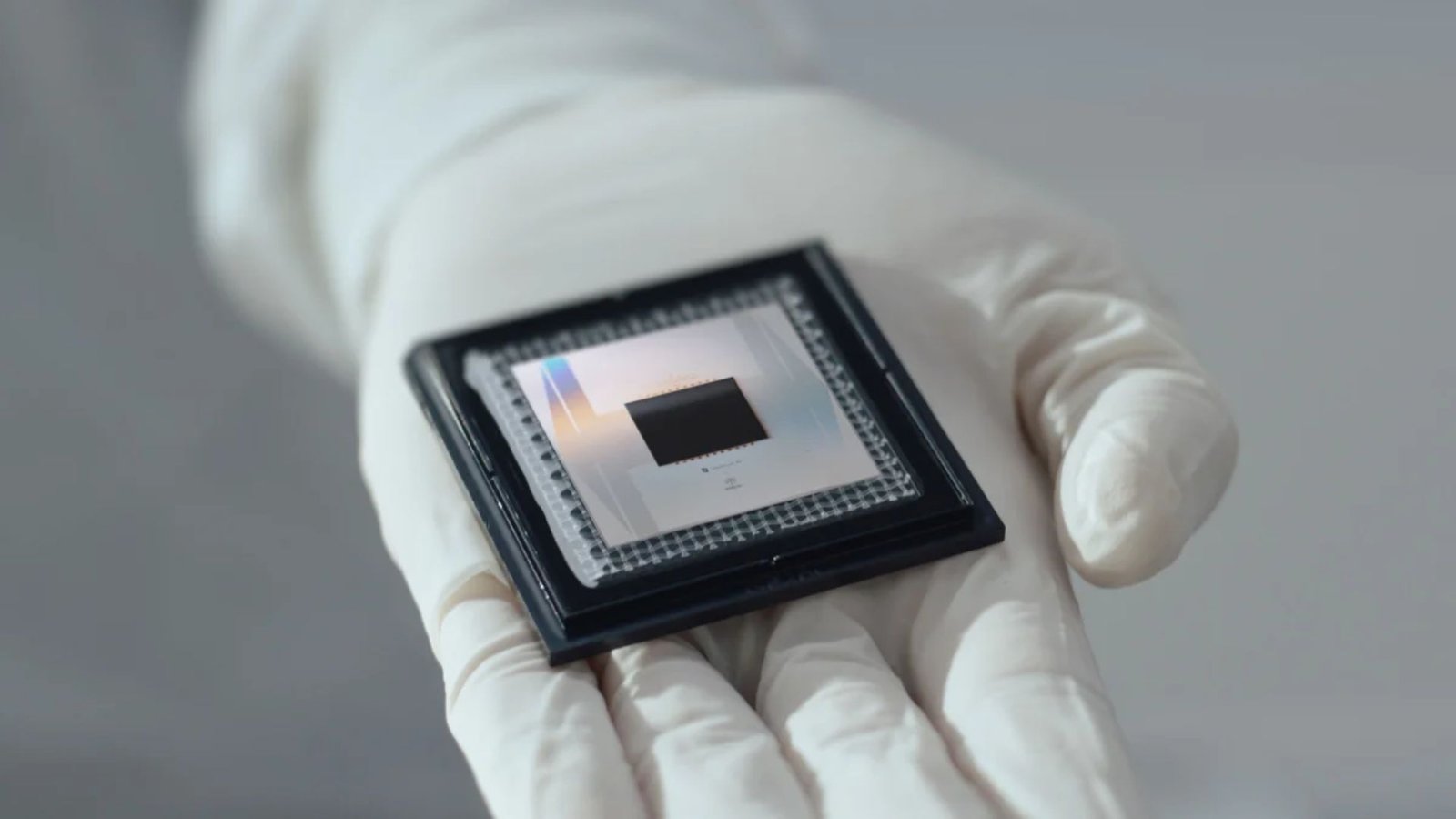
Google has announced that its “Willow” quantum processor has achieved a significant milestone, demonstrating a “verifiable” quantum advantage over classical computers. The claim, published in a recent paper, suggests that the Willow chip can perform specific calculations far beyond the capabilities of even the most powerful supercomputers. This development marks a potential turning point in the quest for practical quantum computing, a field promising revolutionary advancements across various industries.
What is Quantum Advantage?
Quantum advantage, also known as quantum supremacy, refers to the point at which a quantum computer can solve a problem that no classical computer can solve in a reasonable amount of time. While previous claims of quantum advantage have been met with skepticism due to the nature of the problems solved, Google asserts that the Willow chip’s performance offers a more compelling demonstration. The key to this claim lies in the “verifiable” aspect, suggesting that the results obtained from the quantum processor can be reliably confirmed, minimizing the chances of errors or misinterpretations.
The specific problem solved by the Willow chip involves complex simulations. Quantum computers, leveraging the principles of quantum mechanics such as superposition and entanglement, can potentially tackle problems that are intractable for classical computers. These capabilities are particularly relevant in areas like drug discovery, materials science, and financial modeling.
According to Google, the Willow processor is built using superconducting transmon qubits, a technology that has become a leading candidate for building practical quantum computers. The company has been investing heavily in quantum computing research and development, and this latest announcement is a testament to their progress.
While this achievement is significant, experts caution that it is still early days for quantum computing. The types of problems that quantum computers can solve remain limited, and the technology faces numerous challenges in terms of scalability, stability, and error correction. Building a fault-tolerant quantum computer – one that can reliably perform complex calculations without being affected by noise and other disturbances – is still a major hurdle.
Nonetheless, Google’s claim of quantum advantage with the Willow chip is generating excitement within the scientific community. It provides further evidence that quantum computing is rapidly advancing and has the potential to transform various aspects of our lives in the future. Further research and development are needed to realize the full potential of this technology, but this latest breakthrough offers a glimpse into the possibilities that lie ahead.
The details of the Willow chip’s architecture and performance metrics are expected to be published in peer-reviewed scientific journals, allowing other researchers to scrutinize the findings and build upon Google’s work. This open collaboration will be crucial for accelerating the development of quantum computing and unlocking its transformative potential.
Image Source: Google | Image Credit: Respective Owner