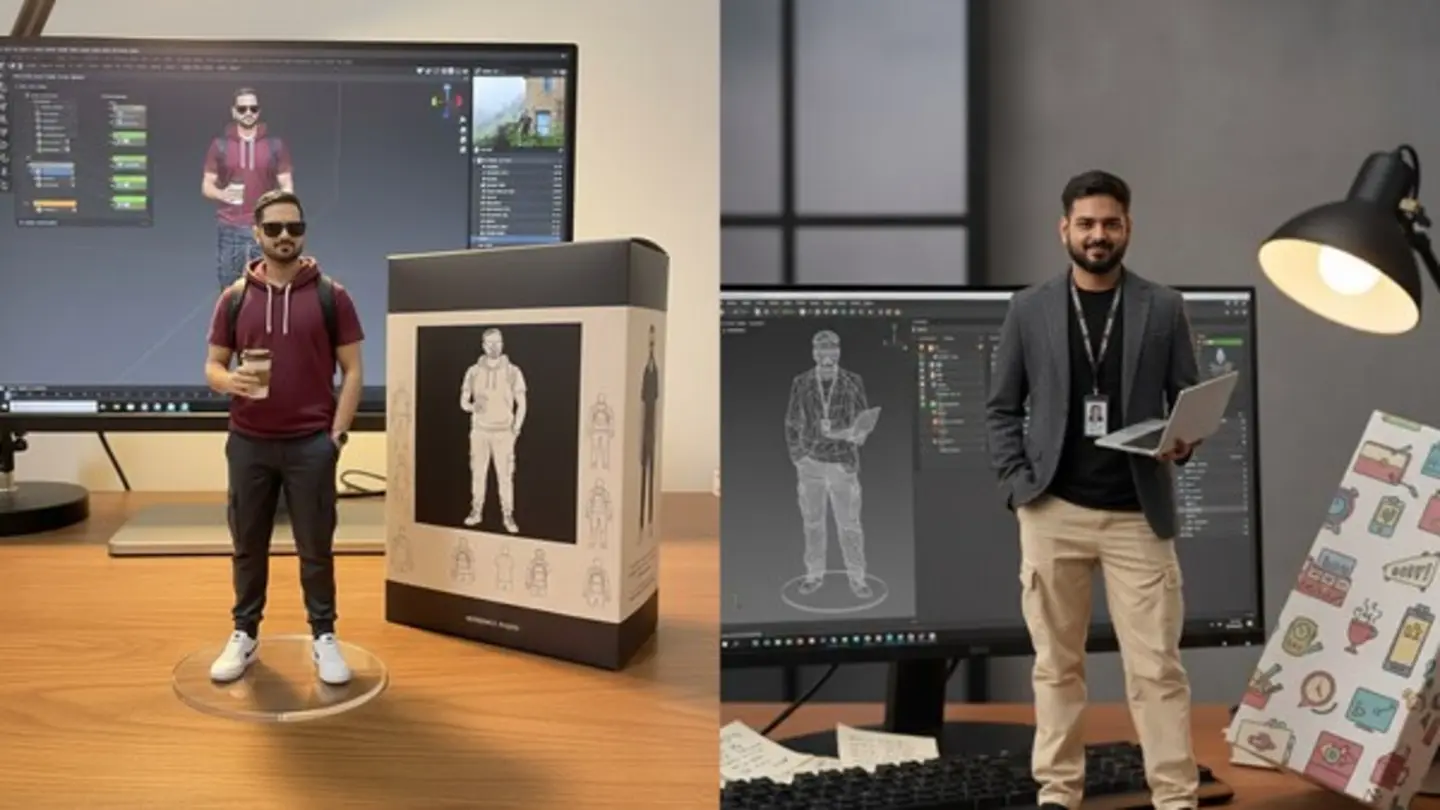
Google AI Studio has introduced a novel method for converting 2D images into 3D models using a technology called Nano Banana. This innovative approach leverages artificial intelligence to interpret visual data and generate three-dimensional representations, opening up new possibilities for various applications, including design, gaming, and augmented reality. The system employs a series of prompts and tips that guide the AI in accurately reconstructing the depth and form of objects depicted in the original images.
Understanding Nano Banana Prompts
The core of the image-to-3D model conversion lies in the effective use of prompts. These prompts serve as instructions for the AI, helping it understand the context and characteristics of the image. For example, a prompt might specify the type of object in the image (e.g., “a vintage car”) or highlight specific features (e.g., “detailed wheels and chrome trim”). The quality and clarity of these prompts significantly impact the accuracy and detail of the resulting 3D model.
To optimize the process, Google AI Studio offers a set of 15 easy Nano Banana prompts. These prompts cover a wide range of scenarios and object types, providing users with a starting point for their 3D modeling projects. The prompts are designed to be user-friendly and adaptable, allowing users to customize them based on their specific needs and the characteristics of the images they are working with.
Tips for Optimal 3D Model Generation
In addition to the prompts, several tips can enhance the quality of the 3D models generated. One key tip is to use high-resolution images. Clear, detailed images provide the AI with more information, leading to more accurate and realistic 3D reconstructions. Another important tip is to ensure that the object in the image is well-lit and clearly visible. Shadows and obstructions can hinder the AI’s ability to accurately interpret the image.
Furthermore, experimenting with different prompts and settings can yield improved results. Google AI Studio allows users to adjust various parameters, such as the level of detail and the rendering style. By fine-tuning these settings, users can tailor the 3D models to their specific requirements. The iterative process of prompt engineering and parameter adjustment is crucial for achieving optimal results.
Applications and Future Implications
The ability to convert 2D images into 3D models has numerous potential applications. In the field of design, it can streamline the creation of prototypes and visualizations. In gaming, it can enable the rapid generation of 3D assets for virtual environments. In augmented reality, it can facilitate the creation of immersive experiences by allowing users to interact with 3D representations of real-world objects. As AI technology continues to evolve, the accuracy and efficiency of image-to-3D model conversion are likely to improve further, unlocking even more possibilities.
Google’s Nano Banana technology represents a significant step forward in the field of AI-powered 3D modeling, providing a user-friendly and accessible tool for creating 3D content from 2D images.
Image Source: Google | Image Credit: Respective Owner