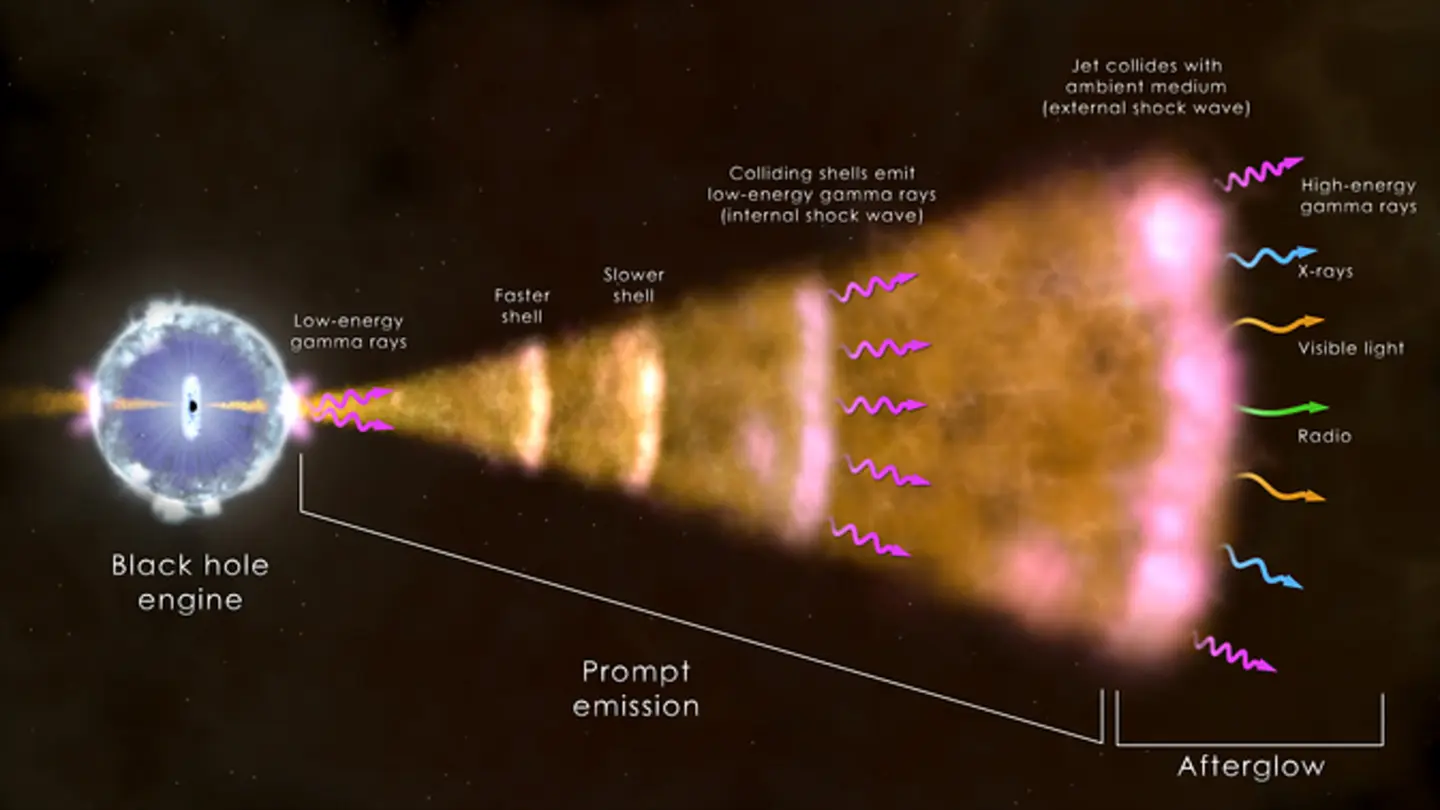
A colossal gamma-ray burst (GRB), lasting an unprecedented 24 hours, has ignited debate within the scientific community, particularly concerning NASA’s alleged suppression of a related black hole discovery. The event, dubbed a “once-in-a-lifetime” occurrence by some astrophysicists, challenges existing models of stellar evolution and black hole formation. Gamma-ray bursts, the most luminous and energetic explosions in the universe, are typically associated with the collapse of massive stars or the merger of neutron stars.
This particular GRB’s unusual duration and intensity have prompted speculation about its origin and potential connection to a previously unknown black hole. Some researchers suggest that the burst could be the result of a hypernova, an extremely powerful supernova that births a black hole. However, the prolonged emission of gamma rays suggests a more complex process might be at play.
Unveiling the Anomaly
The controversy stems from claims that NASA possesses data hinting at the existence of a black hole in the vicinity of the GRB, but is withholding this information from the public. While NASA has not officially commented on these allegations, several independent astronomers have voiced concerns about the agency’s transparency. Critics argue that the potential discovery of a new black hole paradigm warrants immediate and open discussion within the scientific community. The implications of such a discovery could revolutionize our understanding of gravity, spacetime, and the fundamental laws of physics.
Furthermore, the extended duration of the GRB poses a significant challenge to current theoretical models. Standard models predict that gamma-ray bursts should last only a few seconds or minutes at most. The fact that this particular burst persisted for an entire day suggests that the underlying physical mechanisms are far more intricate than previously thought. It’s conceivable that the burst involved a prolonged accretion process onto a newly formed black hole, or a complex interaction between a black hole and its surrounding environment.
The Rude Baguette’s Perspective
The French news outlet, Rude Baguette, has been particularly vocal in its criticism of NASA’s handling of the situation. They claim to have insider information suggesting that the agency is deliberately concealing the black hole discovery to avoid public panic or to protect sensitive research data. Whether these claims are substantiated remains to be seen, but they have undoubtedly fueled the controversy surrounding the GRB and NASA’s role in its investigation. The episode highlights the delicate balance between scientific progress, public transparency, and the potential societal impact of groundbreaking discoveries. Further research and open dialogue are crucial to unraveling the mysteries surrounding this extraordinary gamma-ray burst and the potential black hole discovery it may hold.
Image Source: Google | Image Credit: Respective Owner