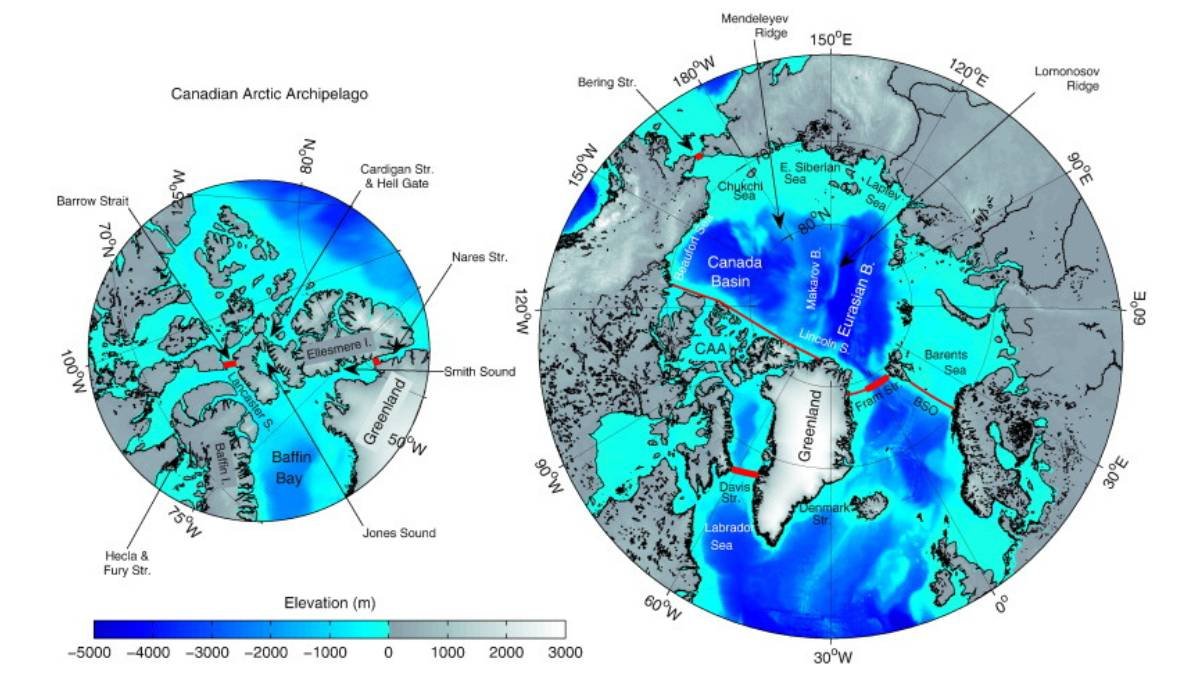
A new study published in ESS Open Archive delves into the complex interplay of local and remote factors influencing the export of liquid freshwater through the Denmark Strait, a crucial gateway connecting the Arctic and Atlantic oceans. Understanding these dynamics is essential for predicting future climate scenarios and their impact on global ocean circulation and sea levels.
The research, employing sophisticated oceanographic models and observational data, identifies key drivers affecting the freshwater flux. These drivers range from local atmospheric conditions and sea ice melt to remote influences stemming from changes in the Atlantic Meridional Overturning Circulation (AMOC) and freshwater discharge from major Arctic rivers.
Local Atmospheric and Sea Ice Influence
Local atmospheric factors, such as wind patterns and precipitation, play a significant role in directly affecting the transport of freshwater through the Denmark Strait. Strong winds can drive surface currents, enhancing the outflow of freshwater from the Arctic. Furthermore, increased precipitation in the Arctic region contributes to higher river discharge, ultimately increasing the freshwater volume flowing into the Arctic Ocean and subsequently through the strait. Sea ice melt, accelerated by rising Arctic temperatures, also contributes a substantial amount of freshwater, altering the salinity and density structure of the surrounding waters.
Remote Drivers and the AMOC
The study highlights the critical role of the AMOC, a major ocean current system that transports warm, salty water northward in the Atlantic and returns cold, fresh water southward at depth. Changes in the AMOC’s strength can significantly influence the amount of freshwater exported through the Denmark Strait. A weakening AMOC, for example, can lead to a reduction in the southward transport of dense, salty water, potentially increasing the relative proportion of freshwater in the region.
Furthermore, remote freshwater sources, such as increased river discharge from Siberia and North America, also contribute to the overall freshwater budget of the Arctic Ocean. These changes in freshwater input can propagate through the Arctic Ocean system, ultimately affecting the freshwater export through the Denmark Strait.
Implications for Climate Change
The findings underscore the interconnectedness of the Arctic climate system and the global ocean circulation. As the Arctic continues to warm and sea ice diminishes, understanding the dynamics of freshwater export through the Denmark Strait becomes increasingly important. Changes in freshwater flux can have cascading effects on the AMOC, potentially leading to significant alterations in global climate patterns. Accurately modeling and predicting these changes is crucial for developing effective climate mitigation and adaptation strategies. Further research is needed to refine our understanding of the complex interactions between local and remote drivers and their impact on the long-term stability of the Arctic climate system and the global ocean.
The research provides valuable insights into the intricate processes governing freshwater export through the Denmark Strait and emphasizes the need for continued monitoring and modeling efforts to better understand and predict the impacts of climate change on this critical region.
Image Source: Google | Image Credit: Respective Owner