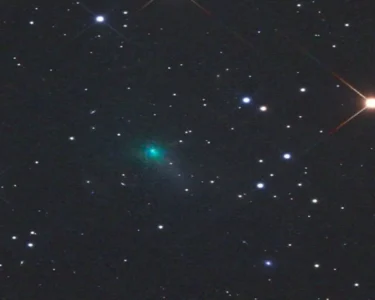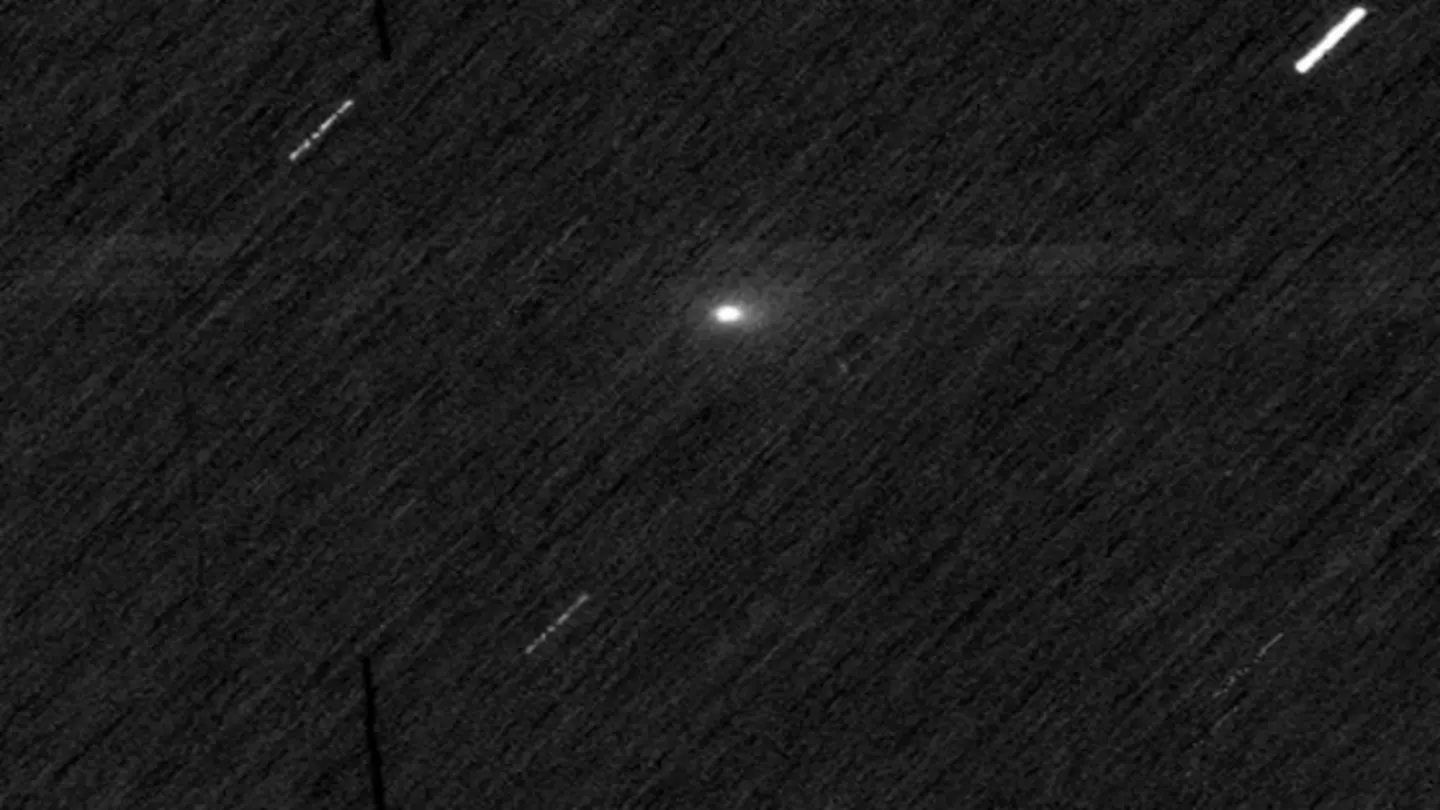
Astronomers have achieved a significant milestone by capturing the first detailed image of interstellar comet 3I/Atlas as it makes its closest approach to Earth. This celestial visitor, which originated from outside our solar system, has drawn considerable scientific attention due to its unique trajectory and composition. The newly released image provides researchers with crucial data about the comet’s structure, behavior, and origins.
The comet, officially designated 3I/Atlas, represents only the third confirmed interstellar object detected passing through our solar system. Unlike objects that originate within our own planetary system, interstellar visitors like 3I/Atlas travel on hyperbolic orbits, meaning they are not gravitationally bound to the Sun. This characteristic makes them exceptionally valuable for scientific study, as they carry information about other star systems and the conditions present in interstellar space.
The recent imaging campaign was conducted using advanced ground-based telescopes equipped with sophisticated instrumentation capable of capturing high-resolution images of distant objects. The image reveals details about the comet’s nucleus, coma, and tail structure, which can help scientists understand its physical properties and chemical composition. Such observations are particularly important because they provide insights into the building blocks of other planetary systems.
As 3I/Atlas makes its closest approach to Earth, astronomers around the world are coordinating observations to maximize data collection. The timing of this close approach presents a rare opportunity to study an interstellar object in greater detail than previously possible. Scientists are particularly interested in analyzing the comet’s gas and dust emissions, which can reveal information about its origin and history.
The detection and study of interstellar objects like 3I/Atlas has become increasingly important in recent years, following the discovery of ‘Oumuamua in 2017 and comet 2I/Borisov in 2019. Each new discovery provides additional data points that help scientists understand the frequency and nature of interstellar visitors. These objects serve as natural probes, carrying information about distant star systems that would otherwise remain beyond our observational reach.
Looking ahead, astronomers are hopeful that continued improvements in telescope technology and survey techniques will enable the detection of more interstellar objects in the coming years. The data gathered from 3I/Atlas will contribute to our understanding of the diversity of cometary bodies throughout the galaxy and may help answer fundamental questions about the formation and evolution of planetary systems beyond our own.
Image Source: Google | Image Credit: Respective Owner